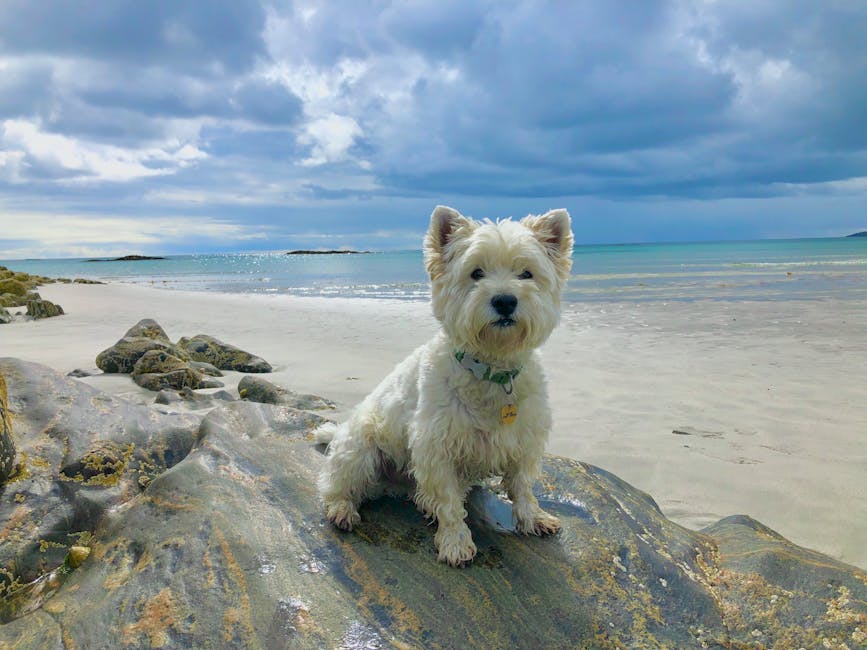
Dog-Friendly Beaches in Scotland: The Complete Guide for 2026
A region-by-region guide to the best dog-friendly beaches in Scotland — from the east coast and Aberdeenshire to Argyll, Ayrshire, the Solway, and the islands. Plus practical safety tips for tides, midges, livestock and remote driving.
Dog-Friendly Beaches in Scotland
From East Lothian to Harris — the best stretches of sand for off-lead adventures, with no seasonal bans to worry about
Looking for dog friendly beaches in Scotland? You are spoilt for choice. Scotland's coastline runs to more than 11,000 miles when you include the islands, and — crucially — almost none of it is closed to dogs. Unlike much of England, Scottish beaches do not enforce blanket May–September dog bans. Under the Scottish Outdoor Access Code, well-behaved dogs are welcome year-round on virtually every beach in the country.
This guide is a region-by-region tour of the best of them. We've split it into the east coast, the west coast, and the islands, with practical notes on parking, terrain and the local hazards (tides, midges, sheep, MOD ranges) that catch first-time visitors out. If you're planning a wider Scottish holiday, this pairs well with our complete guide to the Scottish Highlands with a dog, and for a UK-wide overview see our pick of the best dog-friendly beaches in the UK.
East Coast Highlights
East Lothian, Fife, Angus and Aberdeenshire
The east coast tends to be drier, sunnier and more sheltered than the west — great news for dogs that hate getting drenched. Sand dunes, pine plantations and long flat strands are the signature landscapes here, and most beaches are within an hour or two of Edinburgh, Glasgow or Aberdeen.
Yellowcraig, East Lothian
A short drive from Edinburgh, Yellowcraig is a wide, family-friendly beach looking out to the Bass Rock and Fidra lighthouse. Dogs are welcome year-round across the whole beach, off-lead. The pine wood behind the sand has a small play park and barbecue pits — handy for picnics. Pay-and-display parking, public toilets, and a flat, easy walk down to the beach make it one of the most accessible dog beaches in central Scotland.
Gullane Bents, East Lothian
A mile west of Yellowcraig, Gullane is a long crescent of soft sand backed by towering dunes. Dogs love the dunes; humans love the views across to Fife. There's a large car park and a steep wooden staircase down to the beach. Note: a small section near the lifeguard hut has a summer dog-control zone, but the bulk of the beach is unrestricted.
Tentsmuir, Fife
Probably the best dog beach on the east coast. A vast, flat sweep of sand backed by Tentsmuir Forest, with seals hauled out at low tide near the Abertay Sands. The Forestry and Land Scotland car park (£3) leads through the pines on a 10-minute walk to the beach. No restrictions on dogs at any time of year. The eastern end of the beach borders an MOD range — keep dogs away from any flagged or fenced areas.
Elie and Earlsferry, Fife
A pair of golden coves joined at low tide, sheltered by the Elie Ness headland. Dogs welcome year-round, although the council asks for leads on the busier Ruby Bay section between June and August. The Ship Inn at Elie is famously dog-friendly and serves food on the beachfront wall in good weather.
Lunan Bay, Angus
A mile-long crescent of pinkish-gold sand beneath the ruined Red Castle. Quiet even in August, with a freshwater stream crossing the beach (handy for thirsty dogs) and no restrictions whatsoever. Small car park; arrive early on weekends.
Balmedie, Aberdeenshire
Fourteen miles of sand and dunes north of Aberdeen — one of the longest continuous beaches in Britain. Dogs can run for hours here. A boardwalk leads from the country park car park over the dunes to the beach. The northern end borders the Trump International golf course, but the public right of way along the beach is unaffected. Watch for soft sand near the dunes.
Cruden Bay, Aberdeenshire
A wide, scimitar-shaped bay with the dramatic ruins of Slains Castle (Bram Stoker's inspiration for Dracula) on the headland. Dogs welcome year-round, off-lead. Limited parking in the village; a short walk over a footbridge leads to the sand.
West Coast Highlights
Argyll, Ayrshire and Dumfries & Galloway
The west coast trades the east's flat sands for indented sea lochs, white-shell bays and a wilder, wetter feel. The water is often surprisingly warm thanks to the Gulf Stream, and the views are extraordinary. Midges and ticks are a real consideration here from May to September — see the safety section below.
Ganavan Sands, Argyll
Two miles north of Oban, Ganavan is a sheltered, family-friendly bay with views across to Mull. Dogs welcome year-round; off-lead is fine away from the small play park. Pay-and-display parking, public toilets, and a café open in summer. The walk along the coastal path to Dunollie Castle is excellent.
Calgary Bay, Isle of Mull
Mull's most famous beach (and the namesake of Calgary, Canada). White sand, machair, and turquoise water that genuinely looks Caribbean on a sunny day. Dogs allowed everywhere, off-lead. There's a small free car park, public toilets, and the Calgary Art in Nature café and gallery a short walk away. Read more in our "islands" section below.
Maidens, South Ayrshire
A quiet harbour village with a long, sandy beach looking across to Ailsa Craig and the Isle of Arran. Dogs welcome all year, off-lead. The Wee Hurrie chip van is an institution. Combine with a visit to nearby Culzean Castle (dogs on leads in the country park).
Sandyhills, Dumfries & Galloway
The Solway Coast is one of Scotland's best-kept secrets. Sandyhills is a wide, gently shelving bay with rock pools at low tide and a backdrop of woodland and hills. Dogs welcome year-round. The tide here goes out a long way and comes in fast — check the times before letting dogs roam at the water's edge.
Dhoon Bay (Brighouse Bay), Dumfries & Galloway
A hidden gem near Kirkcudbright. Smaller than Sandyhills but quieter still, with grassy machair, rock pools and good shore fishing. Dogs welcome with no restrictions. Limited parking in the holiday park access road; please park considerately.
Killantringan Bay, Dumfries & Galloway
Near Portpatrick on the Rhins of Galloway, this remote cove sits at the start of the Southern Upland Way. White sand, cliffs and views to Ireland on a clear day. A short walk from the lighthouse car park. Dogs welcome year-round; the cliffs are unfenced, so keep an eye on bouncier dogs.
Island Beaches
Skye, Mull, Harris and Tiree
Scotland's islands have, mile for mile, the best beaches in Britain — and they are all dog-friendly. Getting there involves a CalMac ferry (dogs travel free on outdoor decks and car decks; no booking needed for foot passengers with dogs), but the journey is part of the experience.
Coral Beach, Isle of Skye
A short walk from Claigan, north of Dunvegan. The 'coral' is actually crushed white maerl seaweed, which gives the beach an extraordinary tropical look. Dogs welcome off-lead; the path crosses crofting land with sheep, so keep dogs on a lead until you reach the beach itself. The walk is about a mile each way over uneven ground.
Calgary Bay, Isle of Mull
The undisputed star of Mull. Crescent of white sand, dunes, and exceptional water clarity. No restrictions on dogs. Free car park; arrive early in July and August. Wild camping is allowed under the Scottish Outdoor Access Code, and the open ground behind the beach has dedicated camping spots.
Luskentyre, Isle of Harris
Routinely voted among the most beautiful beaches in Europe, and rightly so. Three miles of pale sand backed by dunes and machair, looking across pale green shallows to the hills of North Harris. Dogs welcome everywhere, off-lead. Limited parking at the eastern end via a single-track road. Bring everything you need — there are no facilities on the beach.
Seilebost and Scarista, Isle of Harris
Neighbours to Luskentyre on the same west coast of Harris, both offering similar white sand and turquoise water with even fewer visitors. Excellent for long beach walks. The Scarista golf course occasionally crosses the dunes — give golfers space.
Gott Bay, Isle of Tiree
Tiree is famously the sunniest place in Britain and Gott Bay is its centrepiece — three miles of flat, firm sand on the north-east of the island. Dogs welcome year-round; the bay is shallow and great for paddling. The whole island is essentially flat, low and treeless, which makes it brilliant for walking but exposed when the wind is up.
Balephuil Bay, Tiree
On the south-west of the island, Balephuil is a wide bay popular with surfers and kitesurfers. Dogs love it; just be aware of strong currents in the centre of the bay if your dog is a swimmer.
Practical Tips for Beach Days in Scotland
Tides, weather, wildlife and what to pack
Scottish beaches reward a bit of planning. The terrain is wilder, the weather changes faster, and remote spots can be a long way from a vet or even a phone signal. A few sensible precautions go a long way.
Tides — Many of the best Scottish beaches (Tentsmuir, Sandyhills, Luskentyre) reveal huge expanses of sand at low tide, but the tide can come in faster than you'd expect. Check tide times before you set out, especially if you're planning to walk to a tidal island or follow the strand round a headland.
Midges — From late May to early September, the Highland midge plagues the west coast and islands at dawn and dusk in still, damp conditions. Midges don't usually bother dogs much, but they can ruin an evening for you. Carry Smidge or Avon Skin So Soft. Windy beaches and bright sunshine are usually midge-free zones.
Ticks — A growing concern across Scotland, particularly in long grass and bracken behind the beach. Use a vet-recommended preventative (Bravecto, NexGard or a Seresto collar) and check your dog thoroughly after every walk — ears, armpits, between toes and the groin area. A tick removal tool belongs in every dog travel kit.
Sheep and lambing — Many beaches are reached by paths that cross crofting or grazing land. Lambing season runs roughly from March to May. Keep dogs on a lead in any sheep area at all times of year, but especially during lambing — Scottish farmers have the legal right to shoot dogs worrying sheep.
Ground-nesting birds — Machair and dune systems behind west-coast and island beaches are important nesting habitat for terns, ringed plovers, oystercatchers and skylarks from April to July. Keep dogs on the path or on the open beach, and out of the dunes during nesting season.
Water safety — Scottish water is cold, even in August. Currents off west-coast beaches and around tidal narrows can be strong. Don't let dogs swim in heavy surf or near river mouths in spate. Rinse them with fresh water afterwards if you can — sea salt and machair sand can irritate paws and ears.
MOD areas — Several stretches of coast are used for military training. Always heed red flags and warning signs. The same applies to grouse moors during the shooting season (12 August to 10 December) — stick to paths.
Driving and parking — Single-track roads on the west coast and islands have passing places, not lay-bys. Don't park in passing places. Many beach car parks are tiny and fill quickly in summer; arrive before 10am or after 4pm, and remember that your dog must be properly restrained in the car on these winding roads.
Phone signal and vets — Mobile signal is patchy in the north-west and on the islands. Save your nearest vet's number before you set off. Inverness, Fort William, Stornoway, Portree and Oban all have practices; in remote Sutherland and the Outer Hebrides, the nearest emergency vet may be over an hour's drive away.
Where to Stay
Pet-friendly accommodation for a Scottish beach holiday
Scotland is one of the easiest places in the UK to find genuinely dog-friendly accommodation. Self-catering cottages dominate, particularly in the islands and the north-west, and most welcome two dogs as standard with a small supplement (£20–50 per stay is typical). Hotels and B&Bs are catching up — the Highlands in particular have several luxury hotels that actively market to dog owners.
For a full breakdown of options across the country, our guide to dog-friendly hotels in the UK covers the best chains and boutique stays. The Scottish Highlands guide goes deeper on accommodation in Aviemore, Torridon, Fort William and Skye specifically.
Wherever you stay, check the small print before booking: maximum number of dogs (often two), whether dogs are allowed in bedrooms or only living areas, and whether they can be left unattended (most won't allow it). For more on our wider beach coverage, browse the full dog-friendly beaches collection.
Are dogs allowed on Scottish beaches all year round?
Do I need to keep my dog on a lead at Scottish beaches?
What is the most beautiful dog-friendly beach in Scotland?
Can I take my dog on a CalMac ferry to the Scottish islands?
Are there any beaches in Scotland where dogs are not allowed?
When is the best time of year to visit Scottish beaches with a dog?
Planning a wider Scottish trip?
Our complete guide to the Scottish Highlands covers walks, accommodation, pubs and practical tips for travelling with a dog across the region.