How Do I Find Dog-Friendly Cafés in the UK?
Find genuinely dog-friendly cafés in the UK - chains with explicit dog policies, garden-centre cafés, etiquette tips, and apps that filter by paw-welcome.
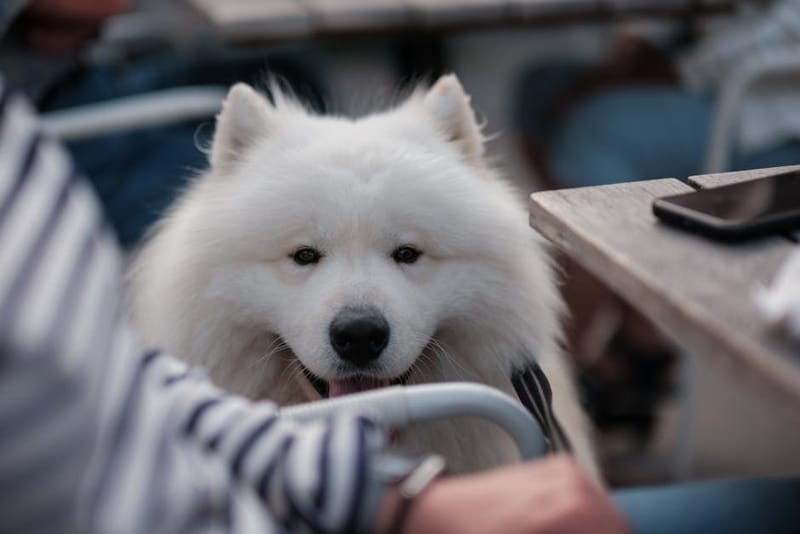
Dog-friendly cafés in the UK are far more common than they used to be - but they're also wildly inconsistent. One branch of a chain will welcome your dog with a water bowl, the next will turn you away at the door. This guide covers the chains with explicit dog policies, the categories of independent café most likely to say yes (garden-centre cafés are the most reliable bet), the apps that let you filter by paw-welcome, and a short etiquette section so the cafés that do welcome dogs stay that way.
Café chains with published dog-friendly policies
Most café chains delegate dog policy to individual branches, which is why experiences vary so much. As of early 2026, only a few have a clear company-wide stance.
Caffè Nero is the standout. Its UK stores have welcomed dogs for years, and the chain has consistently confirmed this on its FAQ pages. Most branches will offer a water bowl, and many display a small dog-friendly sign in the window. This is the closest thing the UK has to a default-friendly coffee chain.
Pret a Manger generally welcomes well-behaved dogs in seating areas. The official position has been positive for some years, but in practice it depends on the branch - busier central-London Prets at lunchtime often discourage dogs simply for crowd-management reasons. Quieter neighbourhood branches are usually relaxed.
Costa Coffee leaves the decision to individual store managers. A large number of branches do allow dogs, particularly outside London, but there is no blanket policy - always ask at the counter. The same applies to most independently-franchised Costa Express and concession sites.
Starbucks UK is the most cautious of the big chains. Dogs are generally not welcomed inside UK stores, though some branches allow them on outdoor terraces. If a Starbucks is your only nearby option, plan for the outdoor seating only.
Greggs takes a similar line to Starbucks - assistance dogs only inside, with takeaway-and-eat-outside the norm for everyone else with a dog.
Because branch behaviour varies, treat any list of dog-friendly chains as a starting point rather than a guarantee. A two-second phone call or a glance at the door for a paw-print sticker saves an awkward conversation at the counter.
Garden-centre cafés - the most reliable bet
If you want a near-100% chance that a café will welcome your dog, head to a garden-centre café. Garden centres have spent the last decade actively courting dog owners, and the cafés inside them have followed.
The big national groups - Dobbies, British Garden Centres, Blue Diamond, Wyevale successors and the many independent country garden centres - overwhelmingly allow dogs in their cafés as part of a wider dogs-welcome ethos across the site. Many provide water bowls, treat jars at the till, and clearly signed dog seating areas. Some run dedicated dog-friendly mornings or 'paws-and-pastries' events.
The reason this works so well: garden-centre customers tend to arrive with cars full of plants, walking boots, and dogs already in tow. Refusing dogs in the café would lose a substantial chunk of the lunchtime trade. Café operators inside garden centres know this, and design accordingly - tiled or hard floors, generous spacing between tables, and a tolerance for the occasional shake-off.
Garden-centre cafés are also a good fit for nervous or under-socialised dogs: the wider site is calm, dog-tolerant, and gives you somewhere to walk laps if your dog gets restless before food arrives.
Independent café-bookshops and lifestyle cafés
Independent cafés are where the experience varies most - but a few patterns help you predict who'll welcome you.
Café-bookshops are very often dog-friendly. The model - a quiet seated space, customers staying for an hour or more with a coffee and a book - pairs naturally with a settled dog under the table. Independent bookshops with cafés in market towns and rural areas tend to be the most relaxed; flagship city-centre branches of national bookshop chains less so.
Climbing-gym, surf-shop and cycling-café 'lifestyle' venues are almost always dog-friendly. The customer base overlaps heavily with dog ownership, and the venues themselves are usually open-plan, hard-floored, and well-ventilated.
Bakery-cafés in rural villages are dependable, especially anywhere with a noticeboard advertising local dog walks or a chalkboard mentioning 'doggy pup-cups'. If staff offer your dog a biscuit unprompted, you've found a regular spot.
City-centre brunch cafés and coffee specialists are the most variable. Some London and Manchester independents go out of their way to welcome dogs (water bowls on every table, branded dog biscuits at the till); others have a strict no-dogs door policy because their tables are tightly packed and their floor is white tile they don't want shaken on. Treat these as 'check first' rather than assume either way.
Apps and tools that filter cafés by dog-friendliness
Three tools will cover most of what you need to find dog-friendly cafés in unfamiliar towns:
Google Maps is the fastest single-source check. Search for 'cafés near me' (or in a destination), open a candidate listing, and scan the recent reviews for the words 'dog' or 'dogs'. Three or four mentions in the last six months is a strong signal - both that dogs are welcome and that other dog-walkers have found the place worth recommending. Photos uploaded by customers often show dogs under tables, which is an even cleaner signal than text.
BringFido maintains a database of dog-friendly venues across the UK and is particularly strong in tourist areas - Cornwall, the Lake District, Norfolk, the Cotswolds. The free filters cover restaurants, cafés, and pubs together; not every venue is up to date, but the curated lists in popular destinations are reliable.
DoggiePedia and Dog Furiendly are two UK-specific directories that lean heavily on user-submitted reviews. They're patchy in coverage but excellent for the regions they do cover well, and Dog Furiendly in particular flags whether dogs are allowed inside, on the terrace only, or only with assistance-dog status.
Combine the three: use Google Maps for any unfamiliar high street, BringFido for holiday destinations, and Dog Furiendly when you specifically want a curated 'dogs welcome inside' list rather than terrace-only.
What to expect: inside, terrace, or assistance-dogs only
When a café advertises itself as 'dog-friendly', it usually means one of three things, and the difference matters.
Dogs welcome inside. The most flexible category - your dog comes in with you, settles under the table or beside your chair, and you can stay for as long as you like in any weather. Garden-centre cafés, café-bookshops, and the most welcoming chains (Caffè Nero, many Prets) sit here.
Dogs on the terrace or outdoor seating only. Common at smaller cafés with limited indoor space, white-tile floors, or food-prep areas close to the seating. Fine in summer; less workable in February. Many UK Costas, all UK Starbucks dog-tolerant branches, and most city-centre brunch cafés that allow dogs at all sit here.
Assistance dogs only. Required by the Equality Act (the 2010 UK law covering assistance dogs in public spaces) 2010 - every UK café must allow registered assistance dogs, even those that don't welcome other dogs. Greggs, Starbucks (most branches), and many specialist food businesses (small bakeries, ice-cream parlours, food-prep-heavy delis) operate at this level.
Reading a café's stance correctly the first time saves the awkward 'oh, sorry, only the terrace' moment at the counter. Look for the paw sticker on the door, water bowl outside, or recent photos of dogs in customer reviews - those three signals together usually mean inside is fine.
Café etiquette with your dog
Dog-friendly cafés stay dog-friendly because dog owners are considerate. The cafés that have introduced 'no dogs' signs almost always did so after one bad incident - a fight between two dogs, a dog jumping at another customer's child, or repeated barking that drove other diners out. Five rules cover almost all of it.
Settle your dog before you order. Walk in, find a table tucked against a wall or in a corner, get your dog into a down on a tucked-in lead before you go to the counter. A settled dog disappears; a wandering one becomes everyone's problem.
Keep the lead short and tucked. A long line or extending lead in a café is a tripping hazard - for staff carrying hot drinks, for other customers, and for your own dog when someone steps on it. A 1.5 m fixed lead, looped under a table leg or your foot, works in any space.
Don't feed your dog from your plate. Cafés that allow dogs are still food businesses, and visible begging-and-feeding from the table is the single biggest reason a manager rethinks the policy. If you want to give your dog a treat, bring something from home and offer it discreetly under the table.
Step out at the first sign of stress. If your dog starts whining, panting heavily, or fixating on another dog, take them outside before it escalates. Most cafés are happy to hold your food at the counter for 10 minutes while you decompress your dog on the pavement.
Pay attention to other customers. Not everyone in a dog-friendly café is a dog person - some are just there for the coffee. Don't let your dog approach other tables uninvited, and accept any 'we'd rather not, thanks' graciously.
What to bring with you
A small kit makes café visits noticeably easier:
- A folded mat or blanket - gives your dog a defined space to settle on, particularly useful on cold tile floors.
- A long-lasting chew or stuffed Kong - keeps your dog occupied while you eat, especially helpful for younger or food-fixated dogs.
- A collapsible water bowl - many cafés provide one but not all do, and a back-up means you don't have to ask.
- Poo bags - not for the café itself but for the inevitable loo break before or after.
- A small towel - for muddy paws if you've come straight from a walk; some cafés keep one by the door, but bringing your own is courteous.
The full packing list for longer trips is in our complete dog travel checklist.
How café-friendliness fits with the rest of a dog-friendly UK day
Cafés are usually one stop in a longer day with the dog - a mid-walk coffee, a post-beach warm-up, or a stop on a longer drive. The companion guides cover the other components of a UK dog day:
- For lunch and dinner with the dog, see our guide to dog-friendly restaurants in the UK.
- For pubs (and the bar-area / dining-room / beer-garden distinction), see dog-friendly pubs in the UK and the regional dog-friendly beer gardens guide.
- For the rest of the day - beaches, walks, attractions - see our UK dog-friendly attractions guide and the destinations index.
What are the most-asked questions?
Are dogs allowed in Caffè Nero?
Are dogs allowed in Pret a Manger?
Are dogs allowed in Costa Coffee?
Are dogs allowed in Starbucks UK?
Are garden-centre cafés actually reliable for dogs?
What does the Equality Act mean for dogs in cafés?
Can I take my dog into a café-bakery or deli?
Is it OK to feed my dog from my plate at a café?
Coffee with the dog is one of the small daily pleasures that the UK has steadily got better at. Caffè Nero set the bar a decade ago; garden-centre cafés cemented it; brunch independents in most towns have followed; and the apps now make finding a paw-welcome venue quicker than choosing one. Treat any single source as a starting point, look for the paw sticker on the door, and remember that the cafés that welcome dogs stay welcoming because the people taking dogs in are the considerate ones.
Heading away with the dog?
Pubs, restaurants, beaches, walks and stays - see the destination guides next.