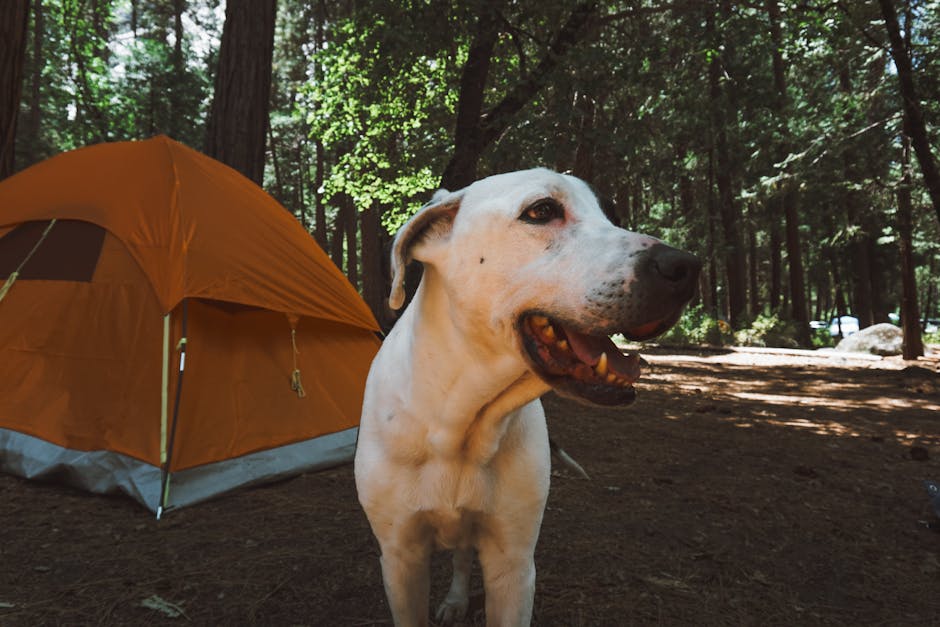
Pet-Friendly Camping and Glamping in the UK: The Complete Guide
Everything you need to plan a brilliant camping or glamping trip with your dog in the UK — top sites, packing essentials, etiquette, wild camping rules, and safety.
There are few holidays as well-suited to dogs as a camping trip. Open fields, woodland trails, fresh air, and the chance to be off-lead in genuinely dog-welcoming places — for many four-legged guests, it's a holiday closer to perfection than any cottage or hotel can manage. And with the UK's enormous variety of campsites and glamping options, from West Country meadows to Highland lochs, there's something for every dog and every owner.
This is the complete guide to dog friendly camping in the UK. We'll cover how to find the best sites, what to pack, what to expect on arrival, the etiquette every dog owner should know, the often-confusing rules around wild camping with dogs, and the safety considerations that keep camping trips happy. Whether you're pitching a one-person tent in Cornwall or booking a luxury bell tent in the Lake District, there's something here for you.
Why Camping with Dogs is Such a Good Idea
The case for canvas and canine
Dogs love camping. They tend to settle far better in a tent than they do in unfamiliar holiday cottages, partly because the smell, sound and rhythm of life around them is genuinely natural — they're outdoors with their pack, and that's enough. There's no slate floor to scrape claws on, no anxious checking of "are dogs allowed on this rug", and very rarely a separation moment when you nip out for milk.
For owners, camping is the cheapest dog-friendly accommodation in the UK by a wide margin. Pitch fees on most sites range from £15 to £35 per night, with most charging only £2-£5 per dog (and many charging nothing at all). Compare that to dog-friendly cottages at £150+ per night plus a £30 cleaning fee per dog, and a week under canvas can cost less than two cottage nights.
Glamping offers a middle path. Bell tents, yurts, shepherd's huts, safari tents and wooden pods give you a real bed, a wood-burner, and (often) electricity, while keeping the close-to-nature feeling that suits dogs so well. Glamping pitches are typically £80-£180 per night — pricier than tent camping but still well below a cottage.
How to Find a Genuinely Dog-Friendly Site
Booking platforms and what to look for
Not every site that says "dogs welcome" is genuinely set up for dogs. Some allow them grudgingly, with strict lead rules, no off-lead areas, and a £10 nightly surcharge that makes you feel they'd rather you hadn't come. Others go out of their way to welcome four-legged guests, with dog-only fields, dog showers, paddling pools in summer, and even on-site walking maps.
Three booking platforms are particularly useful for finding the good ones:
Pitchup is the largest UK aggregator for tent, motorhome and glamping pitches. Its filter system lets you narrow to dog-friendly sites in seconds, and the genuine reviews tend to make clear which sites are properly welcoming. You can also see at a glance whether dogs are allowed off-lead and whether there's an additional charge.
Cool Camping curates a smaller list of independent, design-led campsites — the kind of farm-based, family-run sites where the owner often has their own dogs. Their listings are more editorial and tend to mention specific dog facilities.
Coolstays and Canopy & Stars focus on glamping and unusual accommodation. Both have strong dog-friendly filters and tend to feature properties where dogs are very much welcomed rather than tolerated.
When reading listings, look for these signals: dog-specific facilities (showers, drying areas, fresh water taps), clear off-lead policies, dedicated dog walking fields, and reviews from other dog owners. A site that mentions adders, livestock or river safety in its information is a site that's actually thinking about dogs — not one trying to hide problems.
Top Dog-Friendly Campsites and Glamping Sites Across the UK
Ten favourites by region
These ten sites are consistently rated by dog-owning guests for the quality of their welcome, the walking on the doorstep, and the practical facilities that make camping with dogs straightforward. They're spread across the UK to give you options wherever you're heading.
1. Hollins Farm, Lake District
Family-run site at the foot of Wansfell
Tucked between Ambleside and Troutbeck, Hollins Farm is a small, family-run campsite where dogs are positively encouraged. The pitches are spread across two gently sloping fields with views over the fells, and a beck runs along one edge — popular with dogs for cooling off after a walk. Two short walks lead directly off the site: one up Wansfell, one down to the village pubs.
Pitch types: tent, campervan, small motorhome | Dogs: unlimited, no charge | Off-lead area: designated dog field
2. Coniston Hall Campsite, Lake District
Lakeside camping with direct shore access
On the eastern shore of Coniston Water, this is one of very few UK campsites with direct, unfenced lake access. Dogs can swim from the shore (the southern end has a pebble beach, easier on paws than the rockier northern end), and the campsite has a vast walking field. Facilities are simple but clean. A short cycle path runs to Coniston village.
Pitch types: tent, campervan, motorhome, glamping pods | Dogs: up to 2, £2 per night | Off-lead area: lake shore and marked field
3. Ocean Pitch, Croyde, North Devon
Surf-side camping minutes from a dog-friendly beach
A 2-minute walk from Croyde Bay, Ocean Pitch is a cult favourite for surfers and dog walkers alike. Croyde Beach has a year-round dog-friendly section at the southern end, and the wider area (Saunton Sands, Putsborough, Woolacombe outside summer) gives you a different walk every day. The campsite itself is unfussy and well-spaced, with hot showers, a small shop, and a sea-view deck.
Pitch types: tent, campervan | Dogs: up to 2, £3 per night | Off-lead area: allowed in field outside peak hours
4. Treloan Coastal Holidays, Cornwall
Coastal path camping on the Roseland Peninsula
Pitched directly above Porthcurnick Beach (year-round dog-friendly) and on the South West Coast Path, Treloan is a quiet, family-run site that genuinely loves dogs. Owners often bring their dogs to chat at reception. There's a dog wash station, fresh-water taps near each pitch, and the site is small enough that everyone gets to know each other's dogs. Roseland's quieter coves are a short drive away.
Pitch types: tent, campervan, motorhome, bell tents, yurts | Dogs: up to 2, £2 per night | Off-lead area: beach and field
5. Deepdale Backpackers and Camping, North Norfolk
Coast-path camping with massive dog facilities
On the North Norfolk Coast Path, Deepdale is one of the best-equipped dog-friendly sites in the UK. There's a dedicated dog shower, dog-waste composters, a free dog-walking map, and a list of dog-friendly pubs and cafes within walking distance. The Norfolk Coast AONB is on the doorstep, with miles of dog-friendly beach (Holkham, Brancaster, Wells outside summer) and quiet creek-side walking.
Pitch types: tent, campervan, glamping tipis | Dogs: up to 2, no charge | Off-lead area: designated paddock
6. Upper Booth Farm, Peak District
Working farm camping in the Edale valley
At the head of the Edale valley, Upper Booth is a working hill farm that opens its lower fields to campers. The Pennine Way passes through the site, giving you direct access to Kinder Scout and Jacob's Ladder. Because it's a working farm, there are sheep on adjacent land — so dog control is essential. The off-lead field is well-fenced and dogs are welcome there, but lead use elsewhere on site is non-negotiable.
Pitch types: tent, small campervan | Dogs: unlimited, no charge | Off-lead area: dedicated dog field only
7. Comrie Croft, Perthshire
Forest pitches and Nordic-style katas in Scotland
An hour north of Edinburgh, Comrie Croft is a sustainability-led farm that's been quietly perfecting the dog-friendly camping experience for over a decade. Tent pitches sit in a sheltered birch wood, and a handful of Nordic katas (Lavvu-style canvas tents on raised platforms) offer glamping with a wood-burner. The whole farm is open for walking, and waymarked trails head into the surrounding hills. Comrie village's pubs welcome dogs.
Pitch types: tent, glamping katas, bothies | Dogs: up to 2, no charge | Off-lead area: farmland and forest trails
8. Beecraigs Country Park, West Lothian
Forest-edge camping near Edinburgh
A great option for those who want easy Scottish access without driving deep into the Highlands. Beecraigs sits in a country park with miles of forest trails, a deer park, and orienteering courses you can run with your dog. Pitches are well-spaced and woodland-fringed. The site has a bookable dog-friendly woodland walk pack at reception.
Pitch types: tent, campervan, motorhome, glamping pods | Dogs: up to 2, £3 per night | Off-lead area: designated trails
9. Pencelli Castle, Brecon Beacons
Award-winning Welsh family campsite
Repeatedly award-winning, Pencelli sits at the foot of the Brecon Beacons National Park with the Monmouthshire and Brecon Canal running along its boundary — flat, dog-friendly walking on a hot day. Pitches are immaculately maintained, facilities are exceptional, and dogs are welcomed throughout (except the children's play area). There's a dog-walking field and a stream-side path for cooling off.
Pitch types: tent, campervan, motorhome | Dogs: up to 2, £2 per night | Off-lead area: dog walking field and canal path
10. Loch Ken Holiday Park, Dumfries and Galloway
Loch-side camping in southern Scotland
Loch Ken offers seven miles of freshwater shore for dogs to swim, a private wood with a way-marked trail, and easy access to the Galloway Forest Park — Britain's first Dark Sky Park, which means quiet, wild, and dog-friendly walking with very few visitors. Pitches are loch-view, and there are bell tents and shepherd's huts for those who want a softer landing.
Pitch types: tent, campervan, motorhome, bell tents, shepherd's huts | Dogs: up to 3, £3 per night | Off-lead area: loch shore and woodland trail
Glamping with Dogs: Yurts, Bell Tents and Shepherd's Huts
Comfort under canvas
Glamping has exploded in popularity over the last decade, and with it the number of dog-friendly options. The trick is knowing what kind of glamping suits your dog.
Bell tents and yurts are the most dog-friendly format. Floors are typically wooden or canvas-on-groundsheet (easy to clean), there's plenty of space for a dog bed in one corner, and the door fastens securely. Many yurts have a wood-burner — dogs love the warmth and you'll appreciate it on damp evenings. Look for sites where dogs are explicitly welcomed inside the structure rather than "on the deck only".
Shepherd's huts offer a small but cosy space with a real bed, a wood-burner, and usually a kitchenette. Most are well-suited to one or two dogs that are happy in close quarters. The raised step into a hut can be tricky for elderly or short-legged dogs — check before booking if mobility's a concern.
Safari tents are the largest format — typically two bedrooms, a kitchen and a living area in one canvas structure on a deck. Excellent for families with multiple dogs. Look for hard floors throughout (not soft furnishings only).
Wooden pods sit somewhere between a tent and a chalet. Heating, lighting and a kettle are standard. They tend to be the easiest format to keep clean, but the lack of a wood-burner means a less atmospheric stay.
A general rule: if a glamping site lists "up to 2 well-behaved dogs" with no extra fee and provides a dog bed or blanket, you're in safe hands. If they charge more for dogs than they would for a child, treat it as a yellow flag.
Wild Camping with Dogs in the UK
Where it's legal, where it isn't, and how to do it well
Wild camping rules in the UK are confusing because they're different in each nation, and the law doesn't always match what's tolerated in practice.
Scotland is the dog-camper's paradise. Under the Land Reform (Scotland) Act 2003 and the Scottish Outdoor Access Code, you have a statutory right of responsible access to most land — including the right to wild camp, and to bring your dog. The key word is "responsible": camp out of sight of houses and roads, leave no trace, don't camp in groups larger than two or three tents, and avoid enclosed fields with livestock.
For dogs, the rules are clear: keep dogs under close control near livestock, on lead during the bird breeding season (April-July) on moorland, and always away from grouse moors during the shooting season. Loch shores, glens and forest edges are perfect — but always check the East Loch Lomond byelaws (March-September), where wild camping is restricted in heavily-used zones.
England and Wales do not have a general right to wild camp. Almost all land is privately owned, and wild camping requires the landowner's permission. There is one notable exception: parts of Dartmoor National Park have a right to backpack-camp, recently re-confirmed in court — and dogs are permitted under the same access rules (on lead near livestock, off the moors during ground-nesting bird season).
Beyond Dartmoor, "stealth" wild camping does happen — pitching late, leaving early, leaving no trace — but it's technically a civil trespass everywhere else. If you're considering it with a dog, the additional risk is that a barking dog will give you away long before sunrise.
Northern Ireland is similar to England — wild camping requires permission, with no general public right.
In practice, most owners who want a wild-camping experience with their dog head to Scotland. If you're sticking to England and Wales, look for "near-wild" alternatives — small farm campsites where you have a whole field to yourselves, or backpacker-only sites in the National Parks.
What to Pack for Camping with Your Dog
The essential kit list
A good packing list is the difference between a relaxed trip and one where you're improvising in the dark. Here's what experienced dog campers consider essential:
Long line or tether (5-10m) — invaluable for keeping dogs at the pitch while you're cooking or eating, without restricting them to a short lead. A spiral ground stake gives you a fixed anchor.
Collapsible water bowl and a non-spill travel bowl — one for the pitch, one for walks. Dehydration is the most common dog issue on summer trips.
Dog bed or familiar blanket — even if you bring a thicker pad, a dog bed they recognise from home settles them faster on the first night.
Towel (microfibre travel towel) — tents and wet dogs are not friends. A microfibre towel takes a fraction of the space of a regular bath towel.
Vet bag — bandages, tweezers (for ticks and thorns), antiseptic wipes, saline pouches for eye-rinsing, paw balm, and any prescription medication. A copy of your vet's number and your dog's microchip details. If you're crossing into Europe via the Pet Travel Scheme, take the AHC paperwork too.
ID tag with your mobile and the campsite name — UK law requires a collar tag with the owner's name and address, but a tag with your live mobile number and the campsite name (added with a luggage label or a second tag) is invaluable if your dog goes missing.
Poo bags (and a small dry-bag to stash used ones until a bin) — biodegradable bags break down faster but don't leave them in the bag indefinitely.
Tick remover (O'Tom or similar) — ticks are abundant in moorland, woodland and bracken. Check your dog daily and remove ticks promptly with a proper hook, not tweezers.
Paw balm — for hot tarmac in summer, salt and grit on coastal trails, and after long fell walks.
A reflective coat or LED collar light — campsite paths are dark, and a glowing dog is a safe dog.
Treats and a familiar food — don't switch food during a trip; pack enough of their normal kibble plus an extra day's worth in case of delays.
Campsite Etiquette for Dog Owners
How to be the kind of guest sites love to welcome back
A small minority of badly-behaved owners are responsible for most of the rules that constrain the rest of us. Following a few simple etiquette principles keeps sites welcoming dogs — and gets you invited back.
Lead rules vary, so always check on arrival. Most UK campsites require dogs to be on a lead at all times within the camping field, with off-lead access only in designated areas. Some allow off-lead in quiet hours. If in doubt, lead on.
Never leave a dog alone in a tent or campervan unattended. Dogs bark when they hear unfamiliar noises, and a barking dog at 7am will not endear you to neighbours. If you need to pop out, take the dog or arrange dog-sitting.
Pick up every poo, every time. This is the single biggest complaint sites have about dog owners. Carry bags at all times — including on walks straight from your tent at 11pm. Keep a roll attached to the lead.
Be aware of livestock on adjacent land. Many UK campsites are working farms or border them. Sheep-worrying is a serious offence, and a dog that runs at livestock can legally be shot by the farmer. Keep dogs under close control near any field with animals — even cows, which can charge with dogs in tow.
Manage barking and noise. A whining dog at 6am affects every tent within 50 metres. If your dog is anxious in a new environment, take them for a walk before settling in for the night, and bring a familiar bedding setup.
Respect fire safety. Open fires are prohibited on most sites, and even raised fire pits have safety distances. Never leave a fire unattended with a dog nearby — singed paws are a common camping injury.
Keep food secured. Wildlife will visit your pitch overnight. So will your dog. Storing food in airtight containers (and inside your vehicle if you have one) protects both.
Camping Safety: What Every Dog Owner Should Watch For
The hazards specific to UK camping
Ticks are the single most common health issue dogs encounter while camping. Active March to October across most of the UK, they cluster in long grass, bracken, and heather. Use a vet-prescribed tick preventative through the camping season, check your dog every evening (paws, armpits, ears, neck, belly), and remove any ticks within 24 hours with a proper tick hook. Watch for signs of Lyme disease (lethargy, lameness, fever) for several weeks after a bite.
Adders are the UK's only venomous snake and active April to October. They're shy and bite only when surprised — the most common scenario is a dog nosing into a sun-warmed clump of heather. Bites cause rapid swelling and pain; treat as a veterinary emergency. Keep dogs on lead in known adder areas (much of Dartmoor, the New Forest, parts of the Peak District and Scottish Highlands), especially in spring.
Sheep, cattle and other livestock are the biggest non-medical risk. The legal and ethical position is unambiguous: keep dogs on lead near livestock. Cows with calves are particularly defensive and have killed walkers — if you find yourself in a field with cattle and they approach, drop the lead and let your dog escape rather than holding tight.
Water hazards. Lake and river swims are a camping highlight, but think about flow, currents, and what's downstream. Avoid blue-green algae (most common in still water in late summer — looks like blue-green paint or scum on the surface). Don't let dogs drink from stagnant water or seawater.
Heat. Tents become greenhouses in summer; a closed bell tent can hit 35C by 9am. Pitch in shade where possible, vent the tent overnight, and never leave a dog inside a tent or vehicle on a sunny day. Plan walks for early morning and evening, avoid hot tarmac (test with the back of your hand for 5 seconds), and carry plenty of water.
Adders, sheep, ticks, water and heat form the holy quintet of UK camping risks. Manage those five and you've covered 95% of what can go wrong.
Final Tips for a Smooth Trip
The little things that make a big difference
Arrive in daylight on the first day if you can — pitching a tent in the rain at dusk with an excited dog testing every guy line is a memorable experience for the wrong reasons. Practice setting up your tent in the garden first if it's new — your dog needs to learn what "settle" means inside the structure, and a stress-test before the trip is much easier than learning together on site.
For more practical advice on travelling with dogs in the UK, our other guides cover dog-friendly cottages in the Lake District and Wales, dog-friendly beaches in Devon and Cornwall, and exploring the Peak District with a dog. The fundamentals — lead control around livestock, knowing seasonal restrictions, and packing a vet bag — apply just as much to a cottage trip as to a camping one.
Above all, slow down. Camping is the best holiday a dog can have because it's almost entirely on their terms — outdoors, with their pack, on grass, with their nose to the wind. Bring a deck chair, a flask, a long lead, and let the trip unfold. They'll love it. So will you.