Dog-Friendly Lake District: The Complete Guide for 2026
Dog-friendly Lake District guide: best walks, lake ferries that carry dogs, top pet-welcoming pubs and cottages, and the rules every owner should know.
The Lake District is probably the most dog-friendly stretch of countryside in England — 912 square miles of fells, valleys and lakes where pubs serve dogs before they serve their owners, most cottages welcome four-legged guests, and the boats that crisscross Windermere, Ullswater and Coniston will carry your dog for free or for the price of a pack of crisps. This is the practical, route-by-route, lake-by-lake guide we'd hand a friend planning their first trip up.
Why the Lake District works so well for dogs
Three things make the Lakes unusually good for dog owners. First, the density: in a small area you can find easy lakeside paths, gentle woodland circuits and steeper fell walks all within a 15-minute drive of each other, which matters when your dog has a different fitness level than yours. Second, the operators have caught up — Windermere Lake Cruises, Ullswater Steamers, Coniston Launch and the Steam Yacht Gondola all welcome dogs, and most pubs in the central villages have water bowls and treats behind the bar before you've ordered a pint.
Third, the National Park is well-trodden for dog walkers. The Lake District National Park Authority publishes clear Countryside Code guidance, and the National Trust — which manages much of the open country and many of the gardens — has dedicated dog-friendly pages for each property. You don't have to guess.
How the park is laid out (and where to base yourself)
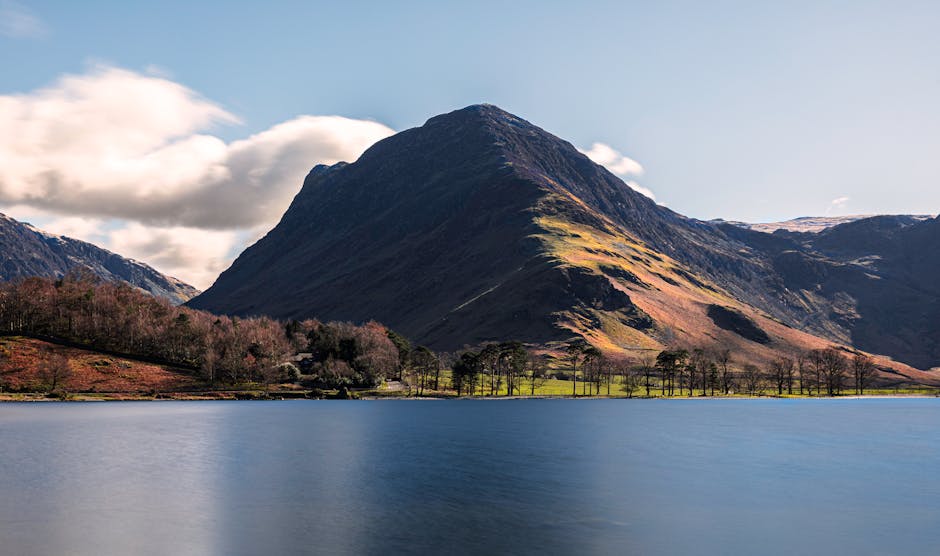
It helps to think of the Lake District in five rough zones. The Central Lakes — Windermere, Ambleside, Bowness, Grasmere — is the tourist hub: most accommodation, most pubs, most footfall, easiest train access from Oxenholme. The Northern Lakes centres on Keswick, Borrowdale and Derwentwater, with the most dramatic fell scenery and the famous Dog & Gun pub. The Western Lakes — Buttermere, Crummock Water, Loweswater, Ennerdale — is quieter, less commercial and arguably the best place to base if your dog wants space without crowds.
The Eastern Lakes hold Ullswater (often called the most beautiful of all the lakes) and Pooley Bridge. The Far Eastern fells around Haweswater are remote, scenically extraordinary and not where you'd take a dog who hasn't done much fell walking before. For a first dog-friendly trip, Keswick or Ambleside are the safest bases; once you've done one, the western valleys reward you.
Best dog-friendly walks (by difficulty)
The Lake District has hundreds of viable dog walks, but a sensible shortlist for first-time visitors looks like this:
A wide, mostly level circular path around a small tarn surrounded by woodland. Owned by the National Trust. Probably the gentlest accessible dog walk in the park — buggy-friendly surface, regular benches, dogs can come off lead on the path itself.
A flat lakeside loop around Buttermere with a short stretch of tarmac path. Genuinely accessible for older dogs and one of the most photogenic walks anywhere. Dog and Fox pub at the start/finish in Buttermere village.
An open-fields and woodland walk along Coniston Water's quieter west side. Combine it with the Coniston Launch back to the village for the dog (50p).
An NT-managed waterfall walk with optional extension up to the Gowbarrow fell. Wide paths, well-signed, ferry connection from Aira Force Pier on Ullswater.
A proper but short fell walk above Derwentwater. Steep ascent, scrambly in places but nothing technical. Walkable both up and down; good first fell for fit dogs.
Only for owners with experienced fell-fit dogs. Long, exposed, often boggy at the top. Avoid in summer heat, in mist, and at weekends in peak season — too busy and too risky for many dogs.
For ten more route-by-route options including elevation profiles and parking notes, see our best dog walks in the Lake District guide.
The lakes you can visit by ferry with your dog
One of the best things about the Lake District for dog owners is that you don't need to walk in straight lines. The boats let you build linear walks — bus or drive to one end of a lake, walk the shore, ferry back. Every major operator takes dogs:
| Feature | Best Overall Windermere Lake Cruises | Ullswater 'Steamers' | Coniston Launch | Steam Yacht Gondola (NT) | Keswick Launch |
|---|---|---|---|---|---|
| Price | — | — | — | — | — |
| Rating | — | — | — | — | — |
| Dogs charged | Free | £1 | 50p | Yes — small charge | ✓ |
| Lead required | Yes, on board | ✓ | ✓ | ✓ | ✓ |
| Routes | Lakeside · Bowness · Ambleside · Brockhole | Glenridding · Howtown · Pooley Bridge · Aira Force Pier | Coniston Pier · Torver · Brantwood · Monk Coniston | Coniston Pier · Brantwood | Derwentwater circular, seven jetties |
| Best for | Linear walks with a return ferry | Aira Force + Gowbarrow circuit | Walk to Torver, ferry back | A heritage extra on a Coniston day | Hop-on-hop-off Catbells + Borrowdale |
Ullswater Steamers keeps water bowls outside the main pier houses, which sounds trivial but matters in August. Windermere's free policy is the most generous in the UK for a major lake ferry operator and is one of the reasons the central Lakes work so well as a car-free destination.
Dog-friendly pubs and food stops
Almost every pub in the National Park welcomes dogs, but a smaller list goes further: dogs in every bar area (not just the boot room), water bowls and treats out by default, and ideally a fire to flop in front of after a wet walk. Reliable picks include:
The Dog & Gun, Keswick
The most-recommended dog pub in the Lakes. Famous Hungarian goulash, dogs on the bar, treats freely given. Walk-in only in peak season — they don't take bookings.
The Wainwright, Keswick
Sister-feel to the Dog & Gun a few minutes' walk away. Lake & Fell beers on tap, dog-welcoming throughout, good fall-back if the Dog & Gun is rammed.
The Drunken Duck, Barngates
Higher-end gastropub above Ambleside with a bedroom side. Dogs in the bar and many of the rooms; ales brewed on site at Barngates Brewery.
Masons Arms, Strawberry Bank
Family-run inn with two holiday cottages and five bedrooms attached. Dogs allowed in bar and accommodation; outdoor terrace with valley views.
Pooley Bridge Inn, Ullswater
Ideal post-walk stop at the north end of Ullswater. Welcomes dogs in the bar, fire-warmed in winter.
Buttermere village pubs
The Bridge Hotel and The Fish Inn at the start/end of the Buttermere circuit both welcome dogs — a useful pairing for a circuit walk that leaves you on the right side of a pint at the end.
For sit-down lunches, the National Trust's tea rooms at Wray Castle, Stagshaw Garden and several others allow dogs on outdoor terraces. In Ambleside, Apple Pie Café has an enclosed outdoor seating area that works well for dogs in dry weather.
Where to stay: cottages, pubs with rooms, and camping
Three distinct categories of pet-friendly accommodation work in the Lakes:
Cottages are the most common. Sykes Cottages and Lakeland Retreats both maintain large pet-friendly inventories and are recommended in community discussion specifically because they explicitly mark which properties have enclosed gardens, lake access, or walks-from-the-door. Coppermines in Coniston runs its own portfolio of dog-welcoming properties focused around the Coniston valley.
Pubs with rooms are an underrated option. The Drunken Duck, Masons Arms and several inns in Patterdale and Buttermere have a handful of rooms attached to a working pub kitchen, which solves the where-to-eat problem on a wet evening.
Camping and glamping works in the warmer months. Inside Out Camping at Seatoller in Borrowdale runs yurts on a bus route from Keswick and welcomes dogs; there are also several Camping & Caravanning Club sites and farm campsites in the western valleys that allow dogs.
For a curated shortlist of cottages with secure gardens and a walk from the doorstep, see our pet-friendly Lake District cottages guide.
When to keep your dog on a lead (and when it's fine to let them off)
The simple rule the Lake District National Park Authority asks visitors to follow is: dogs under close control at all times, and on a lead in any of these conditions:
Off-lead is generally fine on enclosed woodland paths, well-fenced lakeside paths (lots of Buttermere and Derwentwater qualifies), and high open fell where livestock is clearly absent — but only if your recall is genuinely reliable. The conservative default in the Lakes is on-lead unless you have a specific reason.
Getting there without a car
The Lake District is one of the few rural areas of the UK that genuinely works as a car-free destination, including for dog owners. The Oxenholme to Windermere rail branch puts you in the central Lakes in 20 minutes from the West Coast Main Line. From Windermere station, the 555 bus loops through Ambleside, Grasmere and Keswick; the 599 'open-top' bus runs the Bowness-Windermere-Ambleside-Grasmere axis in summer. Dogs travel free on local buses and trains in Cumbria.
For the eastern lakes, Penrith station feeds the 508 to Pooley Bridge, where you can pick up Ullswater Steamers down to Glenridding. The west coast (Whitehaven, Cockermouth) is connected by rail too but bus connections to the inner valleys are thin — these areas reward having a car or paying for a taxi for the last leg.
What to pack for a dog in the Lakes
The Lakes will weather you and your dog hard. Beyond standard kit, three things are non-negotiable:
For day walks: a collapsible water bowl, treats with high-value backup (recall payment around sheep), and an extra towel in a dry bag for the car ride home. For longer fell walks: dog booties if your dog isn't used to scree, especially for descents from Catbells, Scafell or the high Helvellyn ridge.
Our complete dog travel checklist covers the full packing list for multi-day trips.
Frequently asked questions
Is the Lake District dog-friendly?
Can dogs go on Windermere Lake Cruises?
Do I need to keep my dog on a lead in the Lake District?
When is lambing season in the Lake District?
Where should I stay with a dog for the first time?
Can dogs come off lead on the fells?
Is the Lake District accessible without a car?
Plan the rest of the trip
See our route-by-route walks guide and our shortlist of cottages that get dog-friendly right.