Dog-Friendly Norfolk Coast 2026: Holkham, Wells, Brancaster
Norfolk Coast dog-friendly guide 2026: Holkham, Wells, Brancaster, Cromer and Sheringham beaches, the Coast Path, pubs, seasonal access rules.
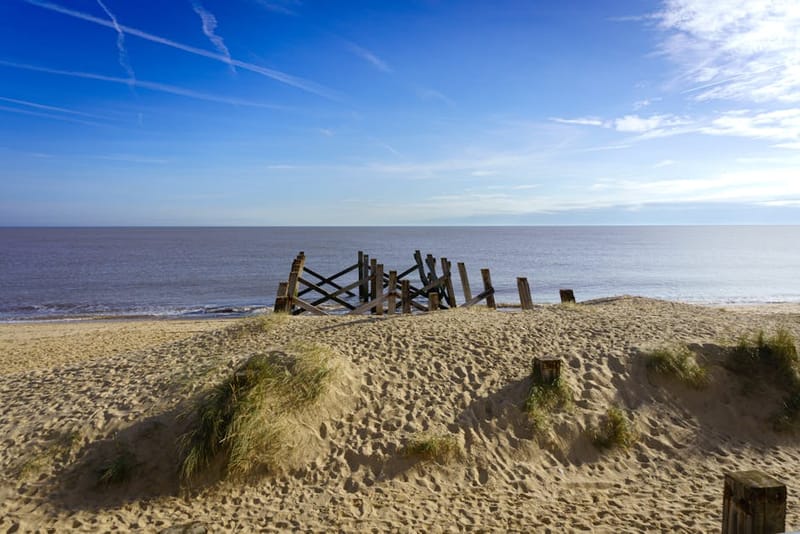
Norfolk's North Coast is one of the most under-rated dog-friendly stretches in the UK. Where Cornwall's beaches funnel tourists into a handful of hot spots and Dorset's chalk coast turns busy fast, Norfolk runs for forty-plus miles of broad sandy beaches, salt marshes, pine-backed dunes, and quiet seafront villages - and most of it is properly dog-friendly. This guide covers the five flagship beaches (Holkham, Wells, Brancaster, Cromer, Sheringham), the walking that links them via the Norfolk Coast Path, the pubs worth booking, and the seasonal access rules every owner should know before driving up.
Practical note up front: Norfolk's North Coast is a designated Area of Outstanding Natural Beauty, much of it managed by the Holkham Estate, the National Trust, and Natural England. Beach access rules vary by parish council, and most working beaches enforce some kind of seasonal dog control between May and the end of September. The lifeguarded swim zones at Wells, Cromer, and Sheringham ban dogs from Easter until October. The good news: even in those areas, year-round dog access is available immediately adjacent, so you are rarely far from a legal off-lead stretch.
Why is Holkham the year-round flagship Norfolk dog beach?
Holkham is the dog-friendly destination on the Norfolk Coast. A two-mile crescent of pale sand backed by Corsican pine, salt marsh, and dunes, with no seasonal ban on dogs and ample parking at Lady Anne's Drive (managed by the Holkham Estate; pay-and-display, modest fees). Dogs are permitted off-lead across the whole beach, with the standard caveat that ground-nesting birds inhabit the dunes between April and August - so during nesting season keep dogs out of the dune slacks themselves and on the open sand instead.
The beach is enormous, even at peak August it doesn't feel crowded once you walk a couple of hundred metres from the pinewood path. The sand stays firm at low tide for long open runs, and there's a freshwater lagoon (Holkham Gap) ideal for a dog rinse before the drive home. Be aware that at very low tide the sea pulls back nearly a kilometre - if your dog is a swimmer, time the visit around mid-tide for the best water access. There are no facilities directly on the beach; the nearest cafes and toilets are at Lady Anne's Drive entrance and at the Lookout cafe at the eastern end of the pinewood.
If you can only do one Norfolk beach with a dog, Holkham is the pick.
What can you do with a dog at Wells-next-the-Sea?
Wells beach sits at the end of a kilometre-long boardwalk through pine forest, opening onto a wide sandy bay with the iconic colourful beach huts on the western edge. Dogs are restricted from the central lifeguarded zone from 1 May to 30 September each year, but the western end (towards Holkham, past the beach huts) and the far eastern end (towards Stiffkey) are dog-friendly year-round. In practice, most owners walk the boardwalk, turn right at the dunes, and have an off-lead beach experience indistinguishable from Holkham.
The town itself is dog-welcoming: the working harbour is a pleasant stroll, the Wells crab and chips shacks tolerate dogs on outdoor tables, and parking is easy on the quay (also pay-and-display). The Albatros bar (moored historic ship) and the Pinewood cafe on the boardwalk both welcome dogs. A useful tip: from Wells you can park at the quay, walk west along the marsh path past Holkham National Nature Reserve, and end up on Holkham beach without the higher-cost Lady Anne's Drive parking - it's about a forty-minute walk each way through some of Norfolk's most photogenic salt marsh.
What can you do with a dog at Brancaster?
Brancaster beach is the westernmost of the flagship dog beaches, accessed via a single road that ends at a beach car park (pay-and-display; small but rarely full out of peak August). The beach is huge at low tide - a vast expanse of firm wet sand - and dogs are welcome off-lead. The west end is bordered by the Royal West Norfolk Golf Club, so keep dogs east of the marker posts to avoid the course. Tide times matter at Brancaster: a fast incoming tide can cut off the western sand spit and the wreck of the SS Vina (an offshore landmark that gets buried at high water).
Adjacent Brancaster Staithe is a working creek with one of the best pubs on the coast (The Jolly Sailors and The White Horse, both dog-friendly in the bar areas). The National Trust manages the dunes at Brancaster and asks dogs to stay on-lead through the dune areas during the April-August ground-nesting season. The Norfolk Coast Path runs through Brancaster Staithe and links west to Thornham and east to Burnham Deepdale - both worth half a day if you base yourself here.
What can you do with a dog at Cromer and Sheringham?
Cromer is the largest of the seaside towns on the east stretch and is more developed than Holkham or Wells - Victorian pier, sea-front amusements, regular crab stalls. Dogs are banned from the central beach (between the lifeguard flags) from Good Friday to 30 September. Either side of the central zone, however, dogs are welcome year-round: the eastern beach below the cliffs runs all the way to Overstrand and is one of the longest off-lead stretches on the coast. To the west, the beach past the pier links across to the Norfolk Coast Path which climbs the cliff toward Sheringham.
Sheringham follows the same pattern - dogs banned from the central swim zone Easter to October, but welcome year-round either side. The town itself is compact and dog-friendly; most cafes have outdoor seating where dogs are explicitly welcomed. The cliff-top walk between Cromer and Sheringham (about four miles) gives big sea views, plenty of sheep-free grazing for off-lead time on the open clifftop, and runs past Sheringham Park (National Trust, dogs on leads in the rhododendron gardens, off-lead on the woodland trails). For a longer walk, push on to Weybourne or take the North Norfolk Railway steam train back - well-behaved dogs travel free in carriages.
Is the Norfolk Coast Path dog-friendly?
The Norfolk Coast Path runs 84 miles from Hunstanton in the west to Hopton-on-Sea in the east, taking in every village covered above. It joins the Peddars Way at Holme-next-the-Sea (which adds another 46 miles inland) so the combined route is one of England's longest National Trails - and one of the few that is dog-friendly end-to-end without seasonal closures.
The two most rewarding sections for a day-hike with a dog: Burnham Overy Staithe to Wells (about six miles via the dunes and Holkham National Nature Reserve, mostly off-lead, finishing in time for crab and chips at the Wells quay); and Sheringham to Cromer (about four miles via the cliffs, with the option of a steam-train return). For families with smaller dogs, the Brancaster Staithe to Burnham Deepdale section (about three miles, mostly flat, mostly off-lead) is the gentlest entry point. Cattle graze the marsh sections from spring to autumn so dogs should be on-lead through grazing land; signs are well-marked.
Which Norfolk pubs genuinely welcome dogs?
Norfolk's coast is dense with dog-friendly pubs - far more than this list captures - but these are the destination picks worth planning around:
- The Rose & Crown, Snettisham - widely regarded as the best dog-friendly gastropub on the West Norfolk Coast. Dogs welcome throughout the bar and most of the dining areas. Excellent local ales and a wood-fired oven; booking essential for weekends.
- The Hoste, Burnham Market - a Burnham institution, the bar and one of the two dining rooms allow dogs. Smart-casual feel; the pet welcome includes water bowls and a dog menu.
- The Jolly Sailors, Brancaster Staithe - the local pub on the harbour. Stripped-back, no-fuss food, dogs in the bar.
- The White Horse, Brancaster Staithe - a step up the gastro-scale from the Jolly Sailors; dogs in the bar but the dining conservatory is people-only.
- The Globe Inn, Wells-next-the-Sea - on the green at Wells, dog-friendly throughout the bar, walkable from the quay.
- The Crab and Boar (Hoveton) - inland on the Broads side, but worth the detour if you are basing a stay further south. Dog-friendly in the bar and on the terrace.
- The Lifeboat Inn, Thornham - one of the oldest pubs on the coast, with a quiet front garden where dogs are welcome.
A good rule of thumb on the Norfolk Coast: assume the village local welcomes dogs in the bar but ring ahead if you want dogs at a dining table. Most kitchens are happy, but some keep the formal restaurant dog-free for allergy reasons.
What changes for dogs on Norfolk beaches between May and September?
Every major Norfolk beach lifeguarded in summer enforces a seasonal dog control zone, but the exact dates and boundaries vary. Here is the cheat sheet for 2026:
- Holkham - no seasonal dog ban anywhere on the beach. Off-lead permitted year-round. Avoid the dune slacks April-August (nesting season).
- Wells - central lifeguarded zone closed to dogs 1 May to 30 September. West and east ends of the beach remain dog-friendly all year.
- Brancaster - no seasonal closure, but dogs on-lead through the National Trust dune areas April-August.
- Cromer - central beach (between marker posts at the pier zone) closed to dogs Good Friday to 30 September. East beach (toward Overstrand) and west beach (toward Sheringham Park) remain open year-round.
- Sheringham - central swim zone closed to dogs Easter to 30 September. Either end of the beach remains open.
Cattle and sheep graze the marsh and clifftop areas between April and October. Where you see Belted Galloways, Highland cattle, or sheep flocks (often on the National Trust and Natural England signage), dogs should be on a lead and given a wide berth - cows with calves can react unpredictably even to a calm, on-lead dog.
Where can you stay with a dog on the Norfolk Coast?
The hotel options on the Norfolk Coast skew toward boutique, inn-format, and holiday-cottage rather than chain hotels. Most pubs in the list above offer rooms (The Hoste, The White Horse, The Rose & Crown, The Lifeboat Inn) and welcome dogs in the rooms as well as in the bar. For self-catering, Holkham Estate cottages and the holiday-let stock around Burnham Market and Wells include a high share of dog-friendly properties - check the property listing for the explicit pet policy rather than relying on a tick-box filter, since pet fees and breed-size limits vary widely.
If you are coming for a long weekend and want one base for the whole coast, Burnham Market or Wells put you within fifteen minutes drive of every beach mentioned above. For a quieter base, Brancaster or Cley-next-the-Sea trade some restaurant choice for emptier morning walks. We cover specific properties on individual hotel review pages as they come into our coverage; bookmark the Four Legged Guests Norfolk hotels listing as we build it out.
If this guide has you planning a wider UK trip with the dog, the same combination of beach access + dog-friendly pubs + coast-path or walking-route density shows up in several other regions worth knowing about:
- Brighton & Sussex Coast - Brighton, Hove, Seaford, Birling Gap, Eastbourne, Hastings, Camber Sands; chalk cliffs and the South Downs Way.
- North Yorkshire Coast - Whitby, Robin Hood's Bay (year-round off-lead), Scarborough, Filey; the Cleveland Way.
- Pembrokeshire Coast - Tenby, Newgale Sands, Barafundle, Whitesands; 186 miles of dog-friendly Coast Path.
- Edinburgh - Standout dog-friendly Scottish city base; Holyrood Park access from multiple central hotels.
- Lake District - Keswick, Borrowdale, Windermere, Penrith; UK's largest National Park.
- Yorkshire Dales - Leyburn, Middleham, Settle; dense footpath network and inn-with-rooms density.
- Devon Riviera - Torquay, Paignton, Brixham; sheltered south-coast bay with mild micro-climate.