UK to France With a Dog (2026): Ferry vs Le Shuttle
Taking a dog UK to France in 2026? Compare Eurotunnel Le Shuttle vs ferry crossings, decode the AHC paperwork, and plan a smooth round trip.
Post-Brexit travel to France with a dog is straightforward once the paperwork is sorted - the choice between Eurotunnel Le Shuttle and a cross-channel ferry comes down to time, cost, and how your dog handles long journeys. Le Shuttle (the Folkestone to Calais car-train service) is the fastest option at roughly 35 minutes platform to platform. Ferries take longer but open up routes into Caen, Cherbourg, St Malo and Roscoff that put you closer to Brittany, Normandy or south-west France without a long French motorway drive.
This guide compares both options, explains the paperwork, and walks through what actually happens on travel day - from check-in at Folkestone or the ferry port through to your first French motorway services.
What paperwork does a UK dog need for France?
Three things are non-negotiable before any UK to France trip with a dog:
- An ISO-compliant microchip implanted before the rabies vaccination. The order matters - a rabies shot given before a microchip is implanted does not count.
- A valid rabies vaccination, with at least 21 days between the primary shot and travel. Boosters keep the protection live for as long as your vet's certificate states.
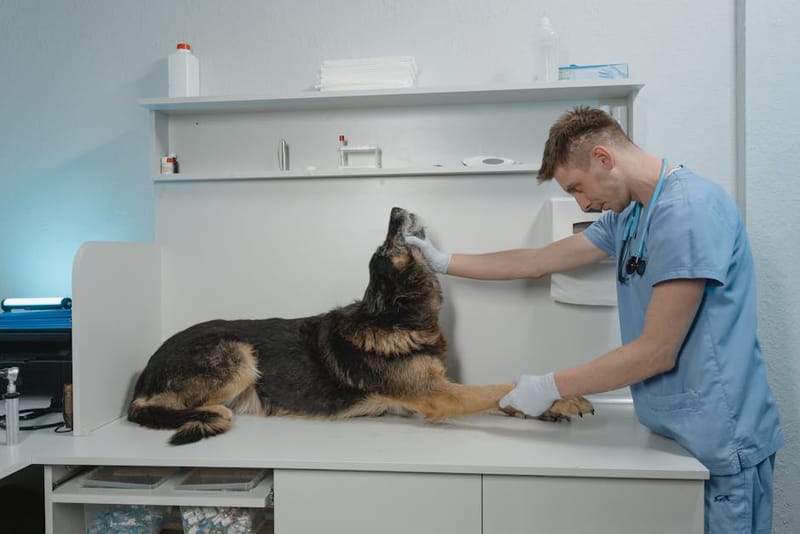
- An Animal Health Certificate from an Official Veterinarian. The AHC replaces the old EU pet passport for UK residents and confirms the microchip and rabies status. It must be issued within 10 days of your travel date - get the appointment booked the same week you make the ferry or Le Shuttle reservation.
Tapeworm treatment is not required for travel into France, but you will need it for the return leg (more on that below). The full Pet Travel Scheme rules are published on gov.uk and updated when regulations change.
How does Eurotunnel Le Shuttle compare to a ferry?
Eurotunnel Le Shuttle is a car-train: you drive onto a carriage at the Folkestone terminal, stay with your car for the crossing, and drive off at Calais Coquelles around 35 minutes later. Dogs travel in the car with the family throughout - no separate booking, no kennels, no car-deck visits. Up to five pets per vehicle are accepted. There is a dedicated pet exercise area at both terminals.
Cross-channel ferries work differently. On the short Dover routes (P&O and DFDS to Calais or Dunkirk, around 90 minutes to two hours), most operators ask dogs to stay in the car on the vehicle deck for the crossing, with kennel cages available as an upgrade. On longer routes (Brittany Ferries from Portsmouth, Poole or Plymouth, three to 11 hours), dog-friendly cabins are usually available - your dog comes upstairs to a cabin with you rather than spending the crossing on the car deck.
Which ferry routes carry dogs to France?
Four operators run UK to France ferries that accept dogs. Routes and policies are updated by the operators - always confirm at booking - but the broad picture has been stable for several seasons:
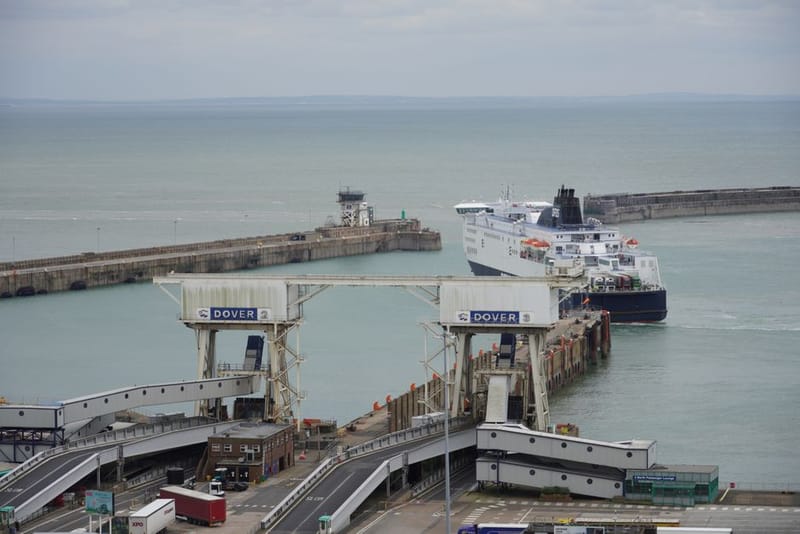
- P&O Ferries - Dover to Calais. Around 90 minutes. Dogs stay in vehicles on the car deck (foot-passenger and motorhome pets get kennel allocation). No deck access during the crossing.
- DFDS - Dover to Calais and Dover to Dunkirk. Around two hours. Dogs travel in vehicles; check-in includes a pet-deck arrangement and DFDS publishes pet-friendly route notes per crossing.
- Brittany Ferries - Portsmouth to Caen, Cherbourg or St Malo; Poole to Cherbourg; Plymouth to Roscoff. Three to 11 hours depending on the route, with overnight options. Dog-friendly cabins, on-deck walking areas (where the ship's design permits), and kennel options. Routes drop you into Normandy or Brittany directly.
- Condor Ferries - via the Channel Islands (Poole or Portsmouth to Jersey or Guernsey, then St Malo). Useful if a stopover in the Channel Islands is part of the trip; otherwise the routing adds time.
Brittany Ferries' dog-friendly cabin inventory is limited and sells out months ahead for school holidays - if a long overnight crossing is part of your plan, book it before booking the AHC appointment.
How long does each option actually take?
Crossing time is only one component. Add check-in, terminal processing, and the road journey at each end:
- Le Shuttle (Folkestone-Calais) - 35 minutes platform to platform. Add 30-45 minutes check-in and 10-15 minutes terminal exit. Total terminal-to-motorway: around 90 minutes.
- Short ferry (Dover-Calais/Dunkirk) - 90 minutes to two hours sailing. Add 45-60 minutes check-in and 15-20 minutes vehicle deck disembark. Total: around three hours.
- Mid-range ferry (Portsmouth-Cherbourg/Caen day sailing) - around four to six hours sailing. Add 60 minutes check-in. Total: roughly six to seven hours.
- Overnight ferry (Portsmouth-St Malo, Plymouth-Roscoff) - 9 to 11 hours. You sleep through most of it. Total: most of a night plus 60-90 minutes either side.
For Paris or northern France, Le Shuttle plus a French motorway leg is almost always the fastest option. For Brittany or western Normandy, an overnight Brittany Ferries crossing can save four to five hours of driving each way and arrives rested.
How much does each option cost?
Headline fares move with season, day of week, and booking lead time, so treat any specific number with caution. The structural pattern is:
- Le Shuttle: car fare plus a per-pet supplement (recent supplements have sat in the £20-£35 each-way range per pet, but the operator updates seasonally). Up to five pets per vehicle.
- P&O / DFDS short ferries: car fare plus a per-pet supplement, broadly comparable to Le Shuttle, sometimes lower out of season.
- Brittany Ferries long crossings: car fare plus dog cabin or kennel upgrade. Dog cabins carry a meaningful premium (typically a few tens of pounds each way) and limited inventory.
For a same-day Dover-Calais turnaround, the short routes are usually cheapest. For a longer holiday in Brittany or south-west France, the diesel and overnight hotel savings of an overnight ferry can offset the higher headline fare. Run both options through the operators' price quotes for your dates before booking.
What happens on the day of travel?
Arrive 60-90 minutes ahead
Both Le Shuttle and ferry operators recommend arriving at least 45-60 minutes before departure. With a dog and the AHC scan, give yourself 90 minutes - it removes the rush if the pet check-in queue is busy.
Pet check-in and microchip scan
Le Shuttle has a dedicated pet building at Folkestone where staff scan the microchip and check the AHC. Ferry operators handle this at vehicle check-in or a pet desk. Have the AHC original (not a photocopy) and the vaccination card to hand.
Toilet and exercise break
Both Folkestone and Calais Eurotunnel terminals have dog exercise areas. Ferry ports have shorter walks - find the dog area before joining the vehicle queue. A walk and water stop before boarding makes a calmer crossing.
Board and travel
Le Shuttle: drive into the carriage, set the parking brake, stay with the dog. Ferries: park as directed, then most short routes ask you to leave the vehicle; on Brittany Ferries with a dog cabin, take your dog directly upstairs after parking.
Disembark and drive on
Carriages and car decks unload quickly. Calais Coquelles puts you straight onto the A16 toward Paris or Belgium. Caen, Cherbourg and St Malo drop you into smaller road networks - plan the first stop within 30 minutes of disembarking for a leg stretch.
How do I bring my dog back to the UK?
Return to the UK adds one extra step that's easy to forget: tapeworm treatment. A vet in France (or any EU country) must administer praziquantel - the standard tapeworm wormer - between 24 hours and five days (1 to 5 days) before the return crossing, and record it on the AHC.
Practical implications:
- Find a French vet near your accommodation. Most tourist towns have a vet who'll do the treatment as a walk-in - call ahead to check.
- Time the appointment to your return crossing. A Friday-evening Le Shuttle home means a vet appointment Monday through Friday morning at the latest.
- The vet adds a dated stamp and signature to the AHC and records the product and batch number. UK border check at the terminal will verify this.
- Microchip and rabies status are checked again on return - no second AHC needed for the return leg if you're inside the four-month window.
Full return rules are on gov.uk's bringing your pet to Great Britain page. Tapeworm rules are a UK biosecurity measure (Echinococcus multilocularis is established in continental Europe and the UK aims to stay free of it), so the time window is strict - a treatment given 6+ days before crossing will fail the check at the border.
Which option should I choose?
Best for
Pick Le Shuttle if...
Best for
Pick a long ferry if...
Frequently asked questions
Can I travel to France with a UK pet passport?
How early do I need to book the AHC appointment?
Can my dog travel on Eurostar?
How long can I stay in France with my dog on one AHC?
Does my dog need any additional vaccinations for France?
UK Animal Health Certificate (AHC) for Dog Travel
Does My Dog Need a UK Pet Passport for the EU?