UK Animal Health Certificate (AHC) for Dog Travel 2026
Post-Brexit UK Animal Health Certificate for dogs - what it is, what it costs, the 22 April 2026 rule change, and how to get one in time.
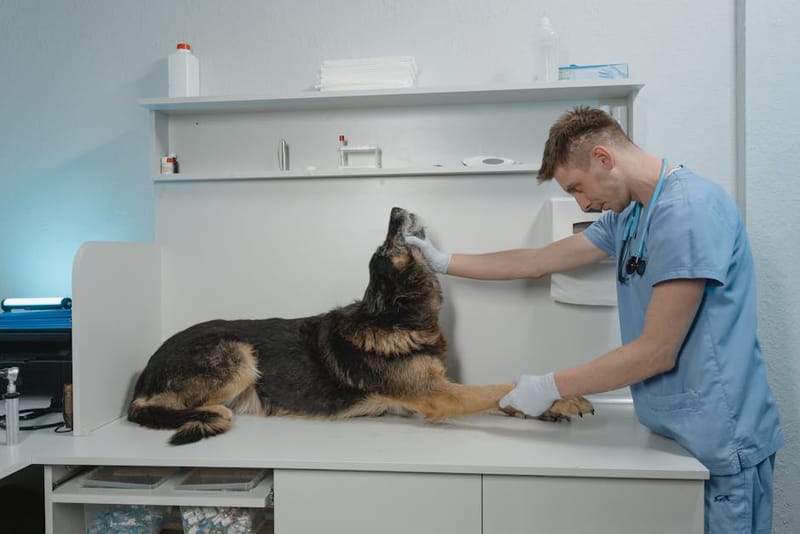
Before Brexit, taking a dog from the UK to the EU was straightforward: the EU pet passport covered repeat trips for years. After Brexit, the UK lost equivalence on pet-travel documents, and the Animal Health Certificate (AHC) replaced the pet passport for every GB-resident dog owner travelling outbound. This guide walks through what the AHC is, what it costs, what the dog needs to qualify, and the significant 22 April 2026 rule change that invalidated every remaining EU-issued pet passport held by a GB resident - a change many older online guides don't reflect.
This is a YMYL (Your Money or Your Life) topic: the practical consequences of getting it wrong are being turned away at the ferry or Eurotunnel terminal, missing a non-refundable booking, or being held at the border. Cross-check anything time-sensitive against gov.uk's pet-travel page immediately before you travel.
What is an Animal Health Certificate?
The post-Brexit replacement for the EU pet passport
An Animal Health Certificate (a single-trip official document signed by a UK-government-approved Official Veterinarian) certifies that a specific dog meets the EU's import requirements: microchipped, vaccinated against rabies, and identified consistently across all the documents. It replaces the EU pet passport for dogs owned by residents of England, Scotland or Wales. Northern Ireland residents continue to use the EU pet passport because Northern Ireland remains in the EU's pet-travel scheme under the Windsor Framework.
The AHC is single-trip in one direction: each outbound trip to the EU requires a new certificate. (One AHC then covers the return journey, plus any onward EU travel for up to six months - see the validity section below.) This is the single biggest practical difference from the old pet passport, which once issued could be reused for years across multiple trips.
Who needs an AHC to travel from GB to the EU?
Residency, not nationality, determines which document you use
Every dog owner resident in England, Scotland or Wales who is taking a dog to any EU member state - Republic of Ireland included - needs an AHC, regardless of nationality. The residency test is yours (the owner's), not the dog's.
Northern Ireland residents do not need an AHC to travel to the EU: they continue to use the EU pet passport scheme. NI-residents travelling to Great Britain face no pet-travel requirements at all under the Windsor Framework.
If you're a GB resident travelling to a non-EU country (the United States, Switzerland, Norway, or anywhere outside the EU's scheme), the AHC doesn't apply - you need to check the destination country's own import rules at gov.uk's pet-travel page and typically obtain a separate export health certificate tailored to that country.
What does my dog need before getting an AHC?
Microchip, rabies vaccination, and a 21-day waiting window
Three pre-conditions must be in place before any vet can issue an AHC:
1. Microchip
The dog must be implanted with an ISO-compliant microchip (an 11784/11785-conformant transponder readable by every standard EU scanner). UK dogs over eight weeks old are required to be microchipped under domestic law anyway since 2016, so this rarely needs new action - but the chip must be readable, and the chip number must match the rabies-vaccination record.
2. Rabies vaccination
The dog must have a valid rabies vaccination administered AFTER the microchip was implanted (or simultaneously). The dog must be at least 12 weeks old at the time of vaccination. There is a mandatory 21-day waiting period after the first rabies vaccination before the dog is eligible to travel - so book the vaccination at least three full weeks before the trip. Booster vaccinations don't reset this waiting period; only the very first rabies vaccination is subject to it.
3. Tapeworm treatment (return journey only)
Tapeworm treatment is not required for the outbound AHC, but it IS required for the return journey from most EU countries. A licensed praziquantel-based tapeworm tablet must be administered by a vet 24–120 hours before the return crossing, and the vet records the treatment in the AHC. The same rule applies for direct travel to Finland, Ireland, Malta, Northern Ireland or Norway, even from another EU country - these countries are tapeworm-free and protect that status at the border.
Where do I get an AHC, and what does it cost?
Any Official Veterinarian - typical fee £150–£250
An AHC can be issued only by an Official Veterinarian - a UK vet who holds the additional Official Veterinarian (OV) qualification from the Animal and Plant Health Agency (APHA). Most veterinary practices in major towns have at least one OV on staff. APHA maintains a directory at find-a-vet (originally built for livestock exports, but pet-travel vets show up the same way).
Costs vary by practice but typically sit in the £150–£250 range for one dog. Higher-end specialist pet-travel clinics may charge £200–£300; routine local practices that offer the service alongside regular consultations are usually at the lower end. The Royal Veterinary College's small-animal hospital quotes £214.81 including a £22.28 non-refundable admin fee as a recent reference. The price covers vet time to verify documentation, conduct the health check, and complete the 9-page bilingual certificate - not the vaccines themselves, which are separate.
Two practical cost tips: (a) book the AHC appointment at the same time as the rabies booster if one is due, so the dog only gets one vet visit instead of two; (b) some practices charge per dog, others charge a flat fee for the appointment plus a smaller per-dog supplement - worth asking when multiple dogs are travelling together.
How long is the AHC valid for?
10 days to enter, 6 months for onward travel, 4 months for return
The AHC has three separate validity windows on the same document:
- 10 days for first entry into the EU. The AHC must be signed by the Official Veterinarian no more than 10 days before the date of arrival into the EU. So if you're crossing on the 15th of the month, your AHC appointment can be anywhere from the 6th to the 15th. Outside that window the certificate is invalid for the outbound leg, and you'll need a fresh one. This is the strictest of the three windows and the one most owners trip over.
- 6 months for onward travel within the EU. Once you've entered the EU, the AHC remains valid for movement between member states for up to 6 months from the signing date. So if you're touring Europe by car, one certificate covers France → Belgium → Netherlands → Germany without re-issuing.
- 4 months for return to the UK. The return-to-GB validity window is shorter: the AHC must still be within 4 months of issuance when you re-enter the UK. After 4 months, you'd need a fresh AHC from an EU vet - adding a logistical complication that's worth planning around if you're contemplating a longer European stay.
One AHC = one outbound trip. There is no provision for repeat use, regardless of how recently the previous trip ended. Every UK→EU journey requires a fresh certificate.
What do I need to do to bring my dog back into the UK?
Tapeworm treatment, designated entry points, and ID checks
The return journey carries the strictest single requirement of the whole trip: a vet-administered tapeworm treatment between 24 and 120 hours before you re-enter the UK, recorded in the AHC by the EU vet who administers it. The 24-hour minimum prevents the dose being given immediately before crossing (which would reduce parasitic-load suppression on arrival); the 120-hour maximum prevents the dose being too old to still be effective. Crucially, both numbers are measured against UK arrival time, not departure from the EU - so a Saturday evening tapeworm tablet given for a Sunday morning ferry is fine, but the same tablet given Friday morning for a Sunday-night ferry exceeds the 120-hour window and the dog will be refused entry.
The treatment must be a praziquantel-based wormer (Drontal, Milbemax, Profender, or equivalent generic). Buy one in advance to carry with you - most EU vets stock the brand, but having a confirmed source removes one variable. The vet records: the brand name, the active ingredient, the dose, the date and time, and signs and stamps the entry in the AHC.
Return to GB must be via a designated Travellers' Point of Entry with an approved pet-checker on duty. Every major ferry route from France, Belgium, Netherlands and Ireland qualifies, as do the Eurotunnel and approved Eurostar routes. Airports are more restricted - only a handful accept incoming pets, and the dog must usually arrive in the hold rather than as cabin baggage. Check the gov.uk list against your travel booking before you commit to non-ferry transport.
At the GB border, the pet-checker scans the microchip, verifies it matches the AHC, checks the tapeworm record's timestamp, and confirms the rabies vaccination is in date. The check typically takes 5–10 minutes per dog. If anything fails - wrong microchip, expired vacc, tapeworm timing out of window - the dog is held until the issue is resolved, which can mean 21 days of quarantine at owner's expense in worst cases.
What changed on 22 April 2026?
The end of grandfathered EU pet passports for GB residents
Until April 2026, a transitional rule allowed GB residents who had been issued an EU pet passport (typically from a UK vet pre-Brexit, or from an EU vet during a long stay) to continue using it for repeat trips to the EU. That transitional period ended on 22 April 2026: from that date, every EU pet passport issued to or held by a GB resident is no longer a valid document for travel from GB to the EU, regardless of who issued it or when.
The rule applies even to passports issued in Northern Ireland or in EU member states, provided the owner is now resident in England, Scotland or Wales. The only people who can still use an EU pet passport for outbound travel from GB are non-residents - for example, an EU citizen on a short visit who is returning home with their dog. For everyone else who lives in GB, the AHC is now the only valid route.
Practical implications: if you used an EU pet passport for a 2024 or 2025 trip and were planning to use it again, that document is no longer valid and you need to book an AHC. The passport itself doesn't need to be returned or destroyed - it's just no longer accepted at the border. Some owners keep it as a record of the vaccination history that fed into the original document; the dog's UK rabies record is the authoritative source either way.
What if something goes wrong at the border?
Common AHC failures and how to avoid them
Three failure modes account for almost every dog being refused entry:
- Microchip and AHC don't match. The chip number on the certificate must match the chip the border scanner reads. Mismatches arise when a chip has migrated, the chip is faulty, or the vet transcribed the number incorrectly. Have your vet read the chip during the AHC appointment to confirm - don't rely on the chip number written on the dog's medical history.
- Tapeworm timing out of window. Either too early (over 120 hours before UK arrival) or too late (under 24 hours, often because of a misunderstanding about the time-zone of the receiving country). Set a calendar reminder for both ends of the window and confirm the date stamp on the certificate matches.
- AHC signed more than 10 days before EU arrival. Date the appointment carefully relative to your departure. A trip postponed by a week can invalidate the certificate, and you'll need a fresh one before the new departure date.
If the dog is refused entry, the practical outcomes are quarantine at a designated facility (typically £20–£40 per day plus admin fees) until the documentation is sorted, or refused crossing with the family. Most ferry and Eurotunnel operators won't refund the booking. Travel insurance with pet-travel cover (separate from pet health insurance) is worth checking before the trip.