Pet-Friendly Cottages Scottish Highlands: 2026 Guide
Discover the best pet-friendly cottages across the Scottish Highlands - Cairngorms, Skye, Loch Ness and more. Where to book and what to look for.
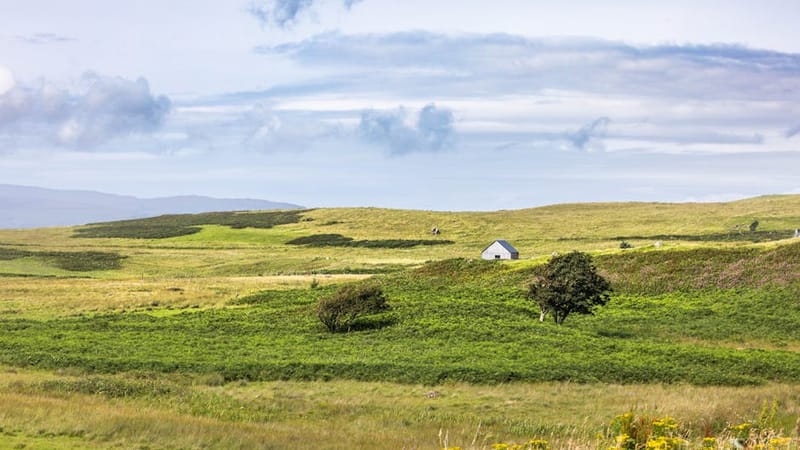
The Scottish Highlands are arguably the most dog-friendly stretch of the UK - vast empty glens, miles of low-traffic single-track road, and a self-catering tradition that overwhelmingly welcomes well-behaved dogs. If you've been put off by the logistics of getting there with a dog, the good news is that almost every reputable cottage operator in Scotland accepts pets, often with no surcharge or with a token fee under £30 per stay.
This guide covers the regions worth basing yourself in, the cottage features that actually matter for a relaxed week with your dog, the booking platforms with the strongest Highland inventory, and the practical details - ferries, vets, pet fees - that make the difference between an easy trip and a stressful one. It's the natural companion to our broader Scottish Highlands destination guide, focused specifically on where to stay.
Why the Highlands work so well with a dog
Empty land, sensible cottage culture, and miles of good walking on the doorstep
The Highlands cover roughly a third of Scotland's landmass with about 5% of its population. That ratio is the underlying reason a week here is so much easier with a dog than a week in, say, the Lake District in August. You can walk for an hour from most rural cottages without seeing another person, livestock densities are low outside lambing season, and the bothy and hill-walking culture means landlords genuinely expect dogs as part of the bookings.
Self-catering also dominates. Hotels with strong dog policies do exist (we cover them in our UK dog-friendly hotels guide), but the Highland norm is a stone-built cottage or converted steading with a kitchen, a wood-burner, and a fenced or fence-able garden. That's a much better fit for a dog than a hotel room - you can leave them briefly while you grab dinner at the local pub, dry them off after a wet hill walk in the cottage's own bootroom, and avoid the 'no dogs upstairs' awkwardness that crops up in B&Bs.
What are the best highland regions for a dog-friendly cottage stay?
The Cairngorms (Aviemore, Boat of Garten, Grantown-on-Spey)
The Cairngorms are the most accessible and most cottage-rich Highland region, sitting on the A9 about three hours north of Edinburgh. The pine forests around Aviemore and Glenmore are famously gentle for older dogs - flat, soft underfoot, and webbed with waymarked trails. Loch an Eilein and Loch Morlich both allow dogs in the water year-round, and the village of Boat of Garten is lined with self-catering options, most with garden access.
Cottages in this area cluster around the £600–£1,000 mark for a midweek break in low season and £1,200–£1,800 in school holidays. Sykes and Cottages.com both list 200+ pet-friendly properties within a 20-minute drive of Aviemore.
Loch Ness and the Great Glen
The Great Glen runs from Inverness south-west to Fort William along the line of Loch Ness, Loch Lochy and Loch Linnhe. The single-track roads and forest paths along the south shore of Loch Ness (B852) are quieter than the main A82 and offer more dog-walking options. Drumnadrochit and Fort Augustus both have a strong cluster of pet-friendly cottages, often with private lochside access.
This is also the region most likely to have a fenced garden listed in the cottage details - a useful filter to apply if your dog can't be trusted off-lead near sheep.
Isle of Skye and the Inner Hebrides
Skye is the most photographed part of the Highlands and the most demanding logistically. Cottages on Skye command a 20–30% premium over equivalent mainland properties, and you'll need to factor in the Skye Bridge (free for cars) or the Mallaig–Armadale ferry (CalMac, dogs travel free, must be on a lead on deck). The reward is uncrowded coastal walking and small communities - Portree, Broadford and Dunvegan all have multiple pet-friendly self-catering options.
For inner-Hebrides alternatives with fewer crowds, look at Mull (CalMac ferry from Oban), Islay (whisky tourism, mostly off-lead-friendly beaches) or Arran. Coverage on Sykes and Cottages.com is patchy on the smaller islands; Hoseasons and Independent Cottages often have the better island inventory.
Argyll, Cowal and the West Coast
Often overlooked because it doesn't fit the classic 'Highland tour' route, Argyll is a strong dog-friendly choice for a quieter trip. The Cowal Peninsula and the area around Loch Fyne and Inveraray have remote cottages with private mooring or beach access at prices well below the equivalent on Skye. The drive from Glasgow is short - under two hours - which matters if you're driving up with the dog.
The North Coast 500 (NC500)
The 516-mile circular route around the northern Highlands is feasible with a dog if you treat it as a 7–10 day trip rather than a 4-day blitz. Pet-friendly cottage clusters exist around Ullapool, Lochinver, Durness and John o' Groats, but availability is tight in summer - book six months ahead for July or August. The advantage of basing yourself in one cottage and doing day trips along the route is that the dog avoids constant car-time stress.
Highland Perthshire (Pitlochry, Aberfeldy)
Strictly speaking the southern fringe of the Highlands rather than the heart, but the easiest area to reach for a long weekend. Pitlochry has a strong cottage-rental market, and the area's rivers and forests (Hermitage, Birks of Aberfeldy, Schiehallion) are well-suited to half-day walks with a dog. Good fallback if Highland-proper cottages are sold out for your dates.
Where to book - the Highland cottage operators worth knowing
Four booking platforms cover most of what's available, and a handful of regional specialists fill in the gaps. The right choice depends on whether you want widest selection (Sykes, Cottages.com), best filters (Booking.com), island coverage (Hoseasons, Independent Cottages), or hand-picked stock (Cottages and Castles).
Sykes Holiday Cottages
The strongest single source for Highland self-catering. Sykes lists more than 1,500 pet-friendly cottages across Scotland, with a hard filter for 'pets welcome' and additional filters for 'enclosed garden' and number of pets allowed. Most listings include a clear pet policy line - typical surcharge is £20–£30 per dog per stay, occasionally waived for smaller breeds.
Sykes is our default first stop for the Cairngorms, Loch Ness (the deep freshwater loch in the Great Glen of the Scottish Highlands) and Argyll. The booking flow is straightforward, the cancellation terms are reasonable, and customer service tends to be responsive when there's a property issue.
Cottages.com
Owned by the same parent company as Hoseasons, Cottages.com has a near-identical inventory to Sykes for many Highland regions but a different presentation and occasionally different prices. Worth cross-checking the same property on both platforms - the headline rate can vary by 5–10% depending on which platform is running a promotion.
Booking.com
Better for hotels than self-catering, but the 'Holiday homes' filter exposes a smaller but useful pool of Highland cottages. The advantages of Booking.com are the genuinely flexible cancellation policies on many properties (free cancellation up to 1–7 days before) and the unified review system. The disadvantage is that pet policies are often less clearly stated than on Sykes - you may need to message the host to confirm specifics.
Hoseasons
Strongest for island and coastal properties - Mull, Skye, the Outer Hebrides, and the lesser-visited north coast. If Sykes shows nothing for the dates you want on Skye, Hoseasons is the next port of call. Like Cottages.com, it's part of the Awaze group, so the underlying inventory overlaps.
Cottages and Castles, Highland Cottage Holidays, Mackay's Holiday Cottages
The three best-known Highland-specific specialists. Cottages and Castles is the largest, with around 400 properties across Scotland - they pre-screen for quality and pet policies tend to be generous (multiple dogs accepted, no per-dog fee on many properties). Highland Cottage Holidays focuses on the western Highlands and inner islands. Mackay's Holiday Cottages covers the far north (Caithness and Sutherland) where the larger platforms have thin coverage.
What to look for in the listing
Pet-friendly is a binary on most platforms, but the difference between a great cottage for a dog and a frustrating one comes down to a handful of features that aren't always on the headline filter. Read the description carefully and message the host if any of these aren't clear.
A genuinely fenced garden
Listings often say 'enclosed' to mean a low wall, hedge or post-and-wire fence. For a dog that won't reliably recall, you want full perimeter fencing at least 4ft tall - ask the host for a photo or a video of the boundary if it matters.
A bootroom or dedicated drying space
Highland weather guarantees you'll come back wet several days a week. A separate space to peel off muddy gear and dry the dog is the difference between a tidy cottage and a soaked sofa.
Hard floors throughout the ground floor
Easier to clean, less stressful for the dog, and removes the worry about wet paws on a cream carpet that's not yours.
Walking access from the door
A cottage that opens onto a forest track, riverside path, or coastal route is worth a 30–40% premium over an equivalent property where every walk requires a drive.
Local pub within walking distance
Highland villages tend to have one good pub. Walking distance means you can have a meal out with the dog at your feet rather than leaving them in an unfamiliar cottage.
Clear pet policy on numbers, breed, and surcharges
Some hosts cap at one dog, some allow up to three, and some charge per night rather than per stay - small print matters when you're booking a week.
Practical considerations
Getting there with the dog
Most Highland trips start with a long drive - Edinburgh to Inverness is 3.5 hours, Manchester to Aviemore is around 6.5. A pre-trip plan for the journey makes a real difference. Our guide to driving with a dog covers harness fitting, rest stops, and overheating risk on the long sections of A9.
If you're heading to the islands, the CalMac ferry network carries dogs free of charge - they must be on a lead, can stay on the open deck or in designated pet areas, and there's no booking required for the dog itself. Note that some smaller ferries (the Corran ferry across Loch Linnhe, for example) require dogs to remain in the car.
Vets and emergencies
The Highlands are sparsely served by veterinary practices. The main practices are in Inverness, Fort William, Oban, Aviemore, Ullapool, Portree (Skye) and Stornoway (Lewis). For trips into more remote areas, programme the nearest practice into your phone before you leave and pack a small first-aid kit (the basics are in our dog travel checklist).
Wildlife and livestock
The Scottish Outdoor Access Code gives you broad right-to-roam, but it explicitly requires dogs under close control near livestock. From mid-March to late July, ground-nesting birds (curlew, lapwing, oystercatcher) are also active, so longer-line work or full lead is the responsible default in moorland. Most landowners are tolerant if dogs are clearly under control; the occasional sign or polite request to lead-up should be treated seriously, particularly during lambing season (April–May).
Beaches and tides
Most Highland beaches allow dogs year-round without restriction - see our Scottish dog-friendly beaches guide for the regional best-of. Tide times matter on long sand beaches like Sandwood Bay and Achmelvich; download an offline tide table before heading out.
When to go
May and June are widely considered the best months - long daylight hours, low midge activity (the worst peaks late June through August), reasonable cottage prices, and most attractions open. Bring tick prevention and check the dog daily.
September and early October are the second-best window. Midges have largely gone, autumn colour through Glen Affric and the Cairngorms is striking, and prices drop sharply after the August school holidays end.
July and August command the highest prices, the worst midges (especially in west-coast and island locations), and the busiest roads. Cottages along the NC500 are typically booked out 6–9 months in advance for these months.
Winter (November–March) is the cheapest and most atmospheric option, but you'll need a cottage with reliable heating and you should plan around shorter daylight (sunrise around 9am, sunset around 4pm in mid-December). Many Highland minor roads close in heavy snow.
What are the most-asked questions?
Are most Highland cottages pet-friendly?
What's the average pet fee?
Which region is best for a first-time Highland trip with a dog?
Can I take my dog on the CalMac ferries to the islands?
Are there breed restrictions on cottages?
Do I need to bring my own bedding for the dog?
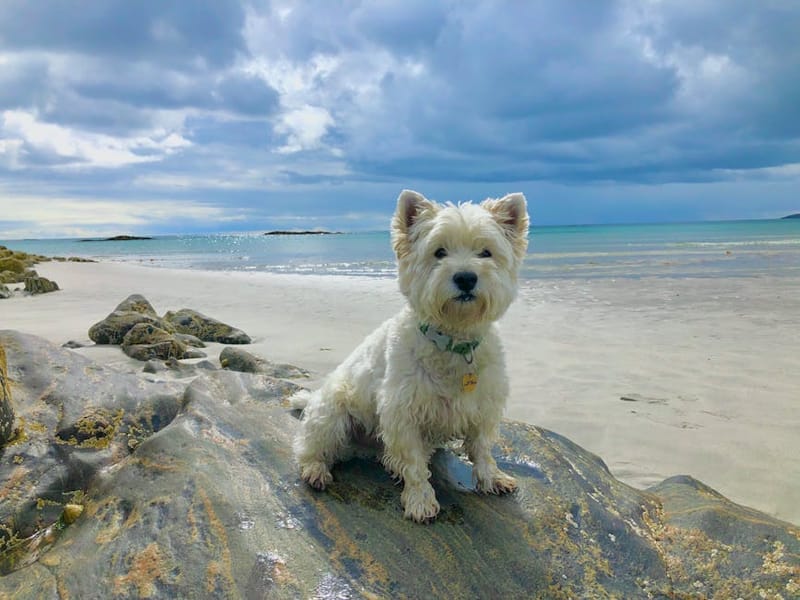
Scottish Highlands destination guide
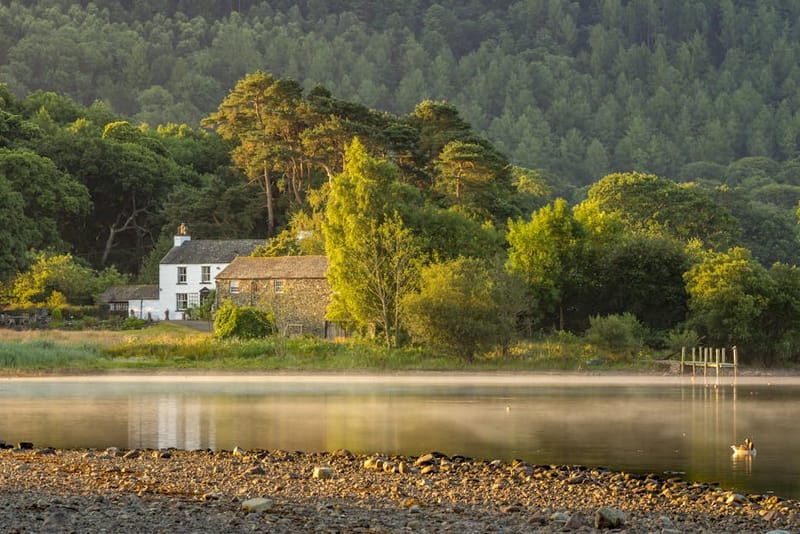
Pet-friendly cottages in the Lake District
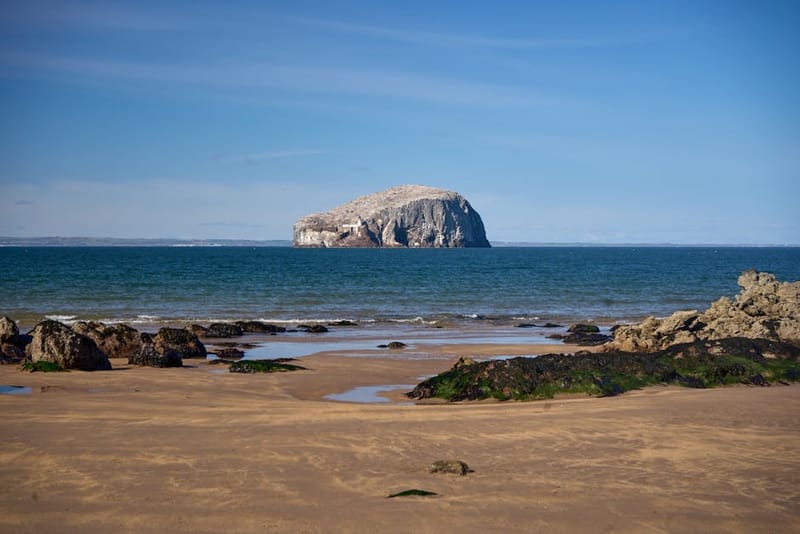
Dog-friendly beaches Scotland
Browse pet-friendly Highland cottages
Sykes Holiday Cottages has the widest selection of dog-friendly self-catering properties across the Scottish Highlands. Filter by 'pets welcome' and 'enclosed garden' to find your match.