Your Puppy's First Trip Away: A UK Travel Guide
How to plan your puppy's first trip away: when they're old enough, building car confidence, what to pack, safe journeys and settling into a new place.
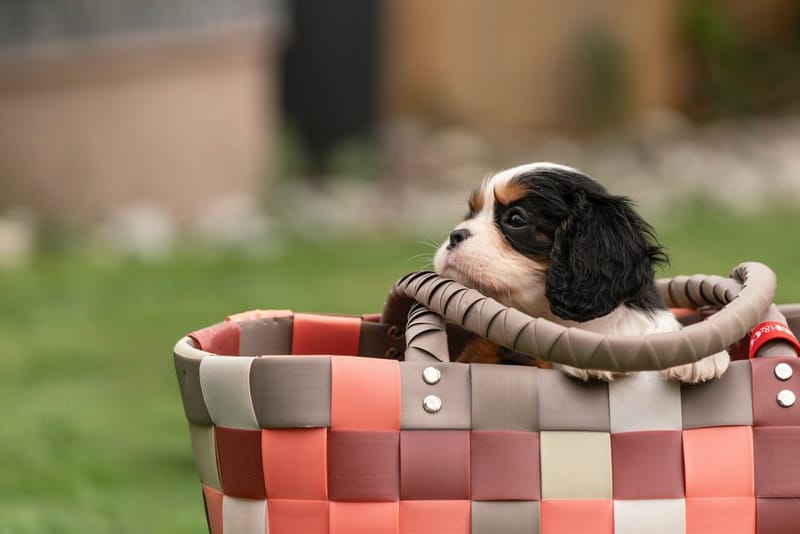
Your puppy's first trip away is a milestone, and a little nerve-wracking. A new place, a long car journey and a strange bed are a lot for a young dog to take in at once. The good news is that puppies are wonderfully adaptable when you prepare them properly. Build their car confidence in advance, time the trip around their vaccinations and toilet routine, and pack the things that smell of home, and a first holiday can be the start of a lifetime of happy travelling. Here is how to get it right.
When is a puppy old enough to travel?
Most puppies are ready for a first trip once they have completed their primary vaccinations, usually at around 12 to 16 weeks. Before that point a puppy (a dog under about six months, still building immunity and toilet control) should avoid public places where unvaccinated dogs have been, so an early holiday is best kept to a private cottage or a stay with family.
Two practical things should be in order before you set off. First, your puppy must be microchipped, which is a legal requirement for dogs in England, Scotland and Wales by eight weeks of age, and the registered details must be current in case they slip away in a new place. Second, your vet should confirm the vaccination course is finished and your puppy is fit to travel.
Beyond the health basics, judge readiness by temperament. A confident, settled puppy will cope with a short break sooner than an anxious one that is still adjusting to its new home.
How do you prepare a puppy for its first journey?
The single biggest favour you can do a puppy is to make the car feel normal before the big day. Start small and build up over a week or two.
Introduce the car while it is parked
Let your puppy explore the stationary car with the engine off, rewarding calm behaviour, so it becomes a positive place rather than a strange one.
Take very short drives
Begin with a few minutes around the block, then build up gradually. Short, frequent trips that end somewhere nice teach a puppy that the car leads to good things.
Travel on a near-empty stomach
Feed only a small meal two or three hours before a journey to reduce the chance of car sickness, which is common in young dogs and usually fades with age.
Secure the puppy properly
Use a crash-tested harness, a secured crate or a boot guard from the very first drive, so safe travel becomes the only travel your puppy knows.
Bring something that smells of home
A blanket from their bed or a worn t-shirt carries the scent of home and helps a puppy settle in the car and at your destination.
What should you pack for a puppy's first trip?
Puppies need a few more bits than an adult dog, mostly to protect their routine and cope with accidents while toilet training is still in progress.
Their usual food and bowls
Keep the diet identical to home. A sudden food change on top of travel is a common cause of an upset tummy in young dogs.
A familiar bed and blanket
Bringing their own bedding gives a puppy a safe, familiar base in an unfamiliar room and helps them settle at night.
A crate or playpen
A travel crate doubles as a safe sleeping space and a way to keep a curious puppy out of trouble in a new home.
Plenty of poo bags and puppy pads
Toilet training takes a step back in a new place. Pads and bags help you manage accidents without stress.
Cleaning supplies and old towels
Pack an enzymatic cleaner for accidents and towels for muddy paws and the inevitable spills.
Vaccination record and vet details
Carry proof of vaccination and the number of a vet near your destination, just in case.
Keeping the car journey calm and safe
A puppy's restraint is not optional. Rule 57 of the Highway Code requires dogs to be suitably restrained so they cannot distract or injure you in a crash, and a secured crate or crash-tested harness also stops a wriggling puppy getting underfoot. Plan a toilet break every hour or two, since young dogs cannot hold on for long, and keep the car cool and well ventilated. Talk to your puppy in a calm voice, and resist the urge to constantly comfort an anxious one, which can accidentally reward the worry. Most puppies settle and sleep once the car is moving steadily.
Helping a puppy settle in a new place
Arriving is where the real work begins. A puppy in a strange house will test boundaries, miss familiar smells and need the toilet often, so keep the first evening calm and predictable.
Set up their crate or bed in a quiet corner straight away, so they have a den to retreat to. Take them out to the same toilet spot frequently and reward every success, because the routine resets in a new environment. Keep feeding and bedtime to their normal schedule, and do not pack the itinerary with too much on day one. A tired, over-stimulated puppy struggles to sleep, which makes the whole trip harder for everyone.
Choosing the right base helps enormously. Ground-floor accommodation with an enclosed garden makes those frequent toilet trips far easier, and a quiet location helps a young dog wind down.
Frequently asked questions
How old should a puppy be before its first holiday?
How do I stop my puppy being car sick?
Do I have to restrain my puppy in the car?
How often should I stop for a puppy on a long drive?
Will travelling set back my puppy's toilet training?
Travelling With a Senior Dog
Dog-Friendly UK Road Trip Planner

Dog-Friendly Hotels with Enclosed Gardens