Affiliate disclosure
We may earn a commission when you buy through links on our site, at no extra cost to you. Our editorial opinions are our own and are not influenced by compensation.
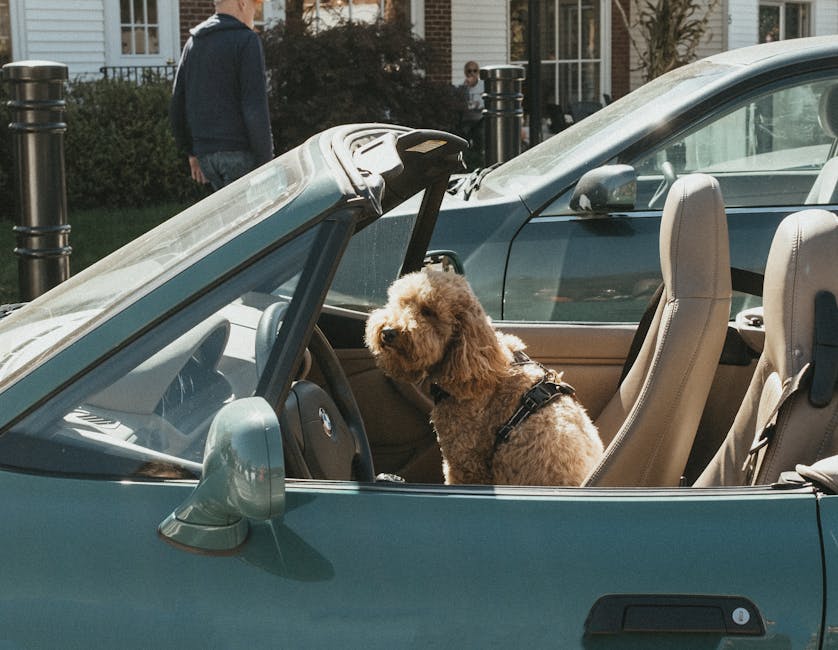
Comparison · 5 picks
Best Dog Car Harness UK: 5 Crash-Tested Picks Compared
Which harness should I buy for my dog?
A quick decision flow based on size, behaviour, and journey length
Pick a harness in three steps:
Step 1: weight. If your dog is under 13 kg (toy or small breed), the Sleepypod Clickit Sport size XS or ZuGoPet Rocketeer Pack are the only options that pass crash certification at this weight class. If your dog is 13 to 25 kg (cocker, springer, beagle, working terrier), the Sleepypod Clickit Sport size M or the Ruffwear Load Up M are the durable picks. If over 25 kg (labrador, retriever, shepherd), only the Sleepypod Clickit Sport L or the heavy-duty Kurgo Tru-Fit have CR1-equivalent strap routing for the load.
Step 2: behaviour. A relaxed traveller suits any belt-anchored harness. A dog that pulls, chews, or shifts during journeys benefits from the boot tether of the Mighty Paw Vehicle Safety Harness or the rear-bench restraint of the Ruffwear Load Up, both of which limit forward inertia in a sudden stop without restricting normal head movement.
Step 3: journey length. Daily 30-minute commutes work with any of the picks above. Long-haul travel (4+ hours) needs a harness with breathable mesh against the chest (Sleepypod and Ruffwear lead here) and padded straps that don't trap heat (Kurgo's mesh-back design helps). For overnight stays, the harness should come off completely - even a CR1-rated harness is not designed for 24-hour wear.
Why Crash Certification Matters
The single biggest factor most buyers overlook
The phrase "crash-tested" appears on the packaging of almost every dog car harness sold in the UK. It often does not mean what shoppers assume.
There is a meaningful difference between manufacturer crash testing (done in-house, with the brand setting their own pass criteria) and independent crash testing by an accredited body. The most respected independent body in the pet safety space is the Center for Pet Safety (CPS), a US-based non-profit that crash-tests pet products to a standardised protocol modelled on the FMVSS 213 child restraint standard. CPS publishes its full certification list, including which harnesses passed and which failed.
For any harness with brand-only crash testing, you are taking the manufacturer's word for the testing methodology and pass criteria. Some are genuine; others are marketing. For CPS-certified harnesses, you have an independent body with no commercial interest publishing the result.
In a real impact, the difference is between a harness that holds your dog in place - sparing them from being thrown forward at 30+ mph and from becoming a projectile that injures human passengers - and one that fails at the buckles, stitching, or attachment loop. The cost gap between certified and uncertified harnesses is meaningful (£60-100 vs £25-40), but for a piece of safety equipment used on every car journey for years, it is one of the more defensible upgrades to make.
If cost is the constraint, an uncertified harness is still markedly safer than letting your dog ride loose on the back seat - that scenario is dangerous in even minor collisions. But if budget allows, the Sleepypod Clickit Sport is the easy recommendation for most dogs and the ZuGoPet Rocketeer for small breeds.
ISOFIX, Seat Belts and Where Dog Harnesses Actually Anchor
Why dog car harnesses use the seat belt, not ISOFIX, and how that affects fitting
Many UK drivers ask whether a dog car harness can clip into the ISOFIX child seat anchors built into modern cars. The answer is no, and understanding why matters for safe fitting.
ISOFIX is a rigid metal mounting system designed for child seats. The anchor points are rated for the loads child seats produce in a crash, and the seats themselves are tested as a complete system. Dog car harnesses are tested with the standard three-point seat belt, which means the seat belt is the load path the manufacturer has actually engineered for. Clipping a tether to the ISOFIX anchor instead transfers the impact load to a point the harness was never tested with, which is exactly the unverified configuration crash certification is meant to avoid.
There are two seat belt routes commonly used with the five picks above:
Lap-belt through the back of the harness: the buckle latches normally, the lap section threads through a reinforced loop on the harness, and the shoulder section sits clear. This is the route the Sleepypod Clickit Sport, Ruffwear Load Up and Mighty Paw harnesses use.
Tether-and-buckle: a short tether clips into the seat belt buckle on one end and the harness on the other. Kurgo Tru-Fit ships with a tether of this type, and the ZuGoPet Rocketeer Pack uses a similar setup for small breeds.
For both routes, the seat belt itself stays the load-bearing component. ISOFIX anchors should be left for child seats.
How do I fit a dog car harness?
The 6-step sequence that works for every harness in this roundup
The exact buckle layout varies by product, but the fitting sequence is the same for every harness in this comparison.
1. Size the harness against the dog first, not the car. Measure chest girth at the widest point and neck circumference. Cross-check against the manufacturer's sizing table for the specific product. A harness that fits the dog's body well but cannot be tightened enough on the car side is preferable to one that fits the seat belt route well but slips on the dog.
2. Fit the harness on the dog at home, away from the car. Check that two fingers fit flat between the dog and any strap, and that the dog can sit, stand and lie comfortably. Walk the dog around the house wearing it for 10 to 15 minutes before any car journey.
3. Use the rear bench seat, behind the front passenger. The rear is statistically safer in a frontal impact, and the position behind the passenger keeps the driver's seat belt free. Avoid the front passenger seat with an active airbag; an airbag deploying into a dog at chest height can be fatal.
4. Thread the seat belt according to the product's instructions. For lap-belt-through-back harnesses, the lap section threads through the reinforced loop on the harness back. For tether-and-buckle systems, clip the tether to the harness, then latch the tether into the seat belt buckle. Do not skip the route shown in the instructions; this is the configuration the crash test used.
5. Pull all slack out of the seat belt. The shorter the tether or seat belt travel, the less distance the dog moves in a sudden stop. This is the single biggest factor in real-world injury reduction.
6. Check the fit again with the seat belt tensioned. Confirm two-finger clearance on the harness, that the buckle sits flat, and that the dog can lie down without straps cutting in. Re-check on every journey; harness padding compresses over time.
At a glance
All 5 options side by side.
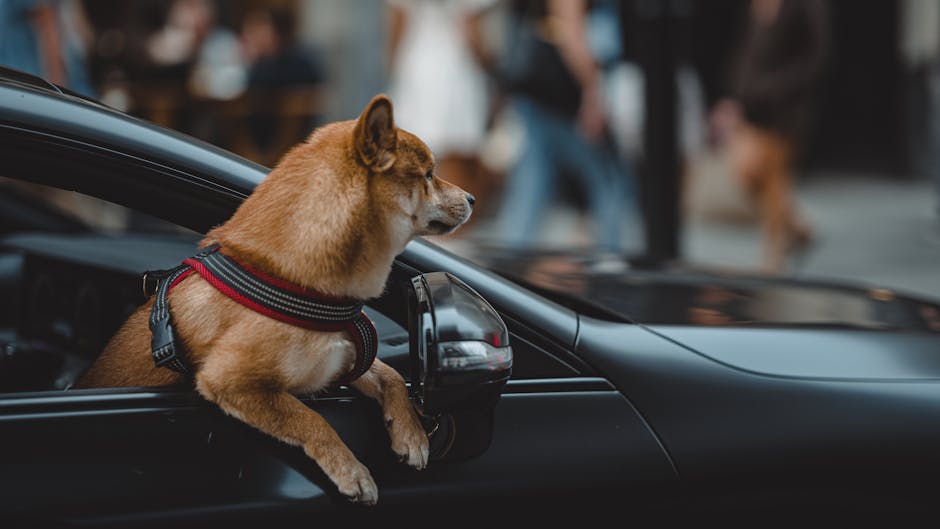 Sleepypod Clickit Sport Sleepypod Clickit Sport |  ZuGoPet The Rocketeer Pack ZuGoPet The Rocketeer Pack | 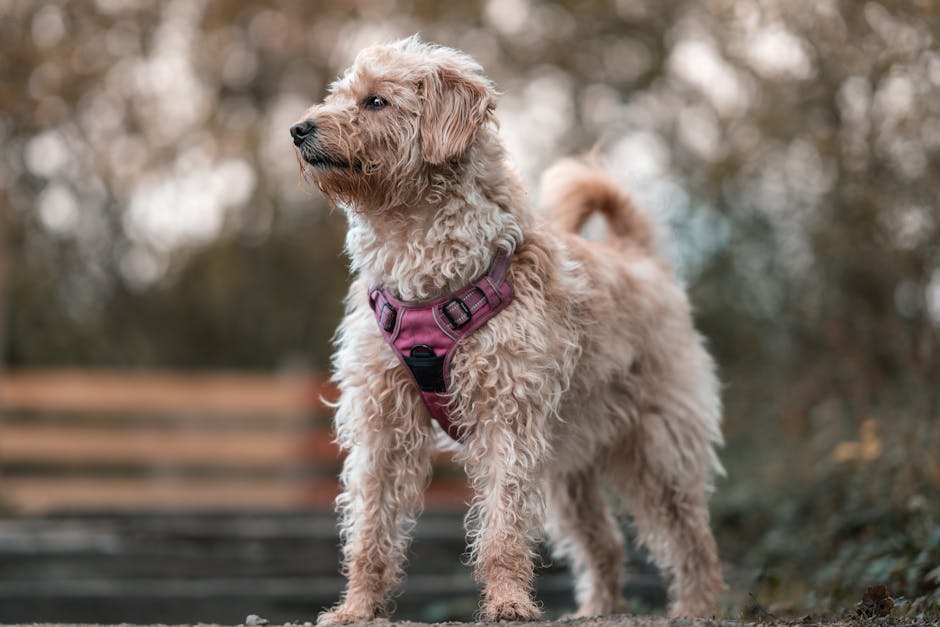 Kurgo Tru-Fit Smart Harness Kurgo Tru-Fit Smart Harness |  Ruffwear Load Up Ruffwear Load Up |  Mighty Paw Vehicle Safety Harness Mighty Paw Vehicle Safety Harness | |
|---|---|---|---|---|---|
| Price | £90 | £110 | £35 | £65 | £30 |
| Best for | Best overall - the safest mainstream UK pick for any dog from XS to XL, with full Center for Pet Safety certification and a build quality that justifies the £80+ outlay. | Best for small breeds - Chihuahuas, Yorkshire Terriers, Toy Poodles and similar where a standard adult harness simply does not fit safely. | Best budget pick - the most credible affordable harness when £80+ is not feasible. | Best for active households - comfort-focused for medium-to-large dogs that travel regularly, where long-trip comfort matters as much as collision protection. | Best everyday choice - strong user reviews and a wide padded chest at the lowest price point. |
| Check price | Check price | Check price | Check price | Check price |
The picks in detail
Sleepypod Sleepypod Clickit Sport
Bottom line. Best overall - the safest mainstream UK pick for any dog from XS to XL, with full Center for Pet Safety certification and a build quality that justifies the £80+ outlay.
Pros
- CPS certified across all five size bands (XS-XL) - independent verification, not brand testing
- Direct seatbelt integration eliminates flimsy tether failure points
- Wide chest plate distributes collision force across a large area
- Quality construction with metal hardware and ballistic nylon
- Doubles as a walking harness with a sturdy lead attachment
Cons
- Premium pricing - around £80-100 in the UK depending on size
- Direct-seatbelt design adds 30-60 seconds to securing the dog at each end of the journey
- Bulkier than dedicated everyday walking harnesses
ZuGoPet ZuGoPet The Rocketeer Pack
Bottom line. Best for small breeds - Chihuahuas, Yorkshire Terriers, Toy Poodles and similar where a standard adult harness simply does not fit safely.
Pros
- CPS certified specifically for small dogs - rare in the small-breed market
- Foam shell adds passive impact protection on top of the harness restraint
- Doubles as a carrier for vet visits and short trips outside the car
Cons
- Strictly small-dog only (up to ~10kg) - no medium or large size options
- Premium pricing (around £100-130 in the UK, with stock that fluctuates)
- Carrier-style design takes more setup time than a simple harness
Kurgo Kurgo Tru-Fit Smart Harness
Bottom line. Best budget pick - the most credible affordable harness when £80+ is not feasible. Good for shorter trips and lower-speed urban driving.
Pros
- Affordable at around £30-40 across most sizes on Amazon UK
- Brand-published crash testing (MGA Research) is more transparent than most uncertified competitors
- Doubles effectively as a walking harness with sturdy front and back D-rings
- Five sizes with a reasonably accurate sizing chart
Cons
- No Center for Pet Safety certification - testing is brand-conducted only
- Tether attachment to the seatbelt loop adds a potential failure point
- Padding is reasonable but lighter than premium options
Ruffwear Ruffwear Load Up
Bottom line. Best for active households - comfort-focused for medium-to-large dogs that travel regularly, where long-trip comfort matters as much as collision protection.
Pros
- Heavily padded ballistic nylon construction is comfortable for medium-to-large dogs
- Energy-absorbing tether designed to limit forward motion in a sudden stop
- Wide chest panel distributes load across a larger area
- Built to the high standard expected from a respected outdoor brand
Cons
- No Center for Pet Safety certification despite Ruffwear's strong reputation
- Premium pricing (around £55-75 in the UK) for an uncertified harness
- Vehicle-use only - does not double as a walking harness
- Can be over-engineered for small or sedentary dogs
Mighty Paw Mighty Paw Vehicle Safety Harness
Bottom line. Best everyday choice - strong user reviews and a wide padded chest at the lowest price point. Best matched to short urban journeys rather than motorway distances.
Pros
- Inexpensive at around £25-35 depending on size and Amazon UK pricing
- Wide padded chest panel for comfort on longer journeys
- Two D-rings allow front-clip walking attachment as a secondary use
- Strong user feedback with thousands of Amazon UK reviews averaging above 4 stars
Cons
- No independent crash certification and limited public testing detail from the brand
- Hardware is plastic in places where premium options use metal
- Short tether restricts movement (which is arguably a safety feature, not a bug)
- Not recommended for high-speed motorway driving or larger, stronger dogs
How to Get the Right Size
Sizing wrong is the most common mistake
A correctly fitted harness is a fundamental safety requirement. Even a CPS-certified harness performs poorly in a collision if the dog can slip out of it because it is too loose, or if it pinches and restricts breathing because it is too tight.
The two measurements that matter:
- Chest girth - the widest part of the dog's chest, just behind the front legs. Measure with a soft tape measure pulled snugly but not tightly.
- Neck girth - the base of the neck where a collar would normally sit. Take this measurement standing, with the dog's head in a natural position.
Most manufacturers provide a sizing chart that maps these two measurements to a size band. Always go by the chart for the specific brand you are buying - sizing is not standardised across brands. A size M Sleepypod is not the same as a size M Kurgo.
Two practical tips:
- Measure at home before ordering. Pet shop staff often size by eye, which is unreliable - most dogs end up in a harness that is one size too big or too small.
- The two-finger test. Once fitted, you should be able to slide two fingers between the harness strap and the dog's body comfortably. Less than one finger is too tight; three fingers or a flat hand fits is too loose.
If the dog is between sizes, size down for chest girth (a tighter chest fit is safer in a collision than a loose one) and size up for neck girth (avoid restricting the throat). Some brands offer in-between sizes, which solve this problem when they fit the dog's measurements.
Where to Use the Harness in the Car
Position matters as much as the harness itself
Once you have the right harness fitted correctly, where in the car you put the dog matters too.
Always on the back seat. The Highway Code (Rule 57) requires dogs to be "suitably restrained so they cannot distract you while you are driving, or injure you, or themselves, if you stop quickly." The DVLA recommends the back seat for dogs in restraints, and most veterinary safety advice agrees - the front seat exposes dogs to airbag deployment, which is dangerous even at low speeds.
Tether to the standard seatbelt buckle, not a luggage hook. The seatbelt buckle is engineered to withstand collision forces; luggage hooks and headrest posts are not. Most harnesses come with a short tether that loops through the seatbelt slot - this is the correct way to use them.
Centre seat is safest for small dogs. Some studies suggest the centre rear seat is the safest position in a collision. If the dog's harness fits comfortably across the middle seat, that is the best place for them.
Avoid boot loose-loading. Letting a dog ride loose in a hatchback boot is unsafe - they can be thrown forward into the cabin or against the boot floor in an emergency stop. If you want to use the boot, fit a proper crash-tested travel crate or a boot guard plus harness combination. Our travelling with your dog by car guide covers crate options and boot setup in more detail.
Final Recommendations
Three picks for three budgets
If safety is the priority and budget allows: Sleepypod Clickit Sport. Center for Pet Safety certified across all five size bands, well built, used by owners who do a lot of long-distance dog travel. It is the harness most reviewers point to when asked "what would you put your own dog in?"
If you have a small dog: ZuGoPet The Rocketeer Pack. The certified market for small breeds is sparse, and the Rocketeer is the standout option. The combined harness-carrier design is genuinely useful beyond car journeys.
If budget is tight: Kurgo Tru-Fit Smart. Not certified, but the most credible of the budget options. Brand crash testing is more transparent than most cheap competitors, and Amazon UK availability is excellent. A reasonable compromise when £80+ is not feasible.
Whichever you choose, the gap between using a proper harness and letting your dog ride loose is far larger than the gap between a budget and premium harness. The most expensive mistake is no harness at all.
For more on pet-safe car travel, see our complete guide to travelling with your dog by car and the dog travel checklist for everything else worth packing.
Round out your travel kit
The other gear that pairs with a crash-tested harness
What's new in 2026 for dog car harnesses?
Product updates from Q4 2025 and Q1 2026
The dog car harness market is relatively stable, but four 2025-2026 updates affect the picks on this page:
Sleepypod size variant expansion (Q4 2025): Sleepypod added an XXL Clickit Sport for dogs over 35 kg (Newfoundland, Great Dane, Saint Bernard). The XXL retains the CPS-CR1 certification at the new weight bracket. UK distribution started with Pet Planet and selected veterinary supply chains; expect wider Amazon UK availability through 2026.
Ruffwear Load Up retired Lavender colour (Q4 2025): cosmetic only. The Granite Grey and Red Currant remain. The harness construction is unchanged.
Kurgo Tru-Fit 2026 refresh: Kurgo published an updated Tru-Fit Smart Harness in February 2026 with an upgraded D-ring rated to 1,000 lbf (4.4 kN). The previous version was rated to 800 lbf. The pricing is unchanged at around £40 to £60.
Mighty Paw shipped a redesigned UK warehouse: previously shipped from a US distribution centre with 10-day lead times; now ships from a Manchester warehouse with 2-day standard UK delivery. The product design is unchanged.
None of these updates change our recommendations. If you bought any of these harnesses in 2023 to 2025 and are happy with the fit, there is no upgrade case for the 2026 refresh; if you are buying for the first time, the refresh is the version to pick.
Frequently Asked Questions
Common questions on dog car harnesses
Q01Are dog car harnesses a legal requirement in the UK?
Q02What is the safest dog car harness on the UK market?
Q03Can I use a car harness as a walking harness too?
Q04Where should I sit my dog in the car?
Q05How tight should a dog car harness be?
Q06Is the Kurgo Tru-Fit actually safe?
Q07What about car harnesses for puppies?
Q08How long should a car harness last?
A well-built harness used for typical UK family car journeys should last three to five years. Inspect it monthly for fraying, hardware corrosion, and stitching wear - especially around the seatbelt attachment point. Replace immediately if any component shows damage. After any significant collision, replace the harness regardless of visible damage; like child car seats, the internal structure may be compromised.