Dog-Friendly Cotswolds
Honey-stone villages, rolling countryside, and a pub welcome on every corner - the Cotswolds is one of the easiest UK regions to enjoy with a dog
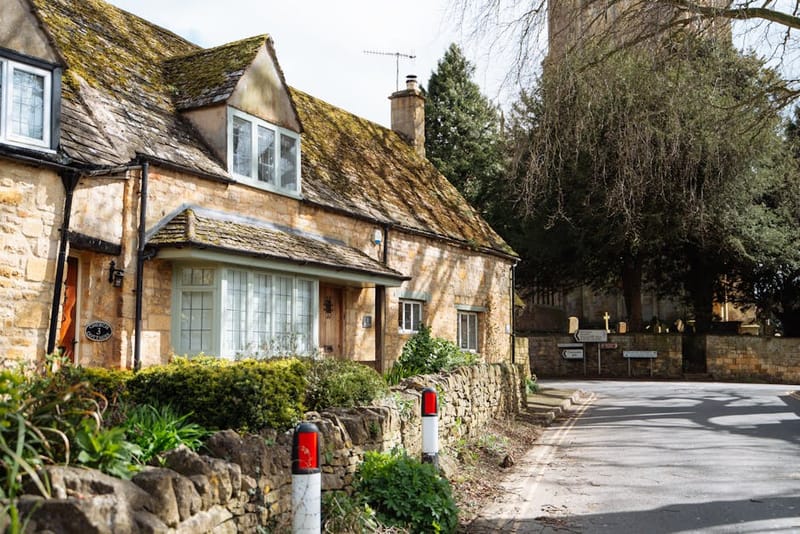
What are the best Cotswolds villages to base yourself in?
Bourton-on-the-Water
Often called the 'Venice of the Cotswolds' for the low stone bridges crossing the River Windrush, Bourton is the most tourist-busy of the villages but stays pleasant out of high season. The riverside green is shallow and dog-safe in summer for a paddle, several pubs along Sherborne Street are dog-welcoming, and you're within a 10-minute drive of Lower Slaughter (a Cotswolds village on the River Eye, known for its honey-stone cottages) and the Slaughter Brook walk.
Stow-on-the-Wold
The highest village in the Cotswolds at 800 feet, Stow has an open market square ringed by independent shops, a strong pub scene (the Porch House claims to be England's oldest inn), and easy access to walks heading out to Lower and Upper Slaughter. Quieter in the evening than Bourton.
Chipping Campden
In the northern Cotswolds, Chipping Campden is a single-street village of unusually elegant honey-coloured buildings. It's also the start point of the 102-mile Cotswold Way (a 102-mile National Trail from Chipping Campden to Bath) - even if you only walk the first mile up to Dover's Hill (an escarpment above Chipping Campden with views across the Vale of Evesham), you get a panoramic view across the Vale of Evesham.
Broadway
A broad main street lined with antiques shops and tea rooms, with Broadway Tower and its 200-acre deer park (yes, you'll need to keep dogs on a lead near deer) a short drive away. Good for combining gentle village pottering with a bigger walk.
Burford
Often described as the 'gateway to the Cotswolds' coming from Oxford, Burford has a steep, picture-postcard high street running down to a medieval bridge over the Windrush. Several dog-friendly pubs and a manageable size for a weekend base.
Painswick
A quieter, less polished alternative in the southern Cotswolds, Painswick sits on a hilltop with views across the Severn Vale. Painswick Beacon, a five-minute drive from the village, is a brilliant short walk with off-lead potential outside livestock fields.
What are the best dog walks in the Cotswolds?
The Cotswolds is one of the easiest regions in England to walk a dog. The footpath network is dense, signage is generally good, and most paths cross sheep pasture or arable fields rather than dense woodland - meaning fewer surprise wildlife encounters and clearer sightlines.
The Slaughters Loop (3 miles, easy)
A flat, mostly-paved walk linking Lower Slaughter, Upper Slaughter, and the open meadows of the Eye Brook. Start in Lower Slaughter village, follow the brook upstream, return via the lanes. Suitable for older dogs and short legs alike. Cars at Lower Slaughter Manor or roadside in the village.
Cotswold Way: Broadway to Broadway Tower (3 miles return, moderate)
A steady climb out of Broadway village up to Broadway Tower at 1,024 feet - the highest point in the Cotswolds. The reward is one of the best views in southern England. Sheep grazing means dogs on leads on the climb itself, but the tower grounds are open and grassy.
Dover's Hill from Chipping Campden (2.5 miles, easy)
A short walk from the centre of Chipping Campden up to Dover's Hill, a natural amphitheatre with views across the Vale of Evesham. Site of the Cotswold Olimpicks, an annual rural games event dating back to 1612.
Cleeve Common (4–6 miles, moderate)
The largest area of unenclosed common land in the Cotswolds, near Cheltenham. Open grassland with room for a dog to run - check for grazing animals before letting go of the lead, and remember the 1 March to 31 July lead rule on Open Access land. Bring water in summer; there's no shade.
Painswick Beacon Loop (3 miles, moderate)
A loop around Painswick Beacon and the Iron Age hillfort, with panoramic views over the Severn Vale and the Forest of Dean. Mostly grassland; some sections cross a golf course where dogs should be controlled.
Bibury and Coln Valley (4 miles, easy-moderate)
Start at the photogenic Arlington Row in Bibury (William Morris reportedly called this the most beautiful village in England), follow the River Coln upstream, and return via Ablington. Mostly flat, with the Coln providing easy paddling stops on warm days.
Where can I find dog-friendly pubs in the Cotswolds?
The Cotswolds has the strongest pub-and-dog culture of any UK region we cover. Most country pubs here let dogs into the bar, and many put out water bowls and treats without being asked. The catch is that "dog-friendly" rarely means the whole building: plenty of inns welcome dogs in the bar and garden but keep them out of the main restaurant, so it pays to know which room you are booking.
Below are the dog-friendly pubs in the Cotswolds we would plan a day around, grouped by area so you can pair each one with a walk from the section above. Where a pub states its dog policy on its own website we say so, with what it says; the rest are pubs named in recent regional guides (SoGlos, March 2025 and Sawday's). Dog access is always at the licensee's discretion and can change with the season or a new landlord, so ring ahead before you build a day round any single pub.
North Cotswolds: Broadway, Stanton, Chipping Campden and Winchcombe
The Lion Inn, Winchcombe. The pub's own site says dogs are "warmly welcomed throughout our pub", and SoGlos notes dogs can sit at the table in both the bar and the restaurant - rarer than you might expect. Winchcombe sits on the Cotswold Way, so it works as a lunch stop on a linear walk.
The Mount Inn, Stanton. A village pub in Stanton, one of the prettiest villages in the north Cotswolds, close to the Cotswold Way and named in SoGlos's dog-friendly list. Pair it with the Broadway Tower walk a few miles north.
The Ebrington Arms, near Chipping Campden. SoGlos says dogs can join you at the table when you eat in the bar area. It is a short drive from Dover's Hill, which makes it the natural end to that walk.
The Gardeners Arms, Alderton. Dogs are welcome in the pub and the beer garden, and SoGlos reports a dedicated dog menu (meat, rice and gravy dishes, pigs' ears and "puppacinos"). A few miles north-west of Winchcombe.
Several pubs in this corner - including The Lygon Arms in Broadway - also appear in our guide to the UK's best dog-friendly beer gardens for their summer terraces.
Central Cotswolds: Stow-on-the-Wold, Bourton and Kingham
The Wild Rabbit, Kingham. More restaurant-with-rooms than village local, and priced accordingly, but the pub's own site says that in the bar "dogs are always welcome". SoGlos adds that dogs can sit on the front and back terraces, where both menus are served, and the garden was placed second in Canine Cottages' 2024 ranking of the UK's best dog-friendly pub gardens.
The Porch House, Stow-on-the-Wold. The Porch House is a Stow inn billed as England's oldest. SoGlos describes dogs settling by the fire while you eat, and notes some dog-friendly rooms if you want to stay over.
The Mousetrap Inn, Bourton-on-the-Water. Set just back from the main tourist drag in Bourton, a traditional village pub with a fire in winter that SoGlos lists as dog-welcoming. A good escape from the crowds after the Slaughters loop.
South-east Cotswolds: Burford and Charlbury
The Lamb Inn, Burford. The inn's own dog page says dogs are allowed in the bar and garden but "are not permitted in the main restaurant". It has specially allocated dog-friendly rooms - the fee at the time of writing is £20 a night, plus £10 for each additional dog, which covers a dog bed, a bowl and a sausage at breakfast. Sawday's notes one room has its own enclosed garden. Tell the inn when you book that the dog is coming.
The Bull Inn, Charlbury. The Bull Inn is a polished gastropub on the eastern edge of the Cotswolds with a handful of rooms that take dogs, according to Sawday's, and good circular walks straight from the village.
The Killingworth Castle, Wootton. The Killingworth Castle is a dining inn near Woodstock, and Sawday's says dogs are "allowed and encouraged", with two dog-friendly rooms supplied with a basket, blankets, a bowl and treats - a useful base for Blenheim, where dogs must stay on a lead in the park.
South Cotswolds: Tetbury, Cirencester and Minchinhampton
The Royal Oak, Tetbury. Dogs are welcome in the downstairs bar, with water bowls and treats, according to SoGlos. Westonbirt Arboretum, which welcomes dogs in most areas except the Old Arboretum, is a short drive away.
The Crown at Ampney Brook, near Cirencester. A waterside garden and dogs welcome in the cosy nooks inside (SoGlos). Its sister hotel, Wild Thyme and Honey, has dog-friendly rooms.
The Bell at Sapperton and The Weighbridge Inn, Minchinhampton. Two log-fire country pubs on the edge of the Golden Valley, both named as dog-welcoming by SoGlos and both well placed for walks across the commons.
Which Cotswolds pubs let dogs stay overnight?
If you want the pub to be your base, the ones above with dog-friendly rooms are The Lamb Inn in Burford, The Porch House in Stow, The Bull Inn in Charlbury and The Killingworth Castle in Wootton, with Wild Thyme and Honey near Cirencester as an alternative. Dog rooms are usually a small, fixed set, so book early for weekends. Our wider round-up of the best UK dog-friendly pubs with rooms covers more options outside the region.
Pub etiquette with a dog in the Cotswolds
- Ask before you sit down, even at a pub that welcomes dogs: many keep a dog area in the bar and a dog-free dining room.
- Keep the dog on a short lead and out of walkways - flagstoned bars are small and busy at weekend lunch.
- Bring a towel. After a wet field walk, most landlords appreciate muddy paws being dealt with before you come in.
- Book weekend lunches in Bourton, Stow and Burford, and mention the dog when you book so you are given a suitable table.
Where can I find dog-friendly cottages and hotels?
The Cotswolds has more dog-friendly self-catering options than almost any other UK region. Stone cottages with enclosed gardens are the typical product - perfect for a dog after a long walk.
Self-catering cottages
For a week or a long weekend, a self-catering cottage usually beats a hotel for travelling with dogs. The bigger holiday-let agencies (Sykes, Cottages.com, Premier Cottages, and Helpful Holidays for the Sykes-group Cotswolds-and-SW subset) all maintain searchable dog-friendly filters with hundreds of Cotswolds properties. Look for:
- Enclosed garden - non-negotiable if you don't want to lead-walk for every toilet break
- Hard floors downstairs - easier to clean after muddy paws than carpet
- Maximum dog count - most properties cap at 1 or 2; a few accept 3+
- Dog charge - typically £25–£50 per dog per week; some properties charge nothing
- No-go rooms - many cottages exclude dogs from bedrooms or upstairs
Hotels and inns with dog-friendly rooms
If you'd rather have meals included, several Cotswolds inns and hotels offer dedicated dog-friendly rooms:
- The Lygon Arms, Broadway - historic inn with allocated dog-friendly rooms, bowls, beds, and dog menu
- The Lamb Inn, Burford - dog-friendly bedrooms, dogs welcome throughout the public areas
- The Wheatsheaf Inn, Northleach - country inn with garden access, dogs welcome in rooms and bar
- The Slaughters Country Inn - riverside setting, dogs welcome in selected rooms with prior arrangement
See our broader dog-friendly hotels UK guide for the full booking approach across UK destinations.
Practical Tips for Visiting the Cotswolds with a Dog
How do I get there with my dog?
The Cotswolds is most easily reached by car - public transport between villages is patchy and slow. From London, the M40/A40 brings you in via Burford in around 90 minutes; from Birmingham, the M5/A46 reaches Broadway in 75 minutes. If you're travelling by car with your dog, the road network is gentle but rural roads narrow quickly, so build in extra time.
When to visit
Late spring (May, early June) and early autumn (September, October) are the sweet spots - fields are still green, wildflowers or autumn colour are at their best, and the worst of the tourist crowds are gone. July and August get busy in the popular villages (Bourton especially); winter is quieter but many pubs reduce dog-friendly seating in cold months when fires take precedence.
Lead etiquette
The Cotswolds is sheep country. The Countryside Code and Cotswolds National Landscape guidance are unambiguous: leads on around livestock, dogs kept under control and in sight everywhere, and bagged dog waste binned in any public bin. Stiles are common - train your dog to manage them, or carry a smaller dog over.
What to pack
- Towel and old blanket for muddy returns to the car
- Water bottle and travel bowl - Cotswolds streams are generally clean but the chalk-stream rivers can run low in summer
- Tick remover - sheep-grazing land carries higher tick risk than urban parks
- Dog poo bags - shops in popular villages stock them, but rural lanes are sparse
Vet access
Cheltenham, Cirencester, Stow-on-the-Wold, and Burford all have local vet practices. For out-of-hours emergencies, Vets Now operates a 24-hour clinic in Cheltenham.
What are the most-asked questions?
Are dogs allowed off-lead in the Cotswolds?
Can I bring my dog to Cotswolds attractions?
Where can I let my dog swim safely?
Is there a beach for dogs nearby?
How many days do I need for the Cotswolds with a dog?
Which Cotswolds pubs let dogs stay overnight?
Are dogs allowed in the restaurant at Cotswolds pubs?
Do I need to book pubs in advance?
When to Visit the Cotswolds with Your Dog
| Season | Pros | Cons |
|---|---|---|
| Spring (Mar–May) | Lambs, wildflowers, mild weather | Lambing, plus the 1 March–31 July lead rule on Open Access land |
| Summer (Jun–Aug) | Long days, river paddling, full pub gardens | Crowded villages, hot tarmac, ticks |
| Autumn (Sep–Oct) | Beech colour, fewer tourists, dry trails | Shorter days, livestock returning to lower fields |
| Winter (Nov–Feb) | Quiet pubs, clear skies, log fires | Mud, shorter walks, some pubs reduce dog seating |
For most dogs and most owners, late September through mid-October is the best window - warm enough for long walks, dry enough for paths to be in good condition, and quiet enough that the popular villages feel manageable rather than swamped.
What should I read next?
If you're planning a wider UK trip with your dog, these guides pair well with the Cotswolds:
- Dog-Friendly Attractions UK - a national overview of where dogs are genuinely welcome
- Dog-Friendly Days Out Near London - the Cotswolds is ~90 minutes from London
- Dog-Friendly Bath - the natural southern continuation, ~30 minutes from the southern Cotswolds
- Best Dog-Friendly Beaches in the UK - for combining inland and coastal trips
- Dog-Friendly Pubs UK - more dog-friendly pubs across the UK
- Dog Travel Checklist - what to pack before any UK trip with a dog