Sleepypod Clickit Sport Review: The Safest UK Dog Harness
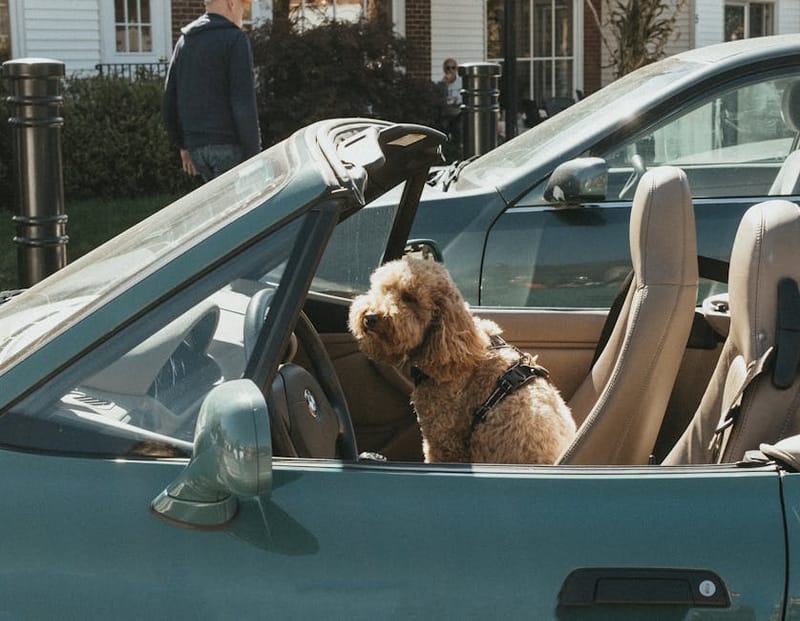
If you only buy one piece of dog travel equipment, the harness is the one that matters most. The Sleepypod Clickit Sport is the most-cited UK pick when the criterion is real crash-test certification rather than marketing language - and after digging through the published Center for Pet Safety data, the manufacturer specs, and the design choices that distinguish it from cheaper alternatives, the £80-100 price tag holds up. This review explains exactly what you are paying for, where it falls short, and which dogs and journeys it is genuinely worth it for.
Why this harness gets recommended so often
The dog car harness market is full of products labelled 'crash-tested'. The phrase is unregulated. Anyone can hang a harness on a sled and call the result a crash test. The Center for Pet Safety (CPS) is the only independent US non-profit that runs a published, repeatable crash-test protocol modelled on FMVSS 213 - the federal standard used for child car seats - and publishes the pass/fail outcome for every product it evaluates.
The Clickit Sport passes the CPS protocol in every size band Sleepypod sells: XS, S, M, L and XL. That is the single most important fact about this harness, and it is a fact you can verify yourself in the public CPS certification database rather than taking a manufacturer's word for it.
What CPS certification actually tests
The CPS protocol crashes a weighted dog test dummy at 30 mph into a fixed barrier and assesses three things: whether the harness keeps the dog on the seat, whether the harness or its anchor points fail mechanically, and whether the dog dummy contacts the front seatback or other interior surfaces hard enough to cause projectile-style injuries to passengers. Many widely-sold harnesses fail one or more of these criteria - the dog stays restrained but the chest plate breaks, or the dog ends up on the floor, or the tether snaps and turns the dog into a projectile.
Passing the CPS protocol is therefore a meaningful filter, and the Clickit Sport is one of a small number of harnesses that pass it across every size.
Direct seatbelt integration: the design that matters
The Clickit Sport does not use a separate tether to clip into the seatbelt receiver. The vehicle seatbelt threads through a guide on the harness itself, so the load path in a crash is harness body → seatbelt webbing → vehicle anchor. There is no tether to fail, no clip to spring open, and no adapter to break.
This is the single biggest design difference between the Sleepypod and the cheaper tether-based options. A cheap harness with a £4 plastic tether transfers all the collision force through the weakest part of the system. The Clickit Sport eliminates that weak link by making the seatbelt itself the restraint.
Build quality and materials
The harness is built from ballistic nylon (the same family of materials used in load-bearing military webbing), with a wide padded chest plate that distributes collision force across the dog's sternum rather than concentrating it on the throat or shoulder. Stitching is double-row throughout the load path. Hardware is metal - load-rated D-rings and adjuster slides, not pressed plastic. None of this is unusual on premium harnesses, but the combination here is what holds up under CPS-level forces.
Sizing and fit
Sleepypod publishes a sizing chart based on the dog's chest girth (measured behind the front legs) and weight. The most common sizing mistake is using weight alone - two dogs of the same weight can have very different chest dimensions, and a CPS-certified harness loses its certified protection if it is the wrong size. Measure twice, choose by chest girth first.
The five-band sizing covers most UK dogs from terriers through to large retrievers and shepherds. Very small toy breeds (under 5 kg) and giant breeds (over 50 kg) are outside the certified range - for those dogs, a crate restraint is usually a better option than a harness anyway.
What it costs you in daily use
The Clickit Sport adds 30-60 seconds at each end of every journey compared to a clip-on tether harness. You thread the seatbelt through the guide, fasten it, and check the slack. For an everyday school-run owner this friction can become a reason to leave the harness in the boot. For long-distance and motorway travel - exactly the journeys where crash forces are highest - those 30 seconds are well spent.
The harness is also bulkier than a dedicated walking harness. It works as a day-to-day walking harness in a pinch (there is a sturdy lead attachment ring on the back), but a household that walks the dog twice daily will probably want a lighter dedicated walking harness alongside.
Specifications
- Crash certified
- Yes - Center for Pet Safety (XS, S, M, L, XL)
- Sizes available
- XS, S, M, L, XL (5-50 kg approximate)
- Material
- Ballistic nylon, double-stitched, metal hardware
- Attachment
- Direct seatbelt integration (no separate tether)
- Walking harness use
- Yes, with rear lead attachment ring
- Typical UK price
- £80-100 depending on size
- Best for
- Long-distance and motorway travel, maximum-safety priority
Best for / not for
Buy the Clickit Sport if: you regularly drive your dog at motorway speeds, you do long trips with the dog in the car, you are uncomfortable putting a £15 harness with an unverified plastic tether between your dog and the road, or your dog is large enough that an unrestrained collision would put the front-seat passengers at serious risk.
Look elsewhere if: your dog only travels short distances at low speed, the budget genuinely won't stretch to £80, or your dog is outside the XS-XL size range - in that case a properly fitted crate strapped down with cargo straps is the better answer.
How it compares to the alternatives
Across the five-product roundup we covered in the best dog car harness UK comparison, the Clickit Sport sits at the top on safety and at the top on price. The ZuGoPet Rocketeer Pack is the closest CPS-certified alternative for very small dogs. Kurgo and Ruffwear are good mid-tier options that prioritise everyday usability. Mighty Paw is the budget pick. The Sleepypod's premium is real, but on this category the premium buys verifiable safety - not branding.
Frequently asked questions
Is the Sleepypod Clickit Sport legal to use in the UK?
Does the Clickit Sport work with all UK car seatbelts?
Can I use it in the front seat?
How does it differ from the Sleepypod Clickit Terrain?
How long does the harness last?
See the Sleepypod Clickit Sport
Editorial pick for safety-first UK drivers. Check current UK availability and sizing guidance before purchase.