Dog-Friendly Dartmoor: The Complete National Park Guide 2026
Dartmoor welcomes dogs across 954 sq km of granite tors and open moorland - with a 1 March–31 July lead rule for ground-nesting birds.
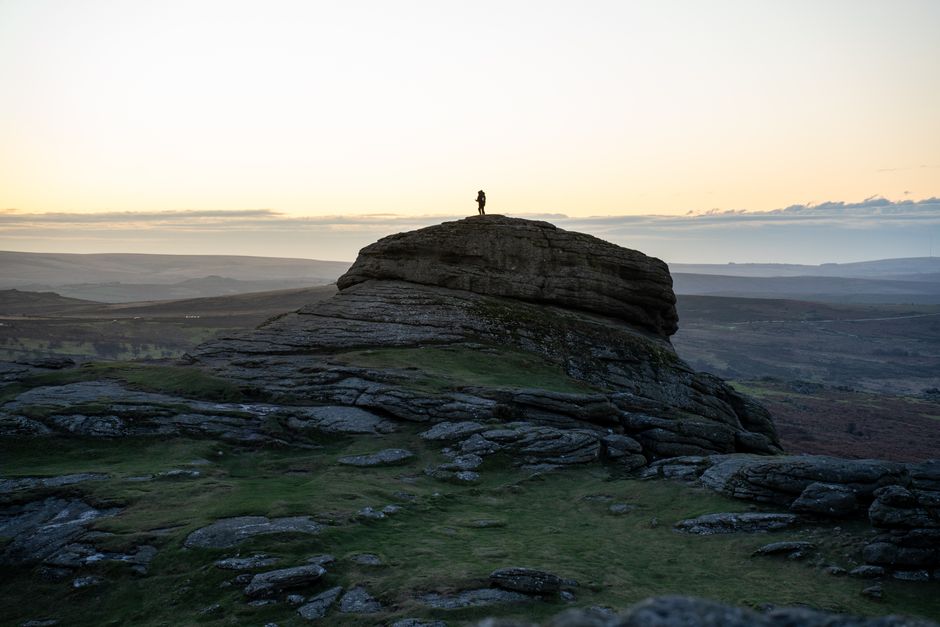
Dartmoor (the granite-bedrock upland in west Devon designated a National Park in 1951) is one of the most distinctive dog-walking landscapes in England - and one of the most heavily regulated. The combination of open access common land, free-roaming semi-feral pony herds, year-round commoning of sheep and cattle, and a population of ground-nesting birds (skylarks, meadow pipits, curlews, golden plovers) means the lead rules matter more here than almost anywhere else in the UK.
The Dartmoor National Park Authority publishes its dog rules clearly: dogs on lead during the livestock breeding and ground-nesting bird season (1 March to 31 July), and on lead anywhere near livestock. The penalty for worrying livestock is the most serious anywhere in UK dog-walking - under the Dogs (Protection of Livestock) Act 1953, farmers can lawfully shoot a dog persistently worrying their livestock. This guide covers the rules, the walks, the wild swimming spots, and the moorland pubs that have built reputations as serious dog-walker stops.
What are Dartmoor's dog rules?
Lambing season, ground-nesting birds, and Dartmoor's commoning livestock
Dartmoor's rules are stricter than most national parks because of two interacting realities: (a) it's an active agricultural landscape, with sheep, cattle and ponies grazing under ancient commoning rights year-round; and (b) the open moorland habitat is critical for ground-nesting birds that have declined steeply in lowland UK.
1 March to 31 July - dogs on lead throughout
The Dartmoor National Park Authority requires dogs on lead across all open moorland during this five-month window. Ground-nesting birds - skylark, meadow pipit, curlew, golden plover - nest directly on the moor floor and a loose dog passing nearby is enough to make the parent abandon the nest, eggs or chicks. Lambing season also peaks in this window (typically March to mid-May on Dartmoor's exposed pastures). Even the best-trained recall dog is too high a risk during this period; the rule is universal and signposted at every access point.
Lead at all times near livestock - year-round
Outside the 1 March – 31 July window, dogs can be off-lead in open moorland AWAY from livestock. The qualifier matters: Dartmoor's commoning rights mean sheep, cattle and ponies are present somewhere on the moor every day of the year, often in groups too small to see from a distance. The practical rule: keep dogs on a short lead anywhere within 50–100 metres of livestock, and drop the lead if cattle approach (the same advice as elsewhere - most cattle injuries to walkers happen when the dog is on lead and the owner tries to hold it during a herd charge).
Wild ponies - same lead rule applies
Dartmoor's semi-feral pony population (around 800 across the moor) are owned, branded, and rounded up annually for sale - they are emphatically not wild. They tolerate human proximity but are unpredictable around dogs, especially mares with foals (April to August). Apply the same on-lead rule as for sheep and cattle.
The shooting clause
Under the Dogs (Protection of Livestock) Act 1953, a farmer can lawfully shoot a dog that is persistently worrying their livestock. Dartmoor and the Lake District are the two UK upland landscapes where this has actually happened in recent years. Livestock-worrying reports go to Devon and Cornwall Police on 101 or to the Dartmoor Livestock Protection Society. The point is not to be alarmist - it's to take the lead rules seriously.
Which Dartmoor walks work best with a dog?
Haytor, Hound Tor, Yes Tor, and the granite tor network
Dartmoor's 160-plus granite tors define the walking landscape. Six routes consistently rank as the best dog-walking options.
Haytor and Hound Tor Circular
The standout route - 7.4 km (4.6 miles) from Haytor Visitor Centre car park, 308 m of elevation, crossing open moorland to Haytor Rocks and following the 1820 disused granite tramway northeast past Holwell Quarry. The path descends into Becka Valley through ancient mossy woodland before climbing to Hound Tor, where the substantial ruins of a deserted medieval village sit on the northeastern slope. The return tracks south via Emsworthy Mire. Best in spring (after 1 August lead-off date passes) for off-lead running, otherwise on lead throughout.
Yes Tor and Black-A-Tor Copse
From Meldon Reservoir car park, across the dam, up the hill to Yes Tor (619 m, Dartmoor's third-highest point), then south-west to Black Tor and down to Black-A-Tor Copse - an ancient SSSI woodland of moss-covered oaks growing from granite scree, one of England's most distinctive natural sites. Wild-swimming opportunity in the River West Okement at the bottom before climbing back to Meldon. ~10 km circular.
Postbridge and the East Dart River
Postbridge village (with the iconic medieval clapper bridge) is the start point for a network of riverside walks along the East Dart. Following the river north toward Hartland Tor and back is ~6 km circular, with multiple wild-swim spots in calm river pools. Lead in the village; off-lead permitted on the river path outside the 1 March – 31 July window.
Wistman's Wood
Wistman's Wood (the famous SSSI moss-covered ancient oak woodland at Two Bridges) is a 5 km out-and-back from the Two Bridges Hotel car park. The wood itself is fragile - strict on-lead at all times to protect the rare bryophyte assemblage and the ancient root systems. The walk to and from is open moorland, lead-on per the seasonal rule.
Bellever Forest
Bellever Forest (Forestry England conifer plantation south of Postbridge) is the off-lead alternative to the open moor. Off-lead permitted year-round on the forest tracks (no ground-nesting bird habitat in the conifer plantation), with circular walks of 3–8 km from the central car park. Good wet-weather choice when the moor is exposed and miserable.
Spitchwick Common
Spitchwick on the River Dart (between Ashburton and Holne) is the best Dartmoor swim spot for dogs. A wide forest-edged river clearing with shallow shelving banks, the swim pools warm up faster than the open-moor rivers, and the surrounding common is dog-friendly off-lead outside lead season.
Where can a dog swim on Dartmoor?
River pools, reservoirs, and the safety rules around fast-water sections
Dartmoor's rivers - Dart, East Dart, West Okement, Erme, Plym, Teign - drain off the moor in fast, cold, peaty water. Dogs love them but two safety factors matter: the rivers can rise rapidly after upland rain (1–2 metres in an hour is normal in the upper sections), and the bedrock granite makes paw-cut injuries common in fast water. Three reliable dog-swim spots:
- Spitchwick Common (River Dart) - wide, shallow shelving banks, slow-moving pools. The most popular family-and-dog swim spot on Dartmoor for good reason. Postcode TQ13 7NL for the car park.
- Bellever (East Dart River) - shallow gravel-bed sections downstream from the village. Good for paddling and shallow swimming; the deeper pools are upstream toward Sandy Hole Pass.
- Foggintor Quarry (Princetown) - disused granite quarry now a steep-sided clear pool. Better for confident swimmers; the entry is a scramble, not a beach. Avoid if you don't trust your dog's recall.
Avoid the upper moor rivers (above 400 m elevation) after any sustained rainfall - they rise dangerously fast and dogs can be carried downstream into rocky pinch points. Reservoirs (Burrator, Meldon, Fernworthy) prohibit swimming for drinking-water reasons; the surrounding paths are fine for dog walks but the water itself is off-limits.
Where to stay with a dog on Dartmoor
Coaching inns, holiday cottages, and camping options
Dartmoor has an unusually dense network of dog-friendly coaching inns and pubs-with-rooms - the moor's long history as a walking and pony-trekking destination means the accommodation market has built around outdoor visitors with dogs.
For pubs with rooms: The Two Bridges Hotel (central Dartmoor, Two Bridges) accepts dogs in selected rooms and serves a dog menu in the bar. The Mill End Hotel (Chagford, on the River Teign) welcomes dogs throughout. The Bearslake Inn (Sourton, on the western edge) is one of the moor's best-known dog-friendly pubs-with-rooms.
For cottages: our review of UK cottage providers shows the major agencies all have strong Dartmoor inventory, with the highest concentration around the eastern villages (Chagford, Moretonhampstead, Widecombe). The typical pet supplement is £25–£40 per dog per week.
For camping: the Camping & Caravanning Club Caravan and Motorhome Club Site at Tavistock accepts dogs; the Forestry England site at Bellever is a dog-friendly camping classic. Wild camping on Dartmoor has unique legal status - it's the only English national park where wild camping is permitted on certain designated commons, and dogs are part of standard camping kit. Check the DNPA wild-camping map before pitching as the permitted zones change annually based on agreements with landowners.
Which Dartmoor pubs welcome dogs?
Moorland village stalwarts and the after-walk classics
A working short-list of Dartmoor's most reliable dog-welcoming pubs:
- The Old Inn, Widecombe-in-the-Moor - village-square pub with roaring log fires, dog-friendly throughout. Popular post-Hameldown walk stop.
- The East Dart Inn, Postbridge - heart-of-the-moor pub with bar, rear beer garden and large front garden. Dogs in bar and gardens.
- Two Bridges Hotel, Princetown area - the central-moor classic with a dedicated dog menu (rare on Dartmoor). Dogs in bar and lounge.
- The Cornish Arms, Tavistock - water bowl at the entrance, dogs in bar and garden (not restaurant).
- The Whitchurch Inn, Tavistock - walkers' bar dog-friendly; known for steaks.
- The Tavistock Inn, Poundsgate - gateway-to-Dartmoor pub on the B3357, dog-friendly bar and garden.
- The Warren House Inn, Postbridge - the highest pub in Dartmoor (434 m), claimed continuously burning peat fire since 1845, dogs welcome.
- The Royal Oak, Meavy - village-green pub on the south-western moor, dog-friendly bar.
- The Plume of Feathers, Princetown - Dartmoor's oldest building (1785), dogs in bar.
For tea-room stops, the Visitor Centre cafés at Haytor, Postbridge and Princetown all accept dogs at outside tables. The Bovey Castle estate (luxury hotel near Moretonhampstead) is dog-friendly in the grounds though not the main house.
What about HMP Dartmoor and the prison area?
Princetown, the prison museum, and the moorland it sits on
HMP Dartmoor (the Category C prison in Princetown, built 1809 to hold Napoleonic prisoners-of-war) dominates the central moor visually but doesn't restrict any walking access. The prison museum (a small free museum in the Plume of Feathers area) is dog-free except for assistance dogs. The walking around Princetown - North Hessary Tor, the Foggintor Quarry route, the South Devon Railway disused-trackbed walk south - is some of the best on Dartmoor for off-lead running outside the 1 March – 31 July window.
Walking past the prison perimeter is unrestricted and tourists do it constantly; just keep dogs on lead within sight of perimeter buildings as a courtesy. Princetown itself is one of the highest-altitude villages in England (440 m), and the moorland weather can change in minutes - pack waterproofs for the dog as well as yourself, especially November to March.
What Dartmoor etiquette do dog owners need to know?
Livestock, ground-nesting birds, military firing ranges
Four practical rules will keep you on the right side of Dartmoor's working agricultural landscape.
Lead in lead season - no exceptions
The 1 March – 31 July lead rule is universal and signposted. Don't try to evaluate when 'it's probably fine' - the rule exists because trained, well-recalled dogs still trigger nest abandonment by ground-nesting birds. The five-month window is a tight enough budget on UK ground-nesters that even a single disturbance per nesting season meaningfully reduces breeding success.
Livestock approach - drop the lead
If cattle, ponies or sheep approach you and your dog is on lead, drop the lead and let the dog get away on its own. The cattle perceive the dog as the threat - when the dog moves away, the herd loses interest. Dogs always outrun cattle; humans don't. Most upland-walker injuries from cattle happen when an owner tries to retain control of a panicked dog mid-charge.
Military firing ranges
Dartmoor contains three Ministry of Defence live-firing ranges: Okehampton, Merrivale, and Willsworthy. Live firing happens roughly 200 days per year. The MoD publishes the firing programme weekly and red flags fly when ranges are active. Plan walks around the schedule; Wistman's Wood, Haytor, Princetown, Postbridge are all outside the firing area.
Mires and bogs
Dartmoor's blanket bogs (Sourton, Aune Head, Foxtor) are genuinely dangerous in poor visibility. Stick to marked paths and bridleways; if a dog is reluctant to follow a route, it usually has a better sense of the ground than you do. In poor visibility, head for the nearest path or road rather than crossing open moor.
If Dartmoor has you planning a wider UK trip with the dog, the same combination of beach access + dog-friendly pubs + upland walking shows up in several other regions worth knowing about:
- Norfolk Coast - Holkham, Wells, Brancaster, Cromer; sandy beaches and 84-mile Norfolk Coast Path.
- Brighton & Sussex Coast - Brighton, Hove, Seaford, Birling Gap, Eastbourne, Hastings, Camber Sands.
- Pembrokeshire Coast - Tenby, Newgale Sands, Whitesands; 186 miles of dog-friendly Coast Path.
- North Yorkshire Coast - Whitby, Robin Hood's Bay (year-round off-lead), Scarborough, Filey.
- Northumberland Coast - Bamburgh, Holy Island, Embleton; 64 miles of dog-friendly Coast Path.
- Lake District - Keswick, Borrowdale, Windermere; UK's largest National Park.
- Devon Riviera - Torquay, Paignton, Brixham; sheltered south-coast bay (next door to Dartmoor).
- Yorkshire Dales - Leyburn, Middleham, Settle; upland walks in the Yorkshire Dales National Park.