Dog-Friendly New Forest: Complete 2026 Guide
Visiting the New Forest with a dog needs more thought than most UK destinations — free-roaming ponies, pannage pigs, and nesting-bird season change the rules.
Dog-Friendly New Forest
Wide-open heathland, ancient woodland, and the UK's most famous free-roaming livestock — what you need to know before you go.
The New Forest is one of the most rewarding national parks to visit with a dog — and one of the most distinctive. Designated in 2005, it covers around 220 square miles of Hampshire and a small slice of Wiltshire, taking in heathland, ancient broadleaf woodland, river valleys, and a stretch of the Solent coast.
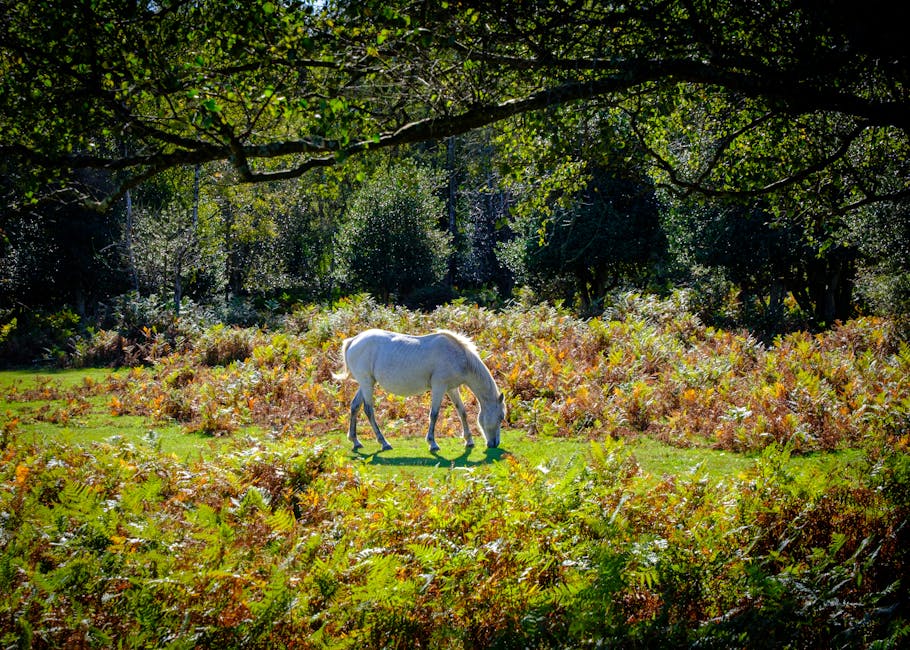
What makes it different from every other UK national park is what's on the land. The New Forest has been governed by ancient commoning rights since the 11th century. Today, that means around 5,000 ponies, 3,000 cattle, 200 donkeys, and a population of roe and fallow deer roam the forest freely. Most of the year you'll see them grazing the verges; in autumn you'll see pigs released for pannage. None of these animals are domesticated pets — they're working livestock owned by commoners and managed by the Verderers of the New Forest, a statutory body whose authority dates to a 1877 Act of Parliament.
For a dog visit, this changes the rules. You can absolutely have a brilliant time with your dog here — but a New Forest visit needs more planning than most destinations, particularly if your dog is reactive to livestock or has a strong chase instinct. This guide covers what to know, where to go, and when to visit.
What Makes the New Forest Different for Dog Walkers
Three things that genuinely set the New Forest apart from a Cotswolds, Lake District, or Yorkshire trip:
1. Free-roaming livestock everywhere. Ponies and cattle aren't fenced into specific fields — they wander the open forest, the heath, and right through villages. You'll often round a bend and find a pony in the middle of the lane. Dogs that haven't been around large livestock can struggle.
2. The pannage season (September to November). For roughly 60 days each autumn, commoners release domestic pigs to eat fallen acorns (which are toxic to ponies). The exact dates are set annually by the Verderers and announced on their website. Pigs are intelligent and territorial, and will defend their patch — give them very wide berth.
3. Ground-nesting birds (March to July). Large parts of the New Forest are designated SSSI and SPA for rare ground-nesting birds — Dartford warbler, woodlark, nightjar, redshank. Forestry England requires dogs to be on leads on heathland during the nesting season, with specific zones marked. Off-lead heath access opens back up in late July.
These aren't suggestions — they're enforced. The New Forest Dog Walking Code, published by Forestry England, is the authoritative source. Worth a 5-minute read before your first visit.
Best Bases for a Dog-Friendly Stay
Where to anchor your trip
The New Forest doesn't have one obvious base — it has a handful, each with a different feel.
Brockenhurst is the most-recommended village for first-time visitors. It sits at the heart of the forest, has its own railway station (direct trains from London Waterloo, around 90 minutes), and ponies regularly wander down the high street. The walks from Brockenhurst Park into the open forest are gentle and well-signposted. Lots of dog-friendly cafés and a few good pubs.
Lyndhurst is the administrative capital of the National Park and the busiest village. Useful for a day visit (the Visitor Centre and Verderers Hall are here), less peaceful as a base — traffic on the A35 cuts through. Boltons Bench and the open heath behind it are an easy walk from the village centre.
Burley is smaller, quieter, and more obviously rural. Good for a quieter base if you want to avoid weekend day-trippers. The Burley to Picket Post walk is a New Forest classic.
Lymington and Beaulieu put you on the southern edge with quick access to coast and estuary walks. Lymington has direct ferries to the Isle of Wight if you want to extend the trip — see our guide on travelling with a dog by train in the UK for the cross-Solent rail+ferry combination.
Sway, Beaulieu, and Bramshaw are smaller villages with good pubs and quieter overnight options. Bramshaw in particular sits right on the open commons.
For accommodation specifics, our broader pet-friendly hotels guide and pet-friendly cottages section cover the booking platforms with reliable dog-friendly filtering. New Forest cottages tend to book up fast for school holidays — six months ahead isn't excessive for August or October half-term.
Best Dog Walks in the New Forest
Five routes that suit different dogs and different days
We're describing route types and well-known starting points rather than naming specific routes that may have changed. For up-to-date trail conditions, check Forestry England's car-park signage on arrival — they update closures and seasonal restrictions weekly.
Bolderwood (woodland circular). A Forestry England car park near Lyndhurst with marked walks of 1.5 to 5 miles. The deer-watching platform is a highlight, but keep dogs leashed nearby — deer are wild and a chasing dog can push them onto the road. Mostly off-lead the rest of the route, outside of nesting season.
Brockenhurst Park to Hatchet Pond. A long flat walk south from Brockenhurst across open heath, ending at a large pond popular with families. About 6-7 miles round trip. Good for high-energy dogs; livestock-aware dogs only — the heath has ponies grazing at all times.
Burley to Picket Post. A genuine high-country walk along Forest Walk paths with views over the Avon Valley. About 5 miles. Better in shoulder seasons — exposed and busy in summer.
Lepe Beach (coast). On the southern edge of the National Park, near Beaulieu. Dogs are allowed year-round on certain stretches; check the seasonal restrictions sign at the entrance. Fantastic for water-loving dogs and a good break from forest walking.
Beaulieu River Path. Riverside walks from Beaulieu village. Tidal in places, so check the times. Quieter than the central forest, lots of bird life.
For every walk: pick up after your dog (Forestry England has bins at all major car parks), don't allow your dog to swim where livestock are drinking, and keep dogs out of bogs (the New Forest has genuine peat bogs that can swallow a small dog up to its shoulder).
Pannage Season — What Pet Owners Actually Need to Know
The forest's most distinctive 60 days
Pannage (sometimes called common of mast) is the right of New Forest commoners to release domestic pigs onto the open forest to eat fallen acorns. It's been practised since at least the 11th century and remains an active part of the forest's management. Acorns are highly toxic to ponies and cattle, so the pigs serve a real ecological function — they hoover the acorns up before the larger livestock can poison themselves.
When it happens. The exact dates are set each year by the Verderers of the New Forest based on the acorn crop. Typically pannage runs for around 60 days starting in mid-September and ending in mid-November, but the dates shift. Check the Verderers' website before booking an autumn trip.
Why it matters for dogs. New Forest pannage pigs are not the friendly farmyard pigs of children's books. They're working livestock — usually large, often Tamworths or Saddlebacks — and they're genuinely territorial when feeding. A pig defending acorns will charge a dog without hesitation. Pigs can outrun a Labrador over short distances and weigh 100-200kg. This is not a contest your dog will win.
What to do. During pannage, leash your dog in any area where pigs may be foraging (roadsides, woodland car parks, picnic areas, paths through oak woodland). If you encounter pigs while walking, give them at minimum 50 metres of space and back away slowly — don't try to circle around closely. If you're booking accommodation in the forest, ask the owner specifically about pannage in your dates and which areas locals avoid.
Ground-Nesting Bird Season
The reason for the leash rule
From 1 March to 31 July, Forestry England requires dogs to be on leads on most of the New Forest's heathland. This isn't bureaucratic — the forest is one of the last UK strongholds for ground-nesting birds whose populations have crashed in the wider countryside.
Dartford warblers nest in heather. Woodlarks and nightjars nest on bare ground. Redshank nest in wet grassland. Even a curious off-lead dog can flush a sitting parent off the nest, exposing eggs to predators or temperature loss within minutes. A single disturbance can fail a clutch.
What's allowed. Off-lead remains fine on enclosed paths through woodland. Specific signed dog-walking areas remain off-lead year-round (the New Forest now has a network of these — check the Forestry England website for the current map).
What's banned. Off-lead access on signed heathland zones during the nesting window. Forest keepers do enforce this, both directly and via PCSOs.
If you have a dog with a strong recall problem and a chase instinct, the simplest answer is: don't visit between March and July at all, or visit and stick to woodland walks for the duration. The bird populations have recovered partly because visitors now follow the rules — there's no upside to being the visitor who undoes that work.
Eating, Drinking, and Practical Bits
How a New Forest dog day actually runs
The pub-and-dog culture is strong here — most village pubs allow dogs in the bar area at minimum, and many in the dining room. Look for the Dog-Friendly accreditation sticker at the door, or call ahead. Our [dog-friendly pubs UK guide](/blog/dog-friendly-pubs-uk) covers what to check before assuming.
Most of the forest's main walking starts (Bolderwood, Hatchet Pond, Wilverley, Whitefield Moor, etc.) are at Forestry England car parks with paid parking. Annual passes are available if you'll visit more than 4-5 times. Cash machines are scarce — bring change or use the contactless meters.
There are streams in the forest but many run through livestock-grazed land. Carrying clean water for your dog is sensible. Most pubs are happy to refill water bottles for guests.
The New Forest has high tick density and a low background rate of Lyme disease. Use a vet-recommended tick prevention treatment, do tick checks after each walk (paying attention to the inside of the ears, between toes, and around the collar), and remove any attached ticks promptly with a tick tool.
Adders, the UK's only venomous snake, are present on New Forest heathland and bask on warm rocks and bare ground in spring and summer. Bites are uncommon but serious for small dogs. If your dog is bitten, keep them still, carry them where possible, and contact a vet immediately — don't wait for symptoms.
When to Visit With Your Dog
Each season has trade-offs
Spring (March–May) — Heathland on-lead due to nesting birds. Woodland and signed dog-walking areas off-lead. Bluebells in the broadleaf woodlands in late April/early May make this stunning. Adders becoming active.
Summer (June–August) — Busy. Beaches and main car parks fill before 10am on weekends. Pannage hasn't started yet. Heathland still on-lead until late July. Hot days are tough on dogs — start early or evening only.
Autumn (September–November) — Pannage runs roughly mid-Sept to mid-Nov; pigs in the woodlands. Heathland off-lead access returns from August. Spectacular colour in the broadleaf woods in late October. Best season for many people, but pannage adds a real planning constraint.
Winter (December–February) — Quietest. Off-lead almost everywhere outside dog-walking exclusion zones. Roads can be hazardous because ponies often sleep on warmer tarmac at night. Days are short — plan walks for the 11am–3pm window when the forest light is genuinely beautiful.
Frequently Asked Questions
Are dogs allowed off-lead in the New Forest?
What happens if my dog chases a New Forest pony?
Can I camp in the New Forest with my dog?
How do I get there with my dog?
Are there dog-friendly beaches near the New Forest?
What if my dog is reactive to other dogs or livestock?
Are New Forest pubs really happy to have wet, muddy dogs?
Related Reading
Plan the wider trip
If you're combining the New Forest with a longer UK trip, these guides cover the bits adjacent:
- Dog-Friendly Days Out Near London — The New Forest is easily a day-trip from West London for early starters.
- Travelling with a Dog by Train in the UK — Brockenhurst is a direct rail stop from London.
- Travelling with Your Dog by Car — Plus the practicalities of UK road trips with a dog.
- Complete Dog Travel Checklist — Everything to pack for a multi-day trip.
- Dog-Friendly Pubs in the UK — Wider context on UK pub-and-dog etiquette.
- Dog-Friendly Hotels in the UK — For booking the New Forest accommodation.