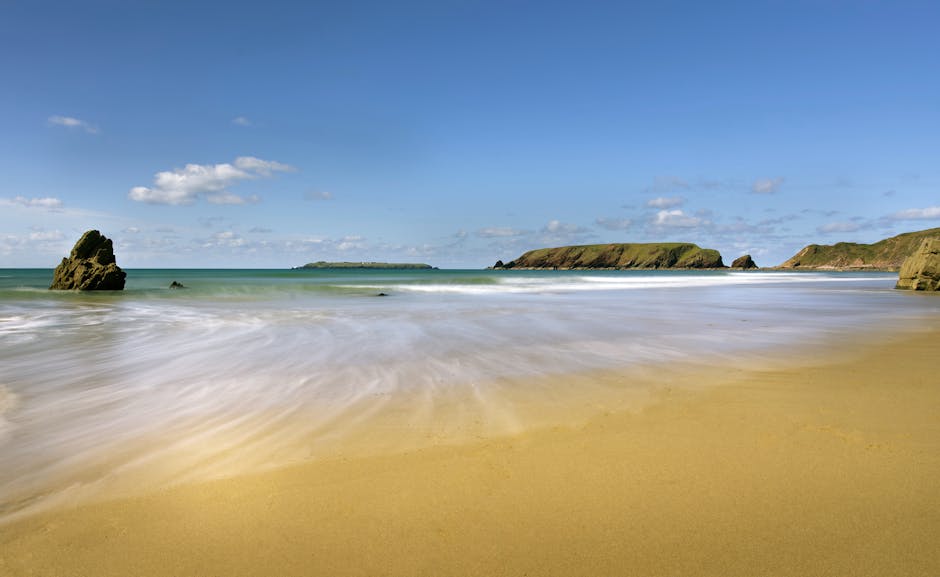
Dog-Friendly Pembrokeshire: A Complete Guide for 2026
Dog-friendly beaches, the Coast Path, accommodation and pubs across Pembrokeshire — the most dog-welcoming county in Wales for coastal escapes.
Dog-Friendly Pembrokeshire
186 miles of Coast Path, dozens of year-round dog beaches and a long list of pubs that welcome muddy paws — your complete guide to taking the dog to West Wales.
Pembrokeshire is, by some distance, the most dog-friendly stretch of coastline in Wales — and arguably in Britain. The whole county is built around the Pembrokeshire Coast National Park, which runs for 186 miles from St Dogmaels in the north to Amroth in the south, almost all of it walkable with a dog. There are more than 50 beaches in the county, a high proportion of them dog-friendly all year, and the local hospitality is properly tuned to dog owners — most pubs allow dogs, most cottages welcome them, and even the boat trips around Skomer accept them on the right tides.
This guide covers the practical decisions: which beaches are worth the drive, where to stay, the standout sections of the Coast Path, the pubs that go beyond just-tolerating-dogs, and the things you actually need to know about livestock, tides and seasonal restrictions. If you're more broadly comparing UK destinations, see our Cornwall guide and the all-Wales cottages roundup.
The best dog-friendly beaches
Pembrokeshire splits roughly into north (rugged, fewer crowds, fewer restrictions) and south (flatter, busier, more seasonal bans).
Year-round, no restrictions
Newgale Sands — Two miles of west-facing beach near Solva. Dogs allowed all year, off-lead, on the entire stretch. Strong currents at high tide; strong wind almost always. Surfers, kite-surfers and dogs share the sand companionably.
Whitesands Bay — North-westernmost beach in Wales. Dogs banned from the main central section between May and September, but the north and south ends of the bay remain open year-round and are the better dog walks anyway — quieter, with rock pools and direct access to the Coast Path.
Manorbier — South coast, between Tenby and Pembroke. Dogs allowed year-round, no seasonal restrictions. The Norman castle on the cliff above adds a photogenic backdrop that genuinely matters if you spend half the holiday taking pictures of the dog.
Freshwater West — South-westernmost beach in Wales. The film set for parts of Robin Hood and Harry Potter and the Deathly Hallows Part 1. Dogs allowed year-round across the entire bay. Currents are dangerous — don't let the dog swim outside the lifeguarded summer hours.
Marloes Sands — Reached only by foot from a National Trust car park, which keeps the crowds down. Dogs allowed year-round. Best at low tide when the full mile of sand opens up.
Year-round but small or remote
Abermawr — A pebble bay backed by woodland, near Mathry. No restrictions. Tiny car park; arrive before 10am in summer.
Caerfai Bay — Closest beach to St Davids. Dogs allowed all year. Steep steps down; not suitable for senior dogs or owners with mobility issues.
Trefin / Aber Draw — A pebble cove rather than a sandy beach, reachable from the Coast Path. Dog-friendly with no restrictions. Quiet even in August.
Seasonal restrictions (May 1 – September 30)
Tenby's main beaches (North, South and Castle), Saundersfoot, Broad Haven (south) and the central section of Whitesands have summer dog bans. Outside those dates the same beaches are open and excellent — especially out of season, when many of the best UK dog beaches are at their quietest.
Walking the Coast Path with a dog
186 miles in total. These are the seven sections that work best with a dog.
The Pembrokeshire Coast Path is one of Britain's National Trails and almost all of it is dog-friendly. Stiles are the main practical issue — there are around 300 of them along the full length, and most are dog-friendly with adjacent gaps or built-in dog flaps, but a handful are still ladder-style. The trickiest sections for older or less mobile dogs are around St Govan's and the Castlemartin range. The flattest and most accessible sections are around Tenby and Saundersfoot.
Standout day walks
- St Davids Head loop (5 miles, moderate). Coast path out, back inland via Coetan Arthur burial chamber. Off-lead-friendly through most of the route; livestock at the inland end.
- Whitesands to Porthselau and back (4 miles, easy). Sheltered, flat, two beach stops. Best with a swim-loving dog.
- Strumble Head to Carregwastad Point (5 miles, moderate). Dramatic cliff scenery, almost no people, regular seal sightings between September and November.
- Solva harbour loop (3 miles, easy). Coast path west to Porthmynawyd, back via the inland valley. Pub lunch in Solva at the end.
- Stackpole Quay to Barafundle and Broad Haven (5 miles, easy). National Trust path; one of the most photographed sections of the path. Dogs welcome year-round at Stackpole and Broad Haven.
- Manorbier to Freshwater East (4 miles, moderate). Cliffs, wildflowers, occasional ponies. The fastest way to feel like you're miles from anyone.
- Cemaes Head from Poppit Sands (4 miles return, moderate). Highest cliffs in Wales; dolphins and porpoises common in summer.
For the longer-distance approach — section-walking the whole 186 miles over a fortnight or two — the typical pattern is to base in Newport, St Davids and Tenby for the three rough thirds. The dog travel checklist covers what to pack for multi-day coastal walks.
Where to stay
Cottages, hotels and campsites that genuinely welcome dogs — not just tolerate them.
Self-catering cottages
Pembrokeshire has more dog-friendly self-catering than any other Welsh county. The two big regional agencies — Coastal Cottages of Pembrokeshire and FBM Holidays — both have dog-friendly filters and accept up to 3 dogs at most properties. Quality Cottages is the third major option and tends to have the more secluded farm-based stays. Sykes Cottages and HolidayCottages.co.uk also list a strong selection. Expect to pay £20–£40 per dog per stay; some properties have stopped charging entirely.
The areas with the densest cluster of good dog-friendly cottages: Solva, St Davids, Newport, Dinas Cross (north coast) and Manorbier, Lawrenny, Angle (south coast). Tenby itself has fewer, but neighbouring villages like Penally and Saundersfoot have many.
Hotels
Pembrokeshire's dog-friendly hotel market is smaller than its cottage market but still substantial. Strong choices include The Grove of Narberth (relais & châteaux, dog beds in rooms, second dog free), St Brides Spa Hotel in Saundersfoot, Twr y Felin in St Davids, and Penally Abbey near Tenby. Most charge £15–£25 per dog per night. See our broader UK dog-friendly hotels guide for what to look for.
Campsites and glamping
Pembrokeshire is genuinely outstanding for dog-friendly camping — most coastal campsites accept dogs and many have direct Coast Path access. Caerfai Farm (St Davids), Trefalen Farm (Bosherston), West Hook Farm (Marloes) and Carrog Hen (Newport) are all dog-welcoming with sea views. Our UK dog-friendly camping guide covers what to look for in a coastal pitch with a dog.
Dog-friendly pubs and food
Where Pembrokeshire really shines — almost everywhere lets dogs in, and a meaningful number have proper dog menus.
Pembrokeshire has one of the highest densities of dog-friendly pubs in Britain. Some standouts:
- The Cambrian Inn, Solva — Coastal-village pub with a back garden facing the harbour. Welcomes dogs throughout, including in the dining area.
- The Sloop Inn, Porthgain — On the Coast Path between Abereiddi and Trefin. Famous for the post-walk pub lunch. Dogs throughout.
- Cornerpiece, St Davids — Dogs welcome, water bowls outside, decent coffee for the humans.
- The Stackpole Inn — Award-winning gastropub at Stackpole. Dogs in the bar area; bookings essential in summer.
- The Sailmakers, Tenby Harbour — Year-round dog-friendly even within Tenby's seasonal beach restrictions.
- Bessie's Tafarn, Cwm Gwaun — A rural classic in the Preseli foothills. Dogs welcome and locals will know your name within five minutes.
- The Druidstone Hotel, Druidstone Haven — A coastal institution with views over St Brides Bay. Dogs in the bar and at outside tables.
Beyond the pubs, look out for the Refresh dog-friendly cafes network — most of the independent cafes in St Davids, Newport and Solva are dog-welcoming; a high proportion serve dog ice cream in summer. Across the Bristol Channel, our UK-wide dog-friendly pubs guide covers the same ground at national scale.
Things to know before you go
Five practical things that catch first-time visitors out.
- Livestock is everywhere. The Coast Path runs through working farmland for most of its length. Sheep, cattle and ponies graze right up to the path. Even reliable recall dogs should go on the lead at sight of livestock — and it's worth knowing the law: in Wales, a farmer can legally shoot a dog that is worrying livestock, and the burden of proof is on the dog owner.
- Adders. Pembrokeshire has one of the highest adder populations in the UK. Bites peak between April and September, especially on warm days when adders bask on path edges. Sticks-or-stones tossing keeps them moving; if your dog is bitten, stay calm, carry rather than walk back, and call a vet immediately.
- Coast Path stiles. Around 30 of the 300 stiles are still ladder-style and not all dogs can manage them. The Pembrokeshire Coast Authority publishes an up-to-date access map showing which sections are dog-friendly throughout. Check before committing to a long section walk.
- Seal pups. September to November sees seal pups on many of the lower beaches and in cliff coves. Dogs and seal pups don't mix — keep dogs on the lead from September onwards on rocky beaches.
- Vehicle ferries. Stena Line and Irish Ferries both sail dogs from Pembroke and Fishguard to Ireland. Dogs travel in the car kennel area or remain in the vehicle on shorter crossings. Our flying-with-a-dog guide compares all the routes off the British Isles.
Frequently asked questions
When is the best time to visit Pembrokeshire with a dog?
Are the Coast Path beaches safe for dogs to swim?
Do I need a car?
Are there vets nearby in case of emergencies?
What about boat trips to the islands?
Is Pembrokeshire better than Cornwall for a dog holiday?
What to read next
If Pembrokeshire is on the shortlist, the natural next reads are pet-friendly cottages in Wales for accommodation options, dog-friendly camping if you'd rather be under canvas, and our complete dog travel checklist for the kit list.
Heading further afield?
Compare Pembrokeshire against the other top UK regions for a dog-friendly break.