Dog-Friendly Northumberland: The Complete Guide for 2026
Northumberland is one of the UK's quietest, dog-friendliest counties. Empty beaches, Cheviot walks, Hadrian's Wall, Kielder Forest, and welcoming pubs.
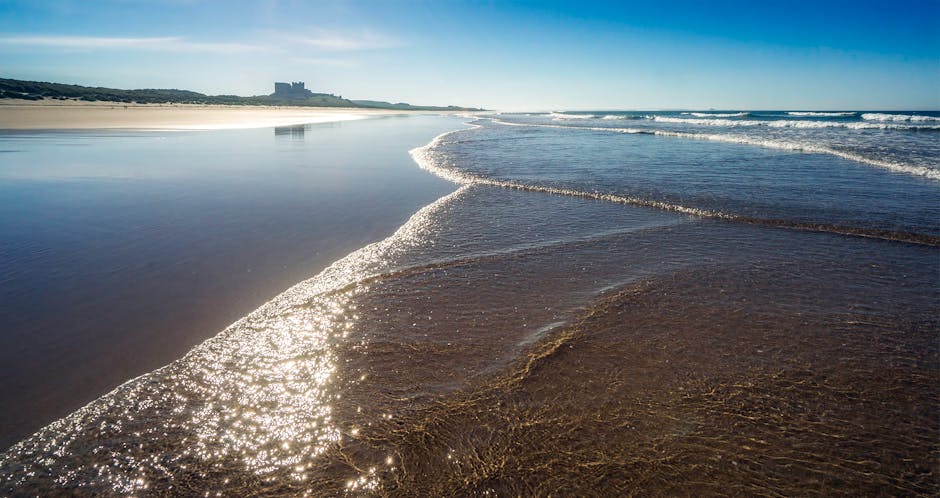
Northumberland is one of the UK's most underrated dog-friendly destinations. Vast empty beaches, the lowest population density of any English county, miles of off-lead-friendly footpaths through Cheviot heather, a National Park that allows dogs almost everywhere, and the kind of pubs where the landlord asks about your dog before you've ordered. If you're tired of jostling for space on the South Coast or queuing at Lake District car parks, this is the corner of England you've been looking for.
Why is the Northumberland Coast such a dog-friendly destination?
Britain's quietest beaches
The Northumberland Heritage Coast runs roughly 64km from Amble in the south to Berwick-upon-Tweed at the Scottish border. It is consistently rated one of the UK's most beautiful stretches of shoreline and - crucially - almost all of it is genuinely dog-friendly year-round. Northumberland's beaches comfortably hold their own against the much busier south-coast names in our national roundup of the UK's best dog-friendly beaches. The seasonal restrictions you find on Devon, Dorset and Cornwall beaches are largely absent here. Most of the iconic spots have no dog ban at any point in the year, which is rare on the English coast.
Bamburgh Beach
Wide, white-sand, framed by the dramatic clifftop silhouette of Bamburgh Castle (the medieval castle on Northumberland's coast). Dogs are allowed all year on the main beach. Park at the village (free in winter, paid in summer) and walk down past the dunes. The beach stretches north for over 5km towards Budle Bay - far enough to lose every other dog walker by the second mile.
Druridge Bay
A huge sweeping arc of sand south of Amble. Dogs welcome year-round. The dunes back onto Druridge Pools nature reserve (keep dogs on leads here - ground-nesting birds). Great for a bracing two-hour walk; quieter than Bamburgh because there is less of an obvious destination.
Embleton Bay
Smaller, equally lovely, with the ruined Dunstanburgh Castle at the southern end giving the perfect 6km out-and-back coast walk along to Craster (smoked-kipper village, dog-friendly pub at the end). Dogs allowed all year. Park at Embleton golf club for the easiest access.
Beadnell Bay and Newton Haven
Low Newton-by-the-Sea is a tiny National Trust hamlet with a famously dog-friendly pub (the Ship Inn) right on the green, and a curving sandy bay either side. Beadnell to Low Newton is one of the better short coast walks if you want something gentler than Dunstanburgh.
Holy Island (Lindisfarne)
Dogs are allowed across most of the island including the priory ruins and the castle grounds (on a lead). Check the tide-safe causeway crossing times before you go - the road floods twice a day and people get caught out every single year. The mudflats are fascinating but stay on the marked Pilgrim's Way at low tide; dangerous quicksand exists either side.
The Cheviot Hills and Northumberland National Park
Empty hill walks with no honeypot crowds
The Cheviot itself (815m)
The county's highest point. The standard route from Langleeford up the Harthope Valley is a long but unrelenting climb - about 16km round trip, 700m of ascent. Suitable for fit dogs in cool weather only; there's no shade and limited water on the upper slopes. Simpler alternative: walk the lower Harthope Valley as far as Hawsen Crags and back (8km, mostly flat).
Simonside Hills
A shorter, more dramatic option south of Rothbury. Three rocky outcrops above a forest plantation, with views back to the coast on a clear day. The 7km circular from Lordenshaw car park is one of the best half-day walks in the National Park for a moderately fit dog.
College Valley
One of the most remote and beautiful valleys in England. Vehicle access is permit-only (apply via the College Valley estate website, or park at Hethpool and walk in). Dogs off-lead away from the active sheep grazing season; wonderful for free-running.
Hadrian's Wall
Roman history with a dog at heel
Dogs are allowed at most of the on-route sites. English Heritage allows dogs at Housesteads Roman Fort, Birdoswald, and Chesters Roman Fort (on a lead). Vindolanda allows dogs in the outdoor areas but not the museum. Bring a long lead - the Wall path itself runs alongside active farmland with sheep for much of the way.
Kielder Forest and Water
England's biggest forest, England's biggest reservoir
Where can I find dog-friendly towns and villages?
Where to stop, eat, and shelter from the rain
Alnwick
Market town with a famously dog-friendly bookshop (Barter Books, in the old railway station). Alnwick Garden allows well-behaved dogs in many areas; the castle does not. Excellent independent cafes mostly take dogs in the bar/courtyard areas.
Berwick-upon-Tweed
England's northernmost town, with Elizabethan walls you can walk almost entirely with a dog (3km circular). Quieter than Alnwick, with a clutch of dog-welcoming pubs and the wide [Tweed](/blog/dog-friendly-scottish-borders/) estuary for walks.
Rothbury
Gateway to the Simonside Hills. Cragside House (NT) doesn't allow dogs in the house but does in the extensive grounds (on leads). The riverside walk along the Coquet is short but lovely.
Craster
Tiny harbour village, world-famous for kippers. The Jolly Fisherman pub on the harbour is unambiguously dog-friendly and serves the kippers a few hundred metres from where they're smoked.
Wooler
Quiet base for the Cheviots, with several outdoor shops, a few cafes, and the pubs you would hope for after a long hill day.
Where to Stay with a Dog
Cottages, hotels, and pubs with rooms
Northumberland has more dog-welcoming self-catering than almost any other English county - partly a product of its rural-tourism economy and partly because farms here have been diversifying into holiday cottages for decades. Most well-known cottage portals will return a respectable list, but quality varies. For higher-end picks, look at the National Trust Holidays properties (Inner Farne lighthouse keeper's cottage in particular) and the Northumbria Byways small cottage portfolio. For best value, the larger aggregator sites (Sykes, Cottages.com) tend to dominate.
If you're combining a Northumberland trip with the broader area, our Yorkshire guide and Scottish Highlands guide cover the natural extensions south and north respectively. For accommodation styles to compare, the Lake District cottage roundup covers a similar northern-England price band.
Practical Tips for a Northumberland Dog Trip
Things the locals know
Drive, don't bus.
The county is rural, the bus network is thin, and public transport between the main areas (coast, Cheviots, Wall) is impractical. Bring a car or hire one in Newcastle.
Watch for sheep, always.
Almost all upland walking here is on active farmland. Even very biddable dogs should be on a lead anywhere near livestock - farmers are legally entitled to shoot dogs they reasonably believe are worrying sheep.
The midges are real but manageable.
Less savage than the Scottish Highlands but bad on still summer evenings, especially near Kielder Water. A tiny tin of Smidge or Avon Skin So Soft sorts you out.
Fresh water is everywhere on the coast - but salty.
Bring a [travel water bottle](/blog/best-dog-water-bottle-travel-uk/). Long coastal walks have no fresh water sources for the dog and salt water makes them worse, not better.
Tides matter on the Holy Island causeway.
Check the official safe-crossing times before you go and stick to them. The signs are not advisory.
Pack for four seasons.
The weather changes fast in Northumberland - fine on the coast, sleeting on the Cheviot, all in one afternoon. Layers, waterproofs, and a towel in the car for a wet dog.
What are the most-asked questions?
Q01Are Northumberland's beaches dog-friendly all year?
Q02Is Hadrian's Wall a good walk with a dog?
Q03Can I take my dog to Bamburgh Castle?
Q04How does Northumberland compare to the Lake District for a dog holiday?
Q05What about the Scottish border - can I cross with my dog?
Q06Are there any places I genuinely cannot take a dog?
Why Northumberland Should Be on Your List
The case for going this year