How Do I Get My Cat Into a Carrier?
A calm, step-by-step method for getting a reluctant cat into a carrier without stress or scratches, plus how to make the carrier less scary for good.

Few pet tasks are as fraught as posting a determined cat through a small plastic door while it turns into a starfish. It does not have to be a battle. With the right carrier, a little preparation and a calm technique, most cats can be loaded in seconds rather than minutes - and without the scratches. Here is how to do it, and how to make the whole thing easier for good.
Why won't my cat go in the carrier?
For most cats the carrier is not the problem in itself - it is what it predicts. If the only time the carrier ever appears is minutes before a car trip to the vet, your cat has learned to treat the sight of it as a warning. Add the fact that being picked up and confined removes a cat's sense of control, and resistance is entirely rational from their point of view.
That matters because the fix is as much about association as technique. A cat that is relaxed around the carrier is one you can load calmly; a cat that already dreads it will fight however good your handling is.
What is the easiest way to get a cat into a carrier?
Work through these steps in order. The first two are done in the days before you travel; the rest are for the moment itself.
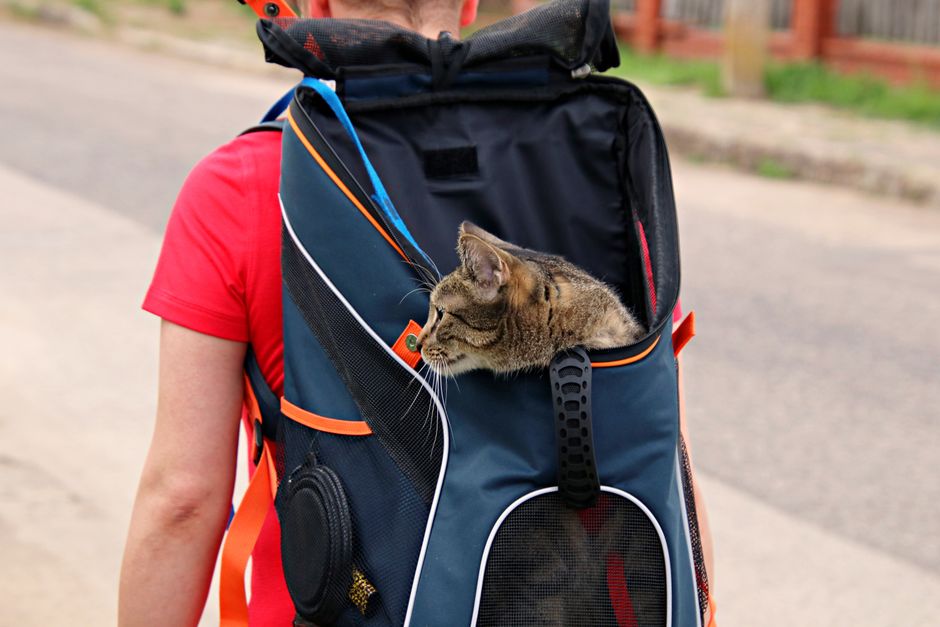
Pick a carrier that opens from the top
A top-loading carrier, or one whose upper half unclips, is far easier than a small front-door-only box. You lower the cat straight down instead of pushing them through a narrow opening.
Leave the carrier out for days beforehand
Put it in a room your cat likes, with familiar bedding and the odd treat inside, so it becomes ordinary furniture rather than a vet-trip signal.
Set it up calmly on the day
Stand the carrier upright and stable, open the door or lid, and line it with a blanket that smells of home. A feline pheromone spray such as Feliway (a synthetic copy of the scent cats leave when they feel safe), applied 15-30 minutes earlier, helps further.
Lower the cat in back-end first
Hold your cat gently but securely and guide them in rear-end towards the opening, so they cannot brace their front legs against the frame. With a top-loader, simply lower them straight down and let their feet settle.
Close, cover and reassure
Latch the door, drape a light breathable cloth over part of the carrier to cut visual stimulation, and keep your voice low and steady. Move to the car without a long delay.
What if my cat still won't go in?
For a real escape artist, a large towel is your best friend. Wrap your cat loosely in it like a gentle burrito, keeping the legs contained, then lower the whole bundle into a top-opening carrier and slide the towel away. It contains the claws and gives your cat something to grip other than you.
If every attempt still ends in a standoff, stop and reset rather than forcing it - a bad experience makes the next one harder. A secured carrier is also how you meet the UK requirement to keep pets suitably restrained when driving, set out in Highway Code Rule 57, so it is worth getting the routine right.
What kind of carrier makes loading easier?
The carrier you buy decides how hard the job is. A hard-sided carrier that opens both from the front and the top is the most versatile: you can lower a calm cat in through the top, and unclip the whole top half if you need to lift a frightened one straight out at the other end. Soft carriers are lighter and cosier but sag when you try to post a cat in, and small front-only boxes force the exact head-first standoff you are trying to avoid.
Size matters too. Your cat should be able to stand up, turn around and lie down, but not so much larger that they slide around when the car moves. Look for firm latches, mesh on more than one side for airflow, and a base you can line with a non-slip mat or familiar bedding. If you are buying for the car specifically, choose one you can thread a seatbelt through, so the same carrier keeps your cat both calm and legally restrained.
How do I make the carrier less scary long term?
The lasting fix is desensitisation. Keep the carrier out permanently as part of the furniture, feed occasional meals inside it, and let your cat explore it with the door fixed open. Over a few weeks the carrier stops being a trap and becomes just another cosy box - at which point loading for a real journey is a fraction of the struggle. If your cat has had years of bad carrier experiences, be patient: rebuilding trust can take several weeks of short, positive sessions, but it is far kinder and more reliable than wrestling before every trip. Pair that with a properly packed travel setup and even nervous cats travel far better.
How far ahead should I prepare?
For a planned trip, start at least a week ahead if you can - two is better for an anxious cat. Bring the carrier out, leave the door open, and drop a favourite treat or a pinch of catnip inside each day so your cat chooses to investigate on their own terms. Feed the odd meal in or beside it, and never shut the door during these practice sessions; the whole point is that the carrier never traps them by surprise.
On the day itself, set everything up before you fetch the cat, close windows and doors to the room, and stay unhurried. If you only have an hour's notice - an emergency vet trip, say - fall back on the towel-wrap and top-loading method above, and accept that this one will be harder. The calm, prepared version is the routine to aim for next time.