Comparison · 3 picks
Cat Tree vs Wall-Mounted Furniture: UK Guide
Affiliate disclosure: we may earn a commission when you buy through links on this page, at no extra cost to you. Our verdicts are our own and are not influenced by compensation. As an Amazon Associate I earn from qualifying purchases.
Cats want height. Climbing, perching and watching the room from above is a natural behaviour, and both a cat tree and wall-mounted furniture give them that vertical territory. The real question is which suits your home: a freestanding tree you can set up in minutes, or wall-fixed shelves that free up the floor. This guide weighs up both, with UK-buyable picks for each.
Cat tree or wall-mounted furniture: which should I choose?
- Choose a cat tree if you want the simplest option - no drilling, everything in one unit, and easy to move or take with you. Best when you have the floor space and a cat or two who like a solid base to launch from.
- Choose wall-mounted furniture if floor space is tight, you rent and can make small fixings, or you want a tidy, modern look. Best when you can fix securely into wall studs and are happy to plan a small climbing route.
- Consider both in a busy multi-cat home - a tree as the main hub plus a couple of wall steps to extend the territory upward.
What are the pros and cons of a cat tree?
A floor-standing cat tree is the default for good reason. It arrives as one unit, assembles in around half an hour with no tools beyond what is in the box, and combines perches, scratching posts and a hiding cave in one place. You can move it between rooms or homes, and there is nothing to drill.
The trade-offs are floor space and stability. A tall tree takes up a real corner of the room, and cheaper or top-heavy models can wobble when a cat launches off the top, which is why the better ones include a wall-anchor strap. Use it - it is the single biggest safety upgrade for a tree.
What are the pros and cons of wall-mounted cat furniture?
Wall-mounted shelves, steps and lounges free up the floor entirely and can look far tidier in a small or modern room. Fixed properly into wall studs, they are extremely stable - there is simply nothing to tip over - and you can arrange a climbing route to suit your space and your cat's confidence.
The catch is installation. They must be screwed into studs, not just plasterboard, or they will pull out under a cat's weight, so they are less suited to renters who cannot drill. They also take more thought to plan than dropping a tree in a corner, and a set of shelves is less of an all-in-one than a tall tree with a built-in cave and posts.
At a glance
All 3 options side by side.
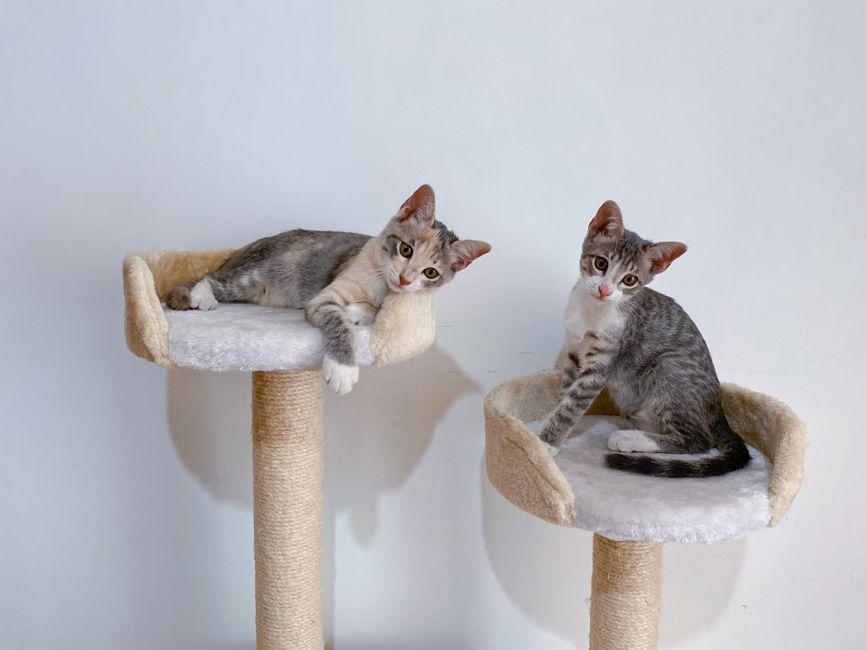 FEANDREA Cat Tree (Widened Perch) FEANDREA Cat Tree (Widened Perch) | 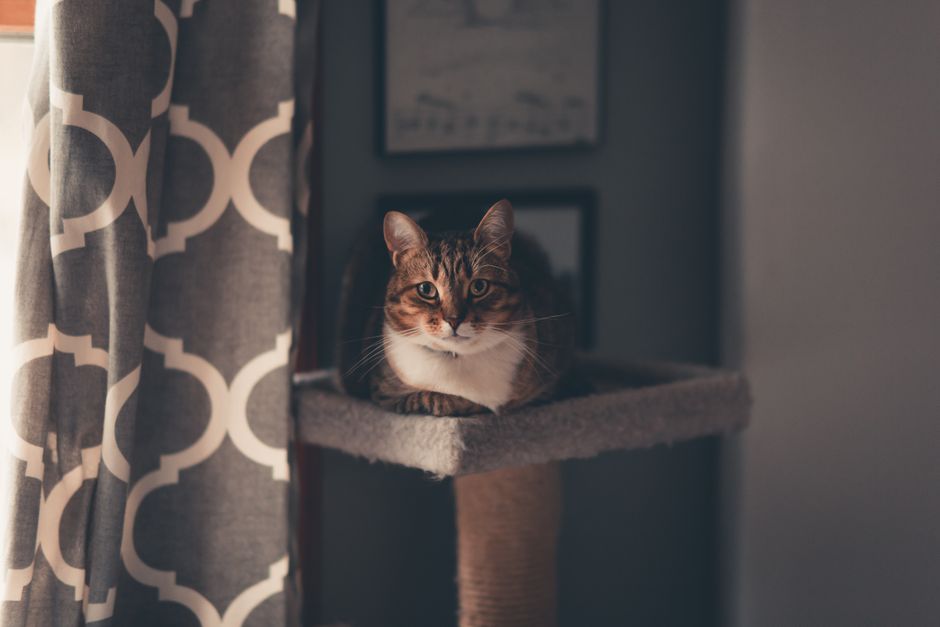 Yaheetech 158cm Cat Tree Yaheetech 158cm Cat Tree | 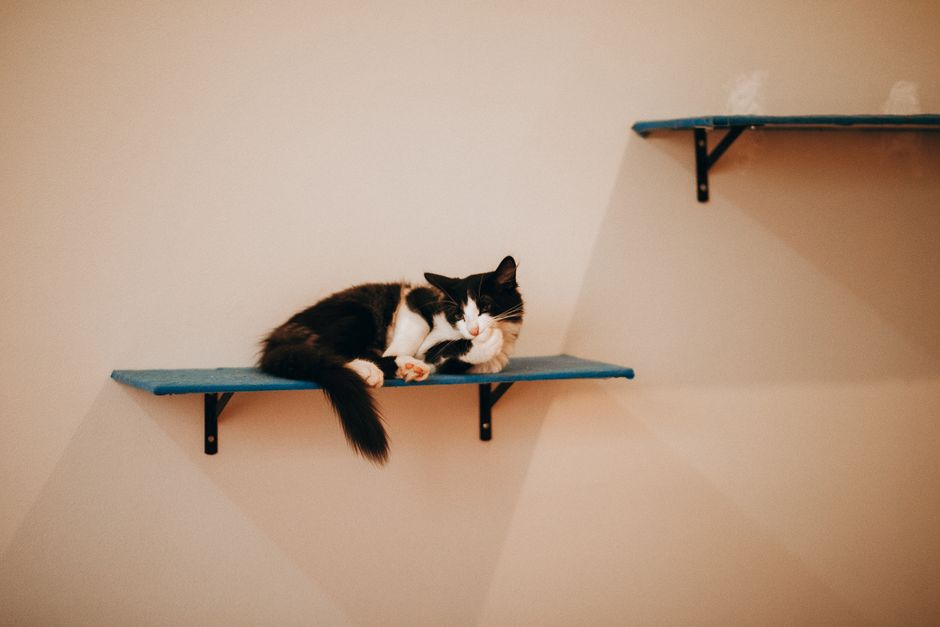 Trixie Wall-Mounted Cat Lounge Set Trixie Wall-Mounted Cat Lounge Set | |
|---|---|---|---|
| Price | See price | See price | See price |
| Best for | The best pick for most homes. | The value pick, and the one for multi-cat homes. | The pick when floor space is tight or you want a clean look. |
| Review | Read review → | Read review → | Read review → |
| Buy |
The picks in detail
FEANDREA Cat Tree (Widened Perch)
Bottom line. The best pick for most homes. A sturdy floor-standing tree with wide perches, a cave and sisal posts that most cats take to straight away, and it needs no drilling. It eats some floor space, but it is the easy, all-in-one choice.
Pros
- Wide perches suit large or older cats
- Sturdy base, stable when climbed
- Straightforward to assemble
Cons
- Takes up floor space
- Plush covering sheds a little at first
Yaheetech 158cm Cat Tree
Bottom line. The value pick, and the one for multi-cat homes. Two condos, perches and a hammock across 158cm give several cats room to spread out without squabbling, at a lower price than most trees this size. The footprint is large, so measure your space first.
Pros
- Lots of levels and hiding spots for the price
- Big enough for multiple cats
- Sturdy baseboard and wall strap
Cons
- Large footprint in the room
- Plush is functional rather than plush
Trixie Wall-Mounted Cat Lounge Set
Bottom line. The pick when floor space is tight or you want a clean look. Fixed to wall studs it gives a rock-solid climb with zero wobble and no floor footprint. You need to drill into studs, and it is less of an all-in-one than a tall tree.
Pros
- Uses no floor space, ideal for small rooms
- No tipping once fixed to studs
- Arrangeable to suit your wall
Cons
- Needs secure fixing into wall studs
- Less all-in-one than a tall tree
How do I set up either option safely?
Anchor a cat tree to the wall
Use the included strap to fix a tall tree to the wall so it cannot topple when your cat leaps off the top perch.
Fix wall furniture into studs
Locate the wall studs with a detector and screw into those, never into plasterboard alone, which will not hold a cat's weight over time.
Start low and build up
Introduce the height gradually. Encourage your cat onto the lower levels first with treats before expecting it to use the top.
Place it well
Put the tree or shelves near a window or a favourite room so your cat has something to watch, which makes it far more likely to use the perch.
How we chose these picks
We picked options that are readily buyable in the UK and represent each approach fairly: two well-reviewed floor-standing cat trees at different price points, and a popular wall-mounted set for homes short on floor space. We compared them on stability, features, footprint, ease of setup and aggregated UK buyer ratings, and we drop anything we cannot point you at a working buy link for.