Best Autumn Dog-Friendly Breaks UK: 8 Off-Peak Picks
Plan an autumn dog holiday in the UK — empty beaches, woodland walks and cheaper cottages from the Lake District to Northumberland.
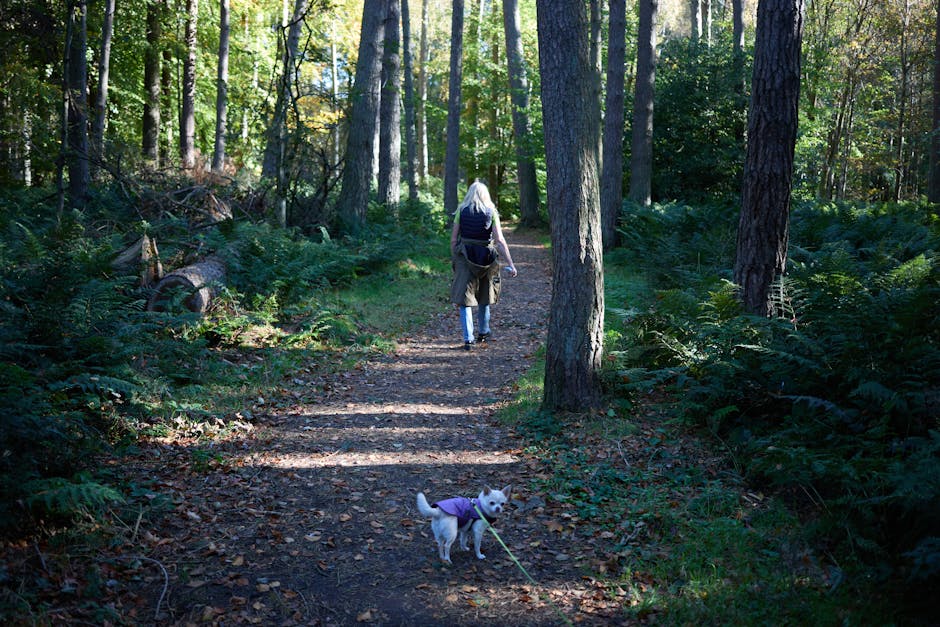
Autumn is, in many ways, the best season for a UK dog holiday. The crowds that overwhelm popular trails in August have gone home. Cottage prices drop sharply from mid-September. Coastal beach restrictions that kept dogs off favourite stretches over summer almost universally lift on 1 October. And cooler temperatures mean a dog can actually enjoy a full day's walking without heat-stroke risk hovering over every decision.
The eight destinations below have been picked specifically for their autumn strengths — places where the season delivers something summer cannot. Some shine for the colour change (Lake District, Cotswolds), others for newly-empty coastline (Pembrokeshire, Northumberland), and a few for genuinely unique seasonal events like the New Forest deer rut. Each links into a fuller regional guide for booking specifics, walks, and dog-friendly pubs.
1. The Lake District — autumn colour and off-peak trails
When the larches turn copper and the August queues vanish
The Lake District in October is a different national park to the one most visitors meet in August. The honeypot villages — Ambleside, Bowness, Keswick — empty out after the schools go back, parking pressure eases, and the larch plantations around Whinlatter, Grizedale and Tarn Hows turn a vivid copper that stands out against the still-green fells. For an active dog, the upper Borrowdale paths and the Catbells ridge are at their best in dry October weather: firm underfoot, clear visibility, and far fewer walkers contesting narrow stiles and gates.
Cottage rates in the Lakes drop noticeably from the third week of September, and mid-week stays in November are often half the late-July price for the same property. Many of the area's best-known dog-friendly pubs — the Britannia Inn at Elterwater, the Mortal Man at Troutbeck — are also much easier to get a table at without booking weeks ahead. For trail picks see our full best dog walks in the Lake District guide, and for off-peak cottage shortlists, pet-friendly Lake District cottages.
2. The New Forest — the deer rut and golden beech woods
October is the New Forest's headline month
The New Forest is one of the few UK destinations where autumn is genuinely the main event rather than a quieter alternative to summer. The annual red and fallow deer rut runs from late September through early November, peaking in mid-October — and while dogs must be kept on leads in rutting areas and well away from the deer themselves, the soundscape (deer roaring at dawn and dusk through beech and oak woodland) is unforgettable. The ancient beech enclosures around Bolderwood and Rhinefield turn from green to gold to bronze across roughly six weeks, with the ornamental Rhinefield drive at its visual peak in late October.
The ponies, donkeys and cattle that have right-of-roam through the forest are still out in October and early November, which means lead discipline matters here even more than usual. Forestry England waymarked walks at Bolderwood, Blackwater Arboretum and Wilverley Plain stay open year-round and handle autumn rain well. Full regional detail is in our dog-friendly New Forest guide.
3. The Norfolk coast — empty beaches and big autumn skies
Beach restrictions lift on 1 October — and the crowds have gone
The north Norfolk coast operates seasonal dog restrictions on a handful of its busiest stretches — Wells, Sheringham central, Cromer central — between May and September. From 1 October those restrictions lift entirely, and the long sand beaches at Holkham, Wells, Brancaster and Burnham Overy Staithe become some of the best off-lead dog beaches in England. The crowds at Holkham (where the parking queues can run to a mile in August) thin out almost overnight after the half-term week.
Autumn light along this coast is part of the appeal: low sun, big skies, and the salt-marsh colours shifting through ochre and rust from mid-September. The coastal villages — Burnham Market, Wells-next-the-Sea, Cley — keep their dog-friendly pubs open year-round and most of the better seafood places (the Crab Hut at Brancaster, the White Horse at Brancaster Staithe) take dogs in the bar. The full breakdown of beach rules and walks is in our dog-friendly Norfolk guide.
4. The North York Moors and Dales — heather, ling, and waterfall walks
Where Yorkshire arguably looks best between mid-August and mid-October
The Yorkshire moors hit their visual peak unusually late — heather flowering across Goathland, Westerdale and the Hambleton Hills runs from mid-August into late September, with the bracken on lower slopes shifting from green to rust through October. The Yorkshire Dales valleys (Wensleydale, Swaledale, Wharfedale) have a different but equally photogenic autumn character: ancient field-barns set against fading-green sheep pasture, with the limestone walls in sharper contrast than they ever are in summer.
Waterfall walks come into their own here in October and November when river levels rise after autumn rain — Aysgarth, Hardraw Force, and the path to Janet's Foss above Malham all run harder than in the dry summer months. For dogs that handle wet weather, this is the strongest season. Cottage availability is also dramatically better than school-holiday peak. See dog-friendly Yorkshire Dales for routes, or the broader dog-friendly Yorkshire overview for North York Moors detail.
5. Pembrokeshire — the coast path in its best season
Mild, less windy than winter, and almost completely empty
The Pembrokeshire Coast National Park is one of the genuinely all-year UK destinations, and autumn (specifically late September through early November) is when its long-distance coast path is at its most walkable. Temperatures stay mild thanks to the Atlantic, the strongest summer winds have eased, and the major beaches — Whitesands, Newgale, Marloes Sands, Barafundle — drop their summer dog restrictions on 1 October. Beach-ban shorthand for the rest of the year: most of the smaller coves stay dog-friendly all year regardless.
Self-catering cottages in the St Davids peninsula and around Tenby cut prices sharply after the schools go back, and many of the working-fishing-village pubs (the Sloop at Porthgain, the Old Sailors at Pwllgwaelod) are quieter and more relaxed in autumn than at any other time. The coast path between St Davids and Solva, in particular, is one of the most enjoyable autumn dog walks in the UK. Full regional detail in our dog-friendly Pembrokeshire guide.
6. The Cotswolds — village walks, autumn produce, and dog-friendly pubs
Cosier than the Lakes, gentler than the moors, and beautifully managed
The Cotswolds are not where you go for big-sky drama or off-lead beach freedom — they are where you go for short, pretty woodland walks between honey-stone villages, with a dog-friendly pub at the end of each one. October and early November are arguably the area's best months: the beech woods above Broadway, around Snowshill and on the Cotswold Way escarpment turn deep gold, the Sunday-morning crowds of summer thin out, and the pub fires come on. The big visitor centres (Bourton, Stow, Castle Combe) stop feeling like theme parks.
For dog owners, the Cotswolds work particularly well as a short autumn break because the walks are modest in scale — most of the well-known village-to-village loops are 4–8 miles on good paths — so older dogs and small breeds get a proper day out without overcommitting. Self-catering rates fall steeply from mid-September and many of the better cottages have wood-burning stoves, which matter more here than they do further north. See our dog-friendly Cotswolds guide for village picks and pub shortlists.
7. Snowdonia (Eryri) — mountain walks without the midges
October is the strongest dog-walking month in north Wales
Snowdonia (Eryri) has a short list of obstacles to summer dog-walking — heat, ticks, busy paths, and midges around the lower slopes in June and July. Autumn removes all of them. October is the strongest month: temperatures drop to 8–14°C through the day, the bracken turns rust, the lower Glyderau and the Carneddau valleys (around Llyn Idwal, Cwm Idwal, the Ogwen valley) come into colour, and weekday parking pressure at Pen-y-Pass and Ogwen Cottage drops dramatically.
The higher Snowdon ridges are not the right autumn target for most dogs — visibility deteriorates fast, paths are exposed, and winter conditions can arrive overnight from late October — but the lower routes around Beddgelert, the Aberglaslyn pass, Llyn Padarn at Llanberis, and the Coed-y-Brenin forest trails near Dolgellau are excellent. For booking and walk picks see our dog-friendly Snowdonia guide.
8. The Northumberland coast — empty beaches, all year
Bamburgh, Beadnell, Druridge: 30 miles of off-lead sand
The Northumberland coast has the rare distinction of essentially no seasonal dog restrictions — Bamburgh, Beadnell, Embleton, Druridge Bay and most of the AONB beaches stay off-lead-friendly all year, with the major exception of bird-nesting fenced sections at Lindisfarne and Coquet Island. That makes autumn here less about restrictions lifting (because they were never imposed) and more about an already-quiet coastline becoming almost completely empty.
Late October and November bring big Atlantic-influence weather: dramatic skies, hard winds, and the kind of moody coastal landscape that suits long beach walks more than gentle pottering. Bamburgh Castle's profile against autumn storm light is, predictably, photographed more than anything else in the county. Inland, the Cheviots offer waymarked walks across open moor, and dog-friendly accommodation in the coastal villages (Seahouses, Alnmouth, Craster) is widely available off-peak. Full detail in our dog-friendly Northumberland guide.
Best months for an autumn UK dog holiday
Late September is the sweet spot — but each month has a different character
If dates are flexible, the strongest autumn window for a UK dog break is the second half of September through the third week of October. The weather is at its most reliable, the schools have gone back, and the major foliage destinations (Lakes, New Forest, Cotswolds, Snowdonia) hit their visual peak somewhere inside that window. Coastal destinations (Norfolk, Pembrokeshire, Northumberland) extend the sweet spot through November because the lifting of summer beach restrictions matters more than leaf colour.
October is the headline month: deer rut in the New Forest, full beech colour across England and Wales, beach restrictions lifted everywhere, and cottage prices roughly 20–40% below peak summer for equivalent properties. November shifts the balance toward coastal destinations and indoor-evening accommodation (cottages with wood-burners, dog-friendly pubs with rooms). Late November and December move into the half-term and Christmas market booking patterns — see our half-term breaks guide and dog-friendly Christmas breaks for those windows.
Booking timing and price patterns
Where the off-peak discount actually shows up
Three booking realities apply to UK dog-friendly autumn holidays. First, cottage prices drop sharply between summer holidays week 6 (typically the last week of August) and the first week of September — often a 25–35% reduction on the same property — and stay low until the Christmas premium kicks in around mid-December. Second, mid-week stays (Monday-to-Friday) drop further than weekends because demand stays concentrated on Friday-to-Monday. Third, smaller agencies and direct-booking owners often discount harder than the big platforms for last-minute autumn availability, particularly in the second half of October.
Pet-fee policies vary widely: most cottages charge a one-off £20–£50 dog fee, some charge per dog per night, and a handful charge nothing. Pub-with-rooms accommodation is the most variable category — some welcome dogs free, others add £15–£30 per night. The general rule is that hotels charge most, independent pubs charge least, and self-catering cottages sit in the middle. For booking patterns specific to multi-dog households, see our UK dog-friendly hotels overview.
Autumn dog-travel pack list
Five things that matter more in October than in July
Autumn travelling needs a slightly different kit than summer. The five items that consistently get forgotten by people travelling outside the main summer season: a microfibre dog towel large enough for a full-body dry, a high-visibility collar or lead attachment (essential for the shortening daylight from mid-October onward), a waterproof coat for short-coated breeds, a second set of bedding for use when the first set is wet, and a sturdy paw-rinse bottle for muddy returns from the car park to the cottage. None of this matters in August. All of it matters in October.
For the full year-round packing breakdown, our complete dog travel checklist covers the core kit and what to swap in for cold and wet weather. The best dog water bottles for travel piece covers hydration for autumn coastal walks where rockpools and standing water aren't always safe to drink.
Where to plan next
Other seasonal and destination guides on the site
Half-term breaks
October half-term destinations sorted by school region and travel time.
Read guideChristmas breaks
Ten dog-friendly winter destinations with festive markets and log fires.
Read guideBest UK beaches
The full year-round beach list with off-peak access notes.
Read guideFrequently asked questions
Autumn-specific dog-travel questions
When do UK seasonal beach dog bans lift?
Is October a good month for the New Forest with a dog?
Where are the warmest UK autumn destinations for a dog?
Do cottages drop in price after the summer holidays?
Is the Lake District too wet for a dog holiday in autumn?
Are dog-friendly pubs busier or quieter in autumn?
Going off-peak pays off in autumn
Empty trails, beaches reopened to dogs and noticeably cheaper cottages — the season rewards the planning.