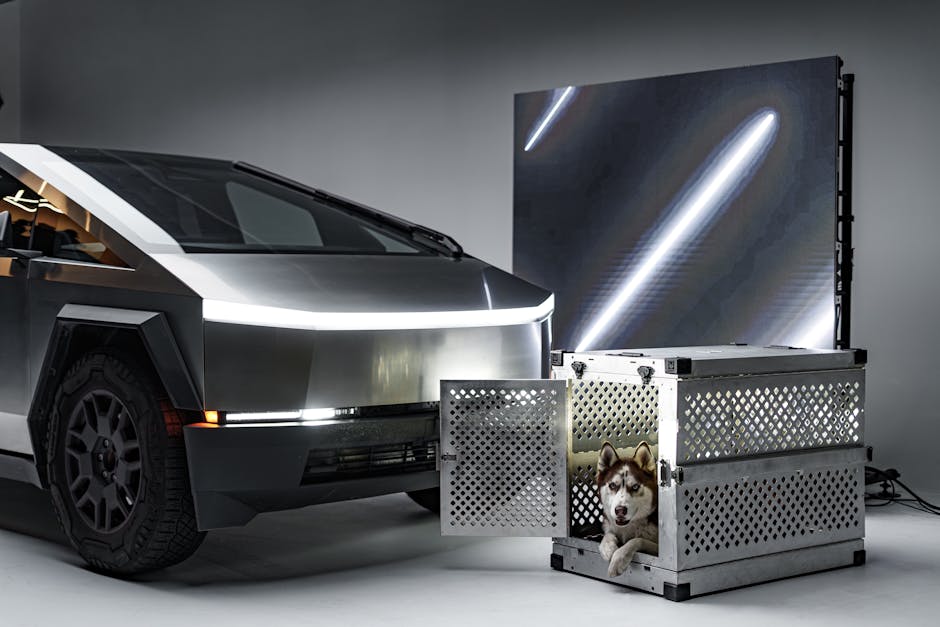
Best Dog Crate UK 2026: 5 Top Picks for Travel & Home
Five honest picks for the best dog crate UK in 2026 — for flying, car journeys, and home crate-training. Sizing guide, IATA rules, plus runner-ups.
A good crate is one of the most quietly useful things you can buy for a dog. The best dog crate UK buyers can get in 2026 has to do at least three jobs well: keep your dog safe in the car, work as a calm den at home, and — for the small number of owners who actually fly with their pet — meet IATA's airline cargo rules. Very few crates manage all three. Most are better at one role than the others.
This guide narrows the field to five picks: a folding metal all-rounder, an airline-approved travel kennel, a crash-tested car crate for serious safety, a budget option that gets the basics right, and a soft-sided crate for short trips and camping. Each section explains who it's for, who it isn't for, and what to watch out for. There is also a sizing guide further down, plus a clear summary of UK ferry, Eurostar, and flight rules so you know which crate you actually need.
Quick comparison: which crate for which job?
Five very different use cases, five very different crates
The shortest version of this guide is the table below. If you only need one number to remember, it's the internal length of the crate — that is what matters for both comfort and IATA rules, not the external footprint a retailer quotes.
- Crate-training and home use: MidWest iCrate Folding Metal. Folds flat, dual-door, includes a divider so a puppy doesn't rattle around in a Labrador-sized crate.
- Flying with a medium or large dog: Petmate Sky Kennel. IATA Container Requirement 82-compliant out of the box. Most UK airlines that accept pets as cargo will accept this kennel; some still require additional metal hardware (see below).
- Daily car travel (priority is safety): MIM Safe Variocage. Built in Sweden, designed for the boot of an estate or SUV, crash-tested by the Swedish manufacturer and rated by the Center for Pet Safety.
- Budget pick: Amazon Basics Single-Door Folding Metal Cage. Half the price of the iCrate and structurally similar, with thinner-gauge wire and a less refined latch.
- Short trips, holiday cottages, camping: EliteField 3-Door Folding Soft Crate. Lightweight, mesh-panelled, packs into a duffel. Not secure enough for a dog that hasn't already settled in a crate at home.
1. MidWest iCrate Folding Metal — best all-rounder
The MidWest iCrate is the default home crate for a reason. It's a folding wire crate with two doors (front and side), a removable plastic tray for cleanings, and a divider panel so you can shrink the usable space while a puppy is small and let it grow into the full crate later. It is sold in sizes from 22 inches (toy breeds) up to 48 inches (giant breeds), which covers every UK pet-passport-eligible breed.
The reason it shows up in so many UK households is the divider. Crate-training works best when the dog has just enough room to stand, turn around, and lie down — not so much room that one end becomes a toilet corner. Buying a 42-inch crate for a Labrador puppy is the cheapest long-term decision (you don't replace it at 8 months), and the divider makes that practical from week one.
What to know before buying: the iCrate folds for transport but it is not crash-tested. It's a containment crate, not a safety crate. If you want a wire crate that doubles as a car restraint, look at the Variocage instead. The iCrate also doesn't meet IATA cargo rules — wire crates aren't airline-approved.
Good for: puppy crate-training, settled adult dogs at home, occasional short car trips with a calm dog.
Skip if: you fly with your dog, you want a crash-tested car solution, or your dog is a serious chewer (some Labradors and shepherds bend the wire).
2. Petmate Sky Kennel — best for flying
If your dog is travelling by air as cargo, the kennel has to comply with IATA's Live Animals Regulations Container Requirement 82 (CR82). The Petmate Sky Kennel is the kennel most airlines and ground-handling agents are used to seeing. It's a hard-shell plastic kennel with a metal-wire door, ventilation on all four sides, and external hardware that meets IATA's spec on bolt count and door-latch design.
UK passenger flights almost never accept dogs in the cabin (a small number of registered assistance dogs aside). For most owners, flying with a dog means booking them as manifested cargo via the Heathrow Animal Reception Centre (HARC), Gatwick, or Manchester, and the airline will require a CR82-compliant kennel. The Sky Kennel ticks that box across BA, Virgin, KLM, Lufthansa, and most carriers that operate pet-cargo services into and out of the UK.
Watch outs: several airlines now require metal nuts and bolts (not the plastic clips the Sky Kennel ships with) for any flight over a certain duration or for flights routed through specific hubs. Buy a cheap metal-fasteners kit at the same time as the kennel — it costs a few pounds and is the difference between your dog flying and being refused at check-in. Also: the Sky Kennel is bulky. The 700-series (for very large dogs) does not fit in the boot of an estate car. If you only fly occasionally, the Variocage is a better daily-driver and the Sky Kennel sits in the garage until you need it.
For the full picture on flying, see our flying with a dog from the UK guide.
3. MIM Safe Variocage — best for safe car travel
Most car crates on Amazon are repurposed home crates with a 'travel' sticker. The MIM Variocage is a different category. It's a Swedish-built aluminium-frame crate designed to crumple in a controlled way during a crash, dissipating energy away from the dog. The single-dog Variocage models are the most-recommended car crate by UK vets and the Center for Pet Safety, the independent US non-profit that crash-tests pet travel products.
It is not cheap. A single Variocage starts at around £650 and the Double XL is over £1,000. For owners with one or two dogs who travel by car most weeks — pet sitters, mobile dog walkers, agility competitors, families who actually use their estate car as a dog car — the cost works out per journey. For a dog that travels twice a year to a cottage in the Lake District, the iCrate or a basic harness on the back seat is honestly fine.
Fit matters more than for any other crate. Variocages are sized to the make and model of car — the small/medium/large/XL designations relate to boot dimensions, not dog size. MIM publishes a per-vehicle fitting guide. Measure your boot floor-to-roof, parcel-shelf-removed depth, and width at the wheel arches before ordering.
Good for: daily car-travelling dogs, multiple dogs in the same boot, anyone whose insurance treats secure pet restraint as a discount factor.
Skip if: you have a hatchback (most won't fit even a Small Variocage), or your dog is comfortable in a crash-tested car harness — see our dog car harness comparison for those alternatives.
4. Amazon Basics Folding Metal Dog Crate — best budget
The Amazon Basics folding metal crate is a near-clone of the iCrate at roughly half the price. Same fold-flat construction, same plastic tray, same divider system, same size range. The corners that have been cut sit in the wire gauge (a little thinner), the door latch (a single slide-latch rather than the iCrate's twin), and the finish (some buyers report sharp edges on the welds — worth running your hand around any new crate before letting the dog in).
For a once-or-twice-a-year crate user — boarding the dog with a sitter, occasional car trips, post-surgery confinement — it does the job. For a puppy that will live in the crate for several hours a day for a year of training, the iCrate is worth the extra £30 because the door is easier to operate one-handed when the dog is keen to get out.
Good for: infrequent users, second crate for a holiday cottage, owners testing whether their dog will tolerate crate training before committing to a more expensive crate.
Skip if: you are crate-training a puppy from week one, or your dog is a known escape artist.
5. EliteField 3-Door Folding Soft Crate — best soft-sided
Soft crates exist for one job: short trips with a dog that already crate-trains happily at home. The EliteField (and near-identical alternatives from Pet Gear, Petsfit, and a clutch of UK Amazon sellers) is a mesh-panelled fabric crate over a tubular steel frame. It packs into a flat duffel, weighs a fraction of a wire crate, and pops up in 30 seconds.
It is not, by any reading, secure. A dog that wants to leave will leave, in less than a minute, via teeth or claws. Soft crates also don't meet IATA cargo rules and they aren't crash-tested. Their value is as a comfort den in a holiday cottage, a quiet corner at a dog show, or under the table in a beer garden — situations where the dog is settled and the crate just provides a familiar shape and a roof.
Good for: cottage holidays (most owners report dogs settle faster in a familiar crate than a strange room), camping with a fully crate-trained dog, agility weekends and dog shows.
Skip if: you need a crate for an anxious dog, a puppy, or any dog that hasn't already crate-trained on a wire crate at home.
If you are planning a UK cottage trip, our dog travel checklist covers exactly what to pack alongside the crate.
How to size a crate correctly
Manufacturers size crates by external dimensions and a vague breed list. Vets size crates by the dog. The vet method is the right one.
Measure your dog standing comfortably (not stretched). You need two numbers:
- Length: nose to base of tail, then add 10–15cm (4–6 inches).
- Height: top of head when sitting upright, then add 5–8cm (2–3 inches).
The crate needs to be at least that big internally. For airline travel (Petmate Sky Kennel), IATA's CR82 spec requires the dog to be able to stand, turn around, and lie down naturally — handlers at HARC will reject undersized kennels. For home crate-training, you want close to the minimum size, not the maximum, especially for puppies; too much space defeats the den principle. The MidWest iCrate's divider is designed exactly for this — set it to the puppy's current size and move it back every few weeks.
Typical sizing (this is approximate — measure the dog, not the breed):
Crate size by typical adult weight
| Specification | Value |
|---|---|
| 22" / 56cm crate | Toy breeds up to ~5kg (Chihuahua, Yorkshire Terrier) |
| 24" / 61cm crate | Small breeds 5–10kg (Pug, Cavalier King Charles) |
| 30" / 76cm crate | Medium breeds 10–18kg (Cocker Spaniel, Beagle, French Bulldog) |
| 36" / 91cm crate | Med-large 18–25kg (Border Collie, English Bulldog, Springer Spaniel) |
| 42" / 107cm crate | Large 25–40kg (Labrador, Golden Retriever, German Shepherd) |
| 48" / 122cm crate | Giant 40kg+ (Great Dane, Newfoundland, St Bernard) |
UK travel rules: when do you actually need a crate?
Owners often buy more crate than they need because they misread the rules. The short version:
- Driving in the UK: Rule 57 of the Highway Code requires dogs to be "suitably restrained". A crate, a seatbelt-style harness, or a boot divider all qualify. Failing to restrain a dog isn't a specific offence on its own, but it can support a careless-driving charge after an accident, and most insurers expect a restraint to be in place. A crash-tested option (Variocage, or a crash-tested harness) is the only way to know the restraint will work as intended in a real collision.
- Eurotunnel Le Shuttle: dogs stay in the car for the crossing. No crate required. Most owners use the same restraint they use day-to-day.
- Ferries (P&O, DFDS, Brittany, Stena): on most short routes (Dover-Calais, Holyhead-Dublin), dogs stay in the car on the car deck. Longer routes (Portsmouth-Santander, Hull-Rotterdam) require pet cabins or kennels — these are booked through the ferry, not BYO.
- Eurostar passenger trains: dogs are not permitted, with the exception of registered assistance dogs.
- Domestic UK rail (National Rail, Caledonian Sleeper): small dogs travel free in carriers. Larger dogs travel on a lead. A soft crate that fits under the seat is useful for small dogs on long journeys; not required.
- Flying from the UK: dogs travel as manifested cargo, not in the cabin (except registered assistance dogs on some carriers). This is where IATA CR82 compliance matters and where the Sky Kennel earns its place.
For destination-by-destination travel planning, our travelling with a dog by car guide goes deeper on UK road rules and ferry routes.
Frequently asked questions
Is a crate cruel?
How long can a dog be left in a crate?
Can I use a soft crate as a flight kennel?
Do I need a separate crate for the car and for home?
What's the difference between IATA-approved and 'airline approved' crates?
How do I crate-train an adult rescue dog that hates the crate?
The bottom line
For most UK households, the right answer is the MidWest iCrate at the size your adult dog will need, with the divider set for current size. That covers home crate-training, short car trips with a calm dog, and the dog-sitter's spare room when you go away.
If you genuinely travel by car most days, add or substitute the MIM Variocage sized to your boot. If you fly with your dog more than once a year, add the Petmate Sky Kennel — and a cheap metal-fasteners kit at the same time. If you take the dog camping or to dog-friendly cottages, the EliteField soft crate packs flat and gives an already-crate-trained dog a familiar shape in a strange room. The Amazon Basics crate is the right pick if budget is the constraint and use will be infrequent.
Whatever you buy: measure the dog, not the breed. And give it a week of positive association before the first car trip or boarding stay — a new crate is just a piece of furniture until your dog has chosen to settle in it.
Planning the trip itself?
Once the crate is sorted, the bigger question is where to take the dog. Our destination guides cover dog-friendly cottages, beaches, and pubs across the UK.