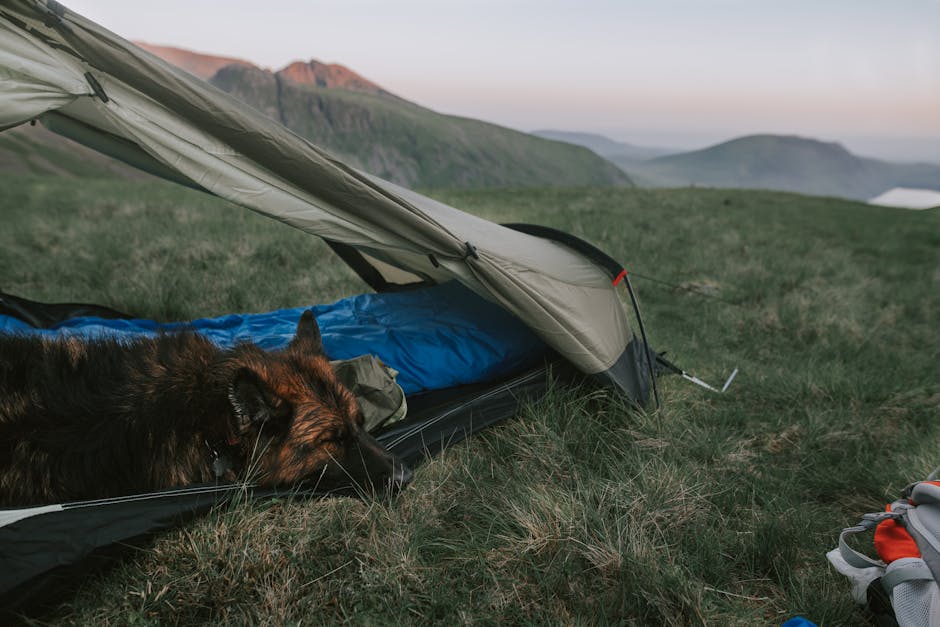
Best Dog Walks in the Lake District: 8 Routes Your Dog Will Love
The best dog walks in the Lake District — from gentle lakeshore strolls and waterfall paths to family fells with panoramic views. Each walk includes distance, difficulty, terrain, lead requirements, and what to expect.
Best Dog Walks in the Lake District
8 brilliant routes for every kind of dog and walker — with honest notes on difficulty, terrain, and where the leads need to come out
The Lake District is one of the finest places in the UK to walk a dog. Dog walks in the Lake District range from buggy-friendly lakeshore loops to proper fell summits, and almost everywhere is reachable on a public footpath. The challenge isn't finding a walk — it's choosing the right one for your dog's fitness, the weather, and the time of year.
This guide picks eight routes that work brilliantly for dogs, covering the full spread from flat one-mile strolls to half-day fell walks. Every route below is on accessible public footpaths or open access land, and we've flagged the lead requirements honestly: where sheep graze, where roads are crossed, and where loose dogs can reasonably enjoy a run.
For a base, our guide to the best pet-friendly cottages in the Lake District covers properties with enclosed gardens, dog showers, and walks from the doorstep — sensible for getting the most out of a walking holiday.
Quick Overview: 8 Lake District Dog Walks
Compare distance, difficulty, terrain and lead requirements at a glance
| Feature | Best Overall Tarn Hows Circular | Aira Force Waterfall | Buttermere Lake Circuit | Loweswater Loop | Catbells Lakeshore (Derwentwater) | Latrigg Summit | Orrest Head from Windermere | Catbells Summit |
|---|---|---|---|---|---|---|---|---|
| Price | — | — | — | — | — | — | — | — |
| Rating | — | — | — | — | — | — | — | — |
| Distance | 1.8 miles | 1 mile loop | 4.5 miles | 4 miles | 3 miles | 2.5 miles | 1.5 miles | 3.5 miles |
| Difficulty | Easy | Easy | Easy | Easy | Easy | Moderate | Moderate | Moderate |
| Terrain | Surfaced gravel path | Stone steps and gravel | Lakeshore path, mostly flat | Woodland and lakeshore | Flat lakeside path | Grassy fell, gentle gradient | Woodland path, some rocky steps | Rocky fell with scrambles |
| Lead Required | Yes (livestock) | Yes (steep drops) | Mixed (sheep and farmland) | Yes through farmland | Mostly off-lead OK | Yes near top (sheep) | Yes near road and farmland | Yes (sheep, exposed sections) |
| Highlight | Buggy/wheelchair friendly | Spectacular 65ft waterfall | Quiet, classic Lakeland views | Lake District's quietest lake | Low-level Catbells alternative | Big views for small effort | Wainwright's first Lakeland view | Iconic family fell with summit views |
1. Tarn Hows Circular
Easy 1.8 miles — the perfect first Lake District walk
Tarn Hows is the easiest fully-formed Lake District walk for dogs. The 1.8-mile loop circles a beautiful tarn (a small mountain lake) on a surfaced gravel path that's wide enough for buggies, wheelchairs, and three-abreast walking. There's a National Trust car park at the start (charges apply) with a Coffee Fix van usually parked up at weekends.
The path is mostly flat with one gentle rise on the western side. Dogs are welcome but must be on leads — the surrounding fields hold sheep year-round, and the National Trust signs make this requirement clear. The tarn itself has several small inlets where dogs can paddle in shallow water, supervised. Many people complete the loop in 45-60 minutes.
It does get busy, especially on summer weekends and bank holidays. For a quieter experience, arrive before 10am or after 4pm, or visit midweek out of school holidays. Autumn is particularly stunning here as the surrounding larch woodlands turn gold.
Distance: 1.8 miles | Time: 45-60 minutes | Ascent: Negligible | Parking: National Trust Tarn Hows car park (LA21 8DP)
Pros
- Surfaced path suitable for elderly dogs and puppies
- Buggy and wheelchair accessible
- Shallow paddling spots around the tarn
- Toilets at the car park
Cons
- Lead required for the entire loop
- Very busy in peak season
- Car park fills early on weekends
- Limited shade on hot days
2. Aira Force Waterfall
Easy 1 mile — short, dramatic, family-friendly
Aira Force is a 65-foot waterfall in a deep wooded gorge on the western shore of Ullswater. The walk to the falls and back takes around 45 minutes and follows well-built stone paths and steps through Victorian-planted woodland. Two sturdy stone bridges cross the gorge above and below the main falls — the lower one offers the best photo angle.
Dogs are welcome on leads throughout. The lead requirement is genuinely important here: there are unfenced drops into the gorge and the stone steps can be slippery in wet weather. Beyond the main falls, an extended path leads up to High Force (a smaller, quieter waterfall) and onwards into the open fellside if you fancy a longer walk.
The National Trust car park has toilets, a tearoom (dog-friendly outdoor seating), and information boards. It's a good rainy-day walk because the woodland canopy provides shelter, and the falls are at their most dramatic after heavy rain.
Distance: 1 mile loop (extendable) | Time: 45 minutes | Ascent: 250 ft | Parking: National Trust Aira Force car park (CA11 0JS)
Pros
- Spectacular waterfall in 30 minutes from the car
- Good rainy-day walk under tree cover
- Tearoom and toilets at the start
- Can extend to High Force or open fells
Cons
- Stone steps slippery when wet
- Unfenced drops into the gorge — lead essential
- Busy on summer weekends
- Not suitable for buggies
3. Buttermere Lake Circuit
Easy 4.5 miles — the best low-level walk in the Lakes
The Buttermere lake circuit is regularly cited as the finest easy walk in the Lake District, and for good reason. The 4.5-mile loop hugs the shoreline of Buttermere with continuously dramatic views of Haystacks, Fleetwith Pike, and the Buttermere fells. There's barely any ascent, the path is well-maintained, and a famous rock-cut tunnel near Hassness adds a memorable highlight.
Dogs love this walk. The shoreline offers dozens of paddling and swimming spots in clean, shallow water. Most of the path is bordered by walls or fences, but some sections cross open farmland with sheep — leads should go on for those stretches and signs make the transitions clear. Outside lambing season, well-controlled dogs with reliable recall can be off-lead on the lakeshore sections away from livestock.
The walk takes 2-2.5 hours at a steady pace. Start from the village of Buttermere (parking can be tight; arrive early or use the National Trust car park at Honister Pass and bus down). The Bridge Hotel and the Fish Inn in the village both welcome dogs and serve good food after the walk.
Distance: 4.5 miles | Time: 2-2.5 hours | Ascent: 200 ft | Parking: Buttermere village (CA13 9XA)
Pros
- World-class scenery throughout
- Plenty of safe swimming spots
- Rock tunnel adds a unique highlight
- Two dog-friendly pubs in the village for after
Cons
- Parking is limited and gets busy
- Lead required across farmland sections
- Can be muddy and exposed in winter
- No facilities mid-route
4. Loweswater Loop
Easy 4 miles — the Lake District's quietest big walk
Loweswater sits in the north-western Lakes and is the smallest, quietest of the major lakes. The 4-mile circular walk combines lakeshore woodland, open meadow, and a short stretch of quiet country lane. It's the kind of walk where you can spend two hours and meet just a handful of other people — rare anywhere in the Lakes during the main season.
The path passes through Holme Wood — a National Trust woodland of mature beech and oak — on the southern shore, where dogs can be off-lead on the woodland paths (sheep aren't grazed within the wood itself). North of the lake, the route crosses farmland and a short section of lane, where leads should go on. Plenty of access points to the water for paddling.
Kirkstile Inn at the start/end of the walk is one of the best pubs in the area, with a dog-friendly bar and excellent food. The route is largely flat with no significant climbs, making it suitable for older dogs and less-experienced walkers.
Distance: 4 miles | Time: 2 hours | Ascent: 100 ft | Parking: Maggie's Bridge car park or Kirkstile Inn (CA13 0RU)
Pros
- Genuinely peaceful even in peak season
- Mature woodland with dappled shade
- Excellent dog-friendly pub at start/end
- Suitable for older dogs and easy walkers
Cons
- Lane sections require lead and traffic awareness
- Some farmland crossings with livestock
- Limited parking at peak times
- Few facilities en route
5. Catbells Lakeshore (Derwentwater)
Easy 3 miles — Catbells views without the climb
If Catbells summit is too ambitious for your dog (or you), the lakeshore alternative gives you the same views in a fraction of the effort. The path runs along the western shore of Derwentwater at the foot of Catbells, with constant views across to Skiddaw and Blencathra. It's flat, well-trodden, and shaded by mature woodland for much of its length.
Start at Hawes End (where the Keswick Launch ferry stops) and walk south along the shore for around 1.5 miles before doubling back. The path stays close to the water throughout, with multiple bays where dogs can swim in clean water. Most of the route is well away from livestock, so off-lead walking is generally fine for dogs with decent recall.
A brilliant alternative is to take the Keswick Launch ferry one-way (dogs travel free) and walk back, or vice versa. The ferry adds variety and views from the water are stunning. Total time including a stop or two for paddling is around 1.5-2 hours.
Distance: 3 miles | Time: 1.5-2 hours | Ascent: Minimal | Parking: Hawes End or use Keswick Launch (CA12 5UE)
Pros
- Catbells views without the climb
- Plenty of off-lead walking on woodland paths
- Multiple safe swimming spots
- Can combine with the Keswick Launch ferry
Cons
- Hawes End parking very limited (consider ferry instead)
- Path can be muddy after rain
- Some narrow sections with passing traffic on bikes
- Crowds near the ferry landings on summer weekends
6. Latrigg Summit
Moderate 2.5 miles — the easiest fell summit in the Lakes
Latrigg is widely regarded as the most accessible fell summit in the Lake District, and for many dog walkers it's the first "proper" fell they tackle. From the high-level Gale Road car park, the route to the 1,203-foot summit is just over a mile each way on a grassy fell path with a steady but gentle gradient. The reward is one of the best views in the entire Lake District: a panoramic vista of Keswick, Derwentwater, the Borrowdale fells, and the Skiddaw massif rising behind.
The car park itself is at around 1,000 feet, so most of the climbing is already done before you start walking. The path is grassy and reasonably wide, and on a clear day the views start almost immediately. Sheep graze on the upper sections, so leads should go on as you approach the summit ridge — particularly during lambing season.
Latrigg works in conditions where the high fells would be unsafe — it's a great choice for windy or showery days when Skiddaw and the higher tops are out of reach. It also gives a younger or less-fit dog a genuine fell experience without overdoing it.
Distance: 2.5 miles | Time: 1.5 hours | Ascent: 600 ft | Parking: Gale Road car park, Underscar (CA12 4PG)
Pros
- Massive views for genuinely moderate effort
- High car park means most height is already gained
- Suitable when high fells are weathered out
- A 'proper' fell experience for first-timers
Cons
- Sheep on summit ridge — lead essential
- Gale Road can be icy in winter
- Exposed summit if windy
- Car park busy on bright weekends
7. Orrest Head from Windermere
Moderate 1.5 miles — Wainwright's first Lakeland view
Orrest Head is the small wooded hill behind Windermere town that famously gave Alfred Wainwright his first view of the Lake District in 1930 — a moment that, by his own account, set him on the path to writing his Pictorial Guides. The walk to the top is short but steady: 0.75 miles uphill from the centre of Windermere, mainly through woodland, with a flat, rocky summit at 784 feet that opens out to a panoramic view of the lake and surrounding fells.
Dogs need to be on leads at the start (the path leaves directly from the A591 and crosses farmland) but the woodland section above the farmland allows off-lead walking for dogs with decent recall. The summit itself is a popular gathering point, often busy with families — keep dogs close at the top, especially as the rocky outcrops have unfenced drops.
It's an ideal introductory Lake District walk if you're staying in Windermere, requiring no car journey and giving genuinely impressive views in just 30-45 minutes. Combine it with the Orrest Head trail extension to make a 3-mile loop including Common Wood.
Distance: 1.5 miles return | Time: 45-60 minutes | Ascent: 500 ft | Parking: Windermere village (LA23 1AH)
Pros
- Walks directly from Windermere town
- Big views for short effort
- Genuine 'aha' moment at the summit
- Can extend into a longer woodland loop
Cons
- Crosses A591 — lead essential at the start
- Summit gets crowded on sunny days
- Rocky outcrops with drops at the top
- Path can be slippery in wet weather
8. Catbells Summit
Moderate 3.5 miles — the iconic family fell
Catbells is the classic family fell of the Lake District, and arguably the most photographed mountain in England. The 1,481-foot summit looks down on Derwentwater with one of the finest views in the Lakes, and the route up the north-east ridge from Hawes End is direct and scenic. It's a moderate fell walk — not technical, but genuinely steep in places, with one or two short rocky scrambles where smaller dogs may need a hand.
Most confident, fit dogs handle Catbells easily, but it's not for puppies, very old dogs, or dogs with mobility issues. The rock steps need decent jumping ability, and the ridge has exposed sections where slipping or panicking would be dangerous. Sheep graze the entire fell, so leads stay on for the whole walk — this isn't optional, it's essential.
Most people complete the round trip in 2.5-3 hours via the standard up-and-back route. A more interesting option is to descend the back of the fell to Manesty and return along the lakeshore (combining with walk #5 above), making a 6-mile circular. Pick a clear day — the views are the whole point, and clouded summits are a waste of effort.
Distance: 3.5 miles return (up and down) | Time: 2.5-3 hours | Ascent: 1,250 ft | Parking: Hawes End or use Keswick Launch (CA12 5UE)
Pros
- One of the most rewarding views in England
- Moderate length suits a half-day outing
- Can combine with lakeshore for a longer round
- Ferry option avoids parking issues
Cons
- Rock scrambles unsuitable for some dogs
- Sheep across the entire fell — strict lead control
- Exposed ridge — avoid in high winds
- Very busy in summer (consider midweek)
Lake District Walking with Dogs: Practical Tips
What to know before you set off
Lambing season runs March to May. During these months, every walk that crosses farmland or open access land requires a short lead. Many farmers post temporary signs reminding visitors. Even outside lambing, sheep are present year-round on most fells.
Carry water for your dog. Most Lake District streams are clean enough to drink from in upland sections, but lower-altitude becks can carry agricultural runoff. A collapsible bowl and a litre of water are sensible for any walk over an hour.
Mind the weather. Lake District weather changes fast. A sunny morning can become a wind-and-rain epic by lunchtime. Pack a coat for yourself and (for short-haired or older dogs) consider a dog coat for upland walks in cooler months. Mountain Rescue handles dog incidents reasonably often, particularly heat-related issues in summer.
Check the National Trust signage. Many Lake District car parks and paths are managed by the National Trust, and signs at trailheads give clear, current guidance on lead requirements, livestock presence, and seasonal restrictions. Read them — they're written by people who know the local conditions.
Picking up matters. The Lake District National Park has a serious problem with dog mess, particularly on popular paths. Carry bags, pick up everything (including in remote spots), and bin or carry out — never bag and leave.
Beyond the Lake District
More dog-friendly walking destinations across the UK
Once you've explored the Lakes, the UK has plenty more dog-walking territory. Our Dog-Friendly Peak District guide covers gritstone edges, reservoirs and access land within easy reach of Manchester and Sheffield. The Yorkshire Dales offer a similar mix of fells and dales with quieter paths, and the Scottish Highlands take things up a level for ambitious walkers. For a complete change of scene, Cornwall's coastal paths offer year-round dog-friendly beaches and the South West Coast Path.
If you'd rather drive less, our Dog-Friendly Days Out Near London round-up covers ten brilliant escapes within two hours of the capital.
Frequently Asked Questions
Common questions about dog walks in the Lake District
What is the best dog walk in the Lake District?
Do dogs need to be on leads in the Lake District?
Can dogs swim in Lake District lakes?
Which Lake District fell is easiest for dogs?
When is the best time to walk in the Lake District with a dog?
Are there dog-friendly pubs near these walks?
Where should I stay for the best dog walking?
Planning a Lake District trip with your dog?
Pair these walks with a properly dog-friendly cottage — enclosed gardens, dog showers, and walking routes from the doorstep.