Can I Take My Dog on a UK Train? (2 Dogs Free, 2026)
Every UK train operator's dog policy in one place - 2 dogs free, lead or carrier required, no seats, no dining cars. Per-operator nuances inside.
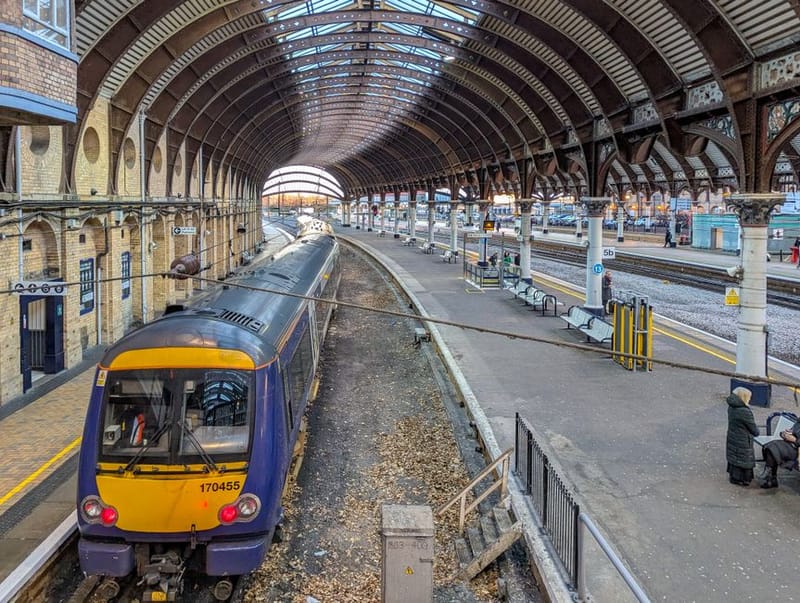
UK rail travel with a dog is one of the more dog-friendly transport options in the country - under the National Rail Conditions of Travel, two dogs travel free with every passenger, and the rules are largely consistent across all UK train operators. Where they differ is at the margins: which classes accept dogs, whether First Class lounges welcome them, and how strictly peak-hour restrictions are applied. This guide covers the brand-wide policy and the per-operator differences across the major UK train companies for 2026.
What does the National Rail policy actually require?
The brand-wide rules every operator inherits
The National Rail Conditions of Travel (the standard contract for all GB rail tickets) set the baseline dog policy that every train operator follows. Per the National Rail pets page:
- Two dogs free per passenger. Two small domestic animals travel free with each adult passenger. There is no need to book or notify the operator in advance.
- Lead OR pet carrier required. Dogs must be kept on a lead for the duration of the journey, or in a fully-enclosed pet carrier. The carrier must be designed for purpose and must not exceed 85 × 60 × 60 cm, and must be large enough for the pet to stand and lie down comfortably.
- No seats for dogs. Animals are not allowed on seats - they sit on the floor or on your lap.
- No restaurant cars. Animals are not allowed in restaurant cars or buffet cars. Standard carriages are fine.
- Additional dogs cost extra. For a third or additional dog, the charge is 50% of the adult fare for your ticket type, capped at £5 for a single journey and £10 for a return.
- Assistance dogs are exempt. Guide dogs, hearing dogs, and registered assistance dogs travel free without restrictions, and are welcome in restaurant cars and First Class lounges.
This baseline applies to every UK train operator. The per-operator differences below are in addition to (not replacing) these rules.
GREAT WESTERN RAILWAY
GWR - Great Western Railway
London Paddington to the South-West and Wales
- South-West weekend trips
- First Class with a dog
- Cornwall + Devon routes
- Free dogs 2 per passenger
- First Class Yes (incl. lounge car)
- Peak restrictions None published
- Lead required Yes, short lead
LNER
LNER - London North Eastern Railway
London King's Cross to Edinburgh via York and Newcastle
- East Coast main line
- Edinburgh weekends
- First Class with a small dog
- Free dogs 2 per passenger
- First Class Yes
- Peak restrictions None published
- Lead or carrier Either
AVANTI WEST COAST
Avanti West Coast
London Euston to Manchester, Liverpool, Glasgow
- West Coast main line
- Glasgow / Manchester trips
- First Class with at-seat snacks
- Free dogs 2 per passenger
- First Class Yes
- Floor or lap only Yes
- Lead or carrier Either
SCOTRAIL
ScotRail
Scottish regional + Highland routes
- West Highland line
- Glasgow / Edinburgh shuttle
- Scenic Scottish trips
- Free dogs 2 per passenger
- All classes Yes
- Peak restrictions None published
- Lead required Yes
ScotRail's policy is permissive - dogs are welcome in all classes across the network including the celebrated West Highland line. Dogs must be on a lead throughout. The Caledonian Sleeper service operated separately from ScotRail has its own policy and accepts dogs in cabins with advance booking and a per-night charge.
NORTHERN TRAINS
Northern Trains
Regional services across the North of England
- Lake District
- Yorkshire Dales
- Settle–Carlisle line
- Free dogs 2 per passenger
- Peak guidance Avoid where possible
- All routes Yes
- Lead required Yes
OTHER MAJOR OPERATORS
CrossCountry, TransPennine Express, Greater Anglia, East Midlands, SE / SWR
The rest of the GB rail network
- Connecting journeys
- Cross-Britain routes
- Regional travel
- Free dogs 2 per passenger (National Rail baseline)
- Class access Varies by operator
- Peak restrictions Operator discretion
- Lead or carrier Either
What about the London Underground and DLR?
TfL operates a separate policy
The London Underground, Overground, DLR, and other Transport for London services run a separate policy from National Rail. The headline rule: dogs are welcome on TfL services free of charge, but must be carried on escalators (TfL provides 'dogs must be carried' signage at every Tube station entrance). Some smaller dogs spend the journey in a carrier; larger dogs walk on the platform and Tube floor on a lead, and are carried only on the escalator itself. See our companion guide to dogs on London transport for the full TfL rules.
Practical tips for travelling by train with a dog
Book aisle / table seats over windows. A dog at-foot needs more leg-room than a window seat provides, and the table layout gives them somewhere quiet to settle.
Travel off-peak where possible. Even on operators with no formal peak restriction, mid-morning weekday trains and weekend off-peak windows are calmer and easier with a dog at-foot.
Bring water + a collapsible bowl. Trains can be warm and journeys long; long-haul services don't have dog water stations.
Use a short lead. Extending leads are explicitly discouraged on most operators' published policies. A 1–1.5 m fixed lead keeps the dog at your foot.
Plan station transfers. Major stations (King's Cross, Paddington, Euston, Manchester Piccadilly) have outdoor areas - useful for pre-journey toilet breaks.
Carrier for nervous dogs. If your dog is anxious in crowds, a carrier (within the 85 × 60 × 60 cm limit) gives them a quieter sensory experience.
Which are the best dog-friendly train routes?
Some UK train routes are particularly well-suited to dog owners, either because they lead to excellent walking destinations or because the journey itself is spectacular:
The West Highland Line (Glasgow to Mallaig) - Widely considered one of the world's most scenic railway journeys. The route passes through the wild, dog-friendly Highlands with numerous stops near fantastic walks. ScotRail operates this route and is very dog-friendly.
Settle to Carlisle - Crossing the Yorkshire Dales, this route passes through superb walking country. Alight at Dent, Garsdale, or Appleby for immediate access to off-lead walks.
The Cornish Main Line (Plymouth to Penzance) - Hugging the coast with sea views, this route delivers you to numerous dog-friendly Cornish beaches and coastal paths.
The Heart of Wales Line (Shrewsbury to Swansea) - A quiet, rural route through mid-Wales with numerous request stops near walking country.
London to Whitstable/Margate - Easy day trips from London to dog-friendly Kent beaches, with journey times of around 90 minutes.
London Waterloo to Brockenhurst (New Forest (the Hampshire National Park covering 219 square miles of heath, woodland and pony commons)) - about 90 minutes direct on South Western. Brockenhurst is the most-recommended village base for dog visitors to the New Forest, with the open forest starting at the platform exit. See our dog-friendly New Forest guide for the on-the-ground rules - free-roaming livestock, pannage season, and the on-lead heathland window in spring/summer.
Frequently asked questions
Are dogs allowed on UK trains?
How much does it cost to bring a dog on a UK train?
Can dogs travel in First Class on UK trains?
Do I need to book a ticket for my dog?
Can I take my dog on the London Underground?
Are there breed restrictions on UK trains?
Can I leave my dog unattended in the train?
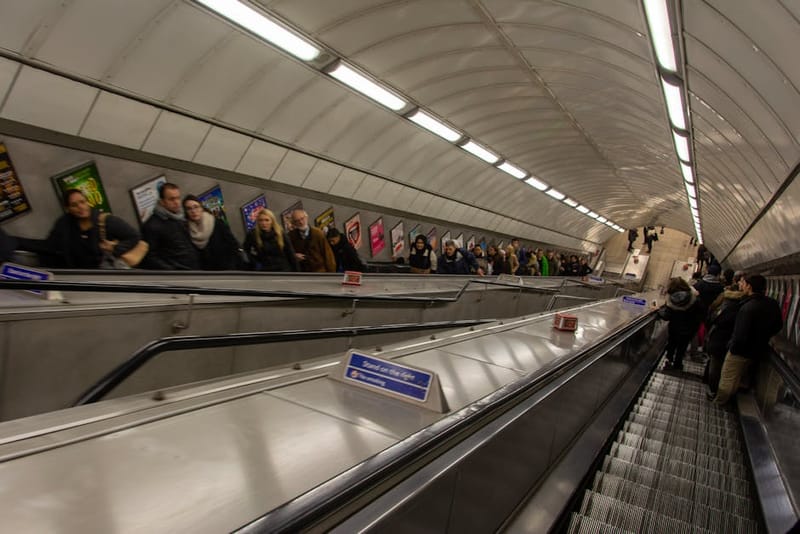
Dogs on London Transport
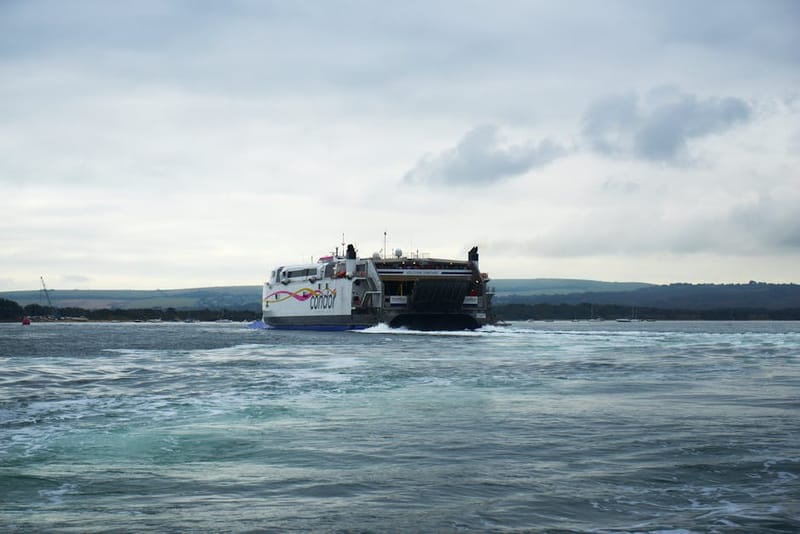
Pet-Friendly UK Ferries
Best UK Pet-Friendly Hotel Chains